Clear The Air News Tobacco Blog Rotating Header Image

The anti-smoking pressure group whose wackiest ideas always become law

http://blogs.spectator.co.uk/spectator-surgery/2015/06/the-anti-smoking-pressure-group-whose-wackiest-ideas-always-become-law/

Every few years, Action on Smoking and Health draws up a wish list of all the policies it would introduce if it was king for the day. It then spends the next few years lobbying ferociously and watches with a satisfied smirk as every single one of their brainwaves becomes the law of the land.

The manifesto of this tiny pressure group is, in effect, the manifesto of whichever party is in power. The only difference is that governments often ignore their own manifesto commitments (such as Labour’s 2005 pledge to exempt private members clubs from the smoking ban) whereas the ASH manifesto is always implemented to the letter.

ASH’s last legislative programme – 2008’s ‘Beyond Smoking Kills’ – became obsolete when the Conservatives acted on its wackiest idea, plain packaging, earlier in the year. Total victory set the stage for yet another brainstorming session, the fruits of which will be released in a report titled ‘Smoking Still Kills’ later this month. This document has already fallen into the hands of Guido Fawkes who provided a peek preview today.

If smokers were hoping that the vendetta against them would end with plain packaging, they need to think again. Amongst ASH’s new ruses are minimum pricing for tobacco, annual price rises of five per cent above inflation for cigarettes, a smoking ban in all cars and a ban on smoking outdoors.

In recent years, anti-smoking policies such as banning tobacco displays in shops have been put forward on the not-very-convincing pretext that they will discourage children from taking up the habit. Before that, the smoking ban in enclosed spaces was pushed on the basis that it would ‘protect’ employees.

Drunk with success, ASH has now ditched such rhetoric. The new policies are overtly aimed at hassling and impoverishing adults who choose to smoke.

When the smoking ban came in, anti-smoking campaigners swore on a stack of bibles that they would never consider banning smoking in the open air. They now want a consultation on it. When they lobbied for a ban on smoking in cars with children, they promised that it was not the start of a slippery slope that would lead to a ban in all cars. They are now pushing for exactly that. All this from a group that laughably claims that it is ‘not anti-smoker’.

They even want to get rid of the trifling exemption to the smoking ban that allows actors to smoke in theatrical productions. Seriously, what do they hope to gain from such teeth-grinding fanaticism? Oh, and if you want to watch a film or TV show that portrays someone smoking, ASH think you should be subjected to a hectoring anti-smoking commercial beforehand. Compulsory by law, naturally.

It would be easy to assume that this combination of petty and extreme demands are a way of ASH justifying their state funding at a time of budget cuts (ASH receives a generous grant from the Department of Health every year).

Mission creep is nothing new in pressure group politics, but for organisations like ASH incremental prohibition has always been the game. Mission creep is a feature, not a bug, of ‘tobacco control’. ASH could never have achieved what they have if they had been open about their agenda when they were formed in the 1970s. Even today, they will not admit to being prohibitionists. They just want smoking to be sort-of-prohibited.

The problem with treating smoking as if it is virtually illegal is that smokers start viewing it the same way. The sale of illegal cigarettes has risen by 33 per cent in the last two years, according to HMRC, and it is likely to rise further when branding is abolished next year. In its 2008 manifesto, ASH hoped that the illicit share of the cigarette market would be three per cent by 2015. In fact, it is 10 per cent and rising.

That’s four billion cigarettes entering the country every year without being taxed, in addition to 4,400 tonnes of rolling tobacco, and HMRC’s figures almost certainly underestimate the scale of the problem.

This could be excused as collateral damage if ASH’s legislative diarrhoea led to a dramatic decline in people smoking, but it doesn’t. In its 2008 report, they set an ‘ambitious but achievable’ target of reducing the smoking rate to 11 per cent by 2015. At the time, it was 21 per cent. It has dropped by a mere 1.5 percentage points, to 19.5 per cent, in the intervening seven years despite the government capitulating to all of its demands. There are plenty of countries that achieve bigger drops than this by doing nothing at all. ASH have now reset their target and are now hoping that smoking prevalence will be 13 per cent by 2020. I, for one, am prepared to bet that it will be considerably higher than that.
Ms Elisabetta Gardini: Illicit Trade of Tobacco Products

Download (PDF, 373KB)

How do you sell death? The tangled world of illicit tobacco

http://scienceblog.cancerresearchuk.org/2015/05/31/how-do-you-sell-death-the-tangled-world-of-illicit-tobacco/

Tobacco companies make more profit every year than Coca Cola, McDonald’s, Starbucks, Google, and Disney combined – a staggering £30 billion.

That vast amount of money is difficult to comprehend, and even more so if you think about how those profits are made: divide those billions by the 6 million tobacco-linked deaths worldwide each year, and it turns out that the tobacco industry makes about £6,000 from each death.

So how do they get away with it, and still make billions?

Clearly, it helps if you use whatever means necessary to keep people addicted to your deadly product.

So to mark this year’s World No Tobacco Day, let’s delve into the tangled history of the illicit tobacco trade, where corporate words fail to match corporate actions – and public health loses out.

World No Tobacco Day

This year’s World No Tobacco Day sets out to focus the public’s mind on this illicit trade, which has been fuelled by both criminal networks and by tobacco companies’ own leaky supply-chains. Consequently, ‘illicit’ tobacco products are both genuine cigarettes smuggled across borders to avoid tax, and counterfeit products.

Each year, sales of these products cost more than €10 billion in lost tax and customs revenue across Europe.

And given that Governments continue to use tax to reduce smoking rates, illicit trade undermines public health by making smoking cheaper and more accessible to children and vulnerable communities.

So what do the tobacco companies have to say for themselves on the matter?

An argument made of air

During the campaign for standard packs, one of the tobacco industry’s key arguments was that plain packs would make counterfeit and smuggled tobacco easier to come by. As we said at the time, this argument is deeply flawed, for two reasons:

Firstly, because of the clear evidence that these companies themselves play a role in illegal trade.

Secondly, as we’ll see below, because of the very nature of international tobacco smuggling.

In fact, there is no reliable evidence that the introduction of standardised packs – due in the UK in 2016 – will increase smuggling. When the UK’s HM Revenue & Customs (HMRC) looked in depth at the issue, they found “no evidence to suggest the introduction of standardised packaging will have a significant impact on the overall size of the illicit market or prompt a step-change in the activity of organised crime groups”.

But as well as using tobacco smuggling and illicit trade as a red herring to try to interfere with measures like standard packs, it grates to hear tobacco companies say that legal cigarettes represent a ‘safer’ option.

Let’s be clear: there is no such thing as a safe cigarette – legally manufactured or illicit – with ‘legitimate’ cigarettes containing around 70 cancer causing chemicals.

A history of mischief

So let’s look at the smuggling trade – and how the industry has been found out.

Each year some 400 billion cigarettes are illegally smuggled across international borders, making it the most widely smuggled legal product.

In 2001, the European Commission, along with 10 EU Member States filed legal action against three of the largest tobacco companies, Philip Morris International (PMI), R.J. Reynolds Tobacco Co and Japan Tobacco International (JTI), for:

‘…an ongoing global scheme to smuggle cigarettes, launder the proceeds of narcotics trafficking, obstruct government oversight of the tobacco industry, fix prices, bribe foreign public officials, and conduct illegal trade with terrorist groups and state sponsors of terrorism’. (Emphasis ours)

PMI and JTI settled their cases in 2004 and 2007 respectively. But in August 2014, the courts upheld a decision which will allow the EU to pursue a case against R.J. Reynolds relating to the company’s alleged involvement in a criminal money-laundering and cigarette smuggling scheme.

And there’s more. In the UK in June 2013, the National Audit Office reported that HMRC had also kept a watch on manufacturers’ ‘oversupply’, i.e. producing or importing far too much tobacco in one area, making smuggling to another much easier (we blogged about it at the time).

In some instances, the HMRC estimated that the total supply of some brands of rolling tobacco to some countries exceeded demand by 240 per cent in 2011.

Since this report, HMRC hit British American Tobacco with a £650,000 fine in November 2014 for oversupplying cigarettes to Belgium which has lower tobacco taxes than the UK.

Fox guarding the hen house

The agreements following the European Commission’s legal action included obligations on several companies to make large payments.

PMI alone agreed to pay £674 million over 12 years – but it was also ordered to control the future smuggling of its cigarettes through a range of measures.

Frustratingly, however, it was left to the company itself to put these measures into practice. Given its track record, it’s hard to believe that it was put in charge of monitoring its own illicit trade.

Andy Rowell, research fellow at the Tobacco Control Research Group at the University of Bath, is not convinced at all. ”The tobacco companies have a history of complicity in smuggling. But we know that leopards do not change their spots,” he told us.

“The companies are spending millions trying to con people that they are the victims of smuggling rather than the villains,” he says.

The 12 year agreement is now coming to an end – but the European Commission is now discussing its ‘renewal’ with Phillip Morris.

This is incredibly worrying. There’s a fundamental conflict here, considering that the international community recognises the threat the industry poses to public health policy.

Now 180 parties have signed up to an international treaty to help reduce smoking rates and deal with the tobacco industry. Within this treaty – the Framework Convention on Tobacco Control (the FCTC treaty) – there’s a specific section worth noting. Known as Article 5.3, it’s designed to keep these companies at arm’s length when it comes to decisions about people’s well being.

Article 5.3 states that governments should engage with tobacco companies:

‘only when and to the extent strictly necessary to enable them to effectively regulate the tobacco industry and tobacco products’.
But is it really ‘strictly necessary’ for the EU to engage with PMI over illicit trade? And when it does, what does it say? Over the last 10 years there has been a worrying lack of transparency.

What needs to be done

We already have the blueprint for tackling illicit trade. The World Health Organisation’s Protocol to Eliminate Trade in Illicit Tobacco Products (ITP) outlines the introduction of a tracking and tracing system for tobacco products. But the protocol is useless without action – all 180 parties to the FCTC treaty should sign and ratify this protocol.

And we need to make sure the ‘track and trace’ system is one that will work, NOT one run by industry itself – something Rowell says is their preferred end-game, “which would be very much letting the foxes take over the hen house.”

It’s vital that this system – and all future initiatives to tackle the illicit trade – are completely independent of tobacco industry involvement, and that we learn from the past.

Tobacco products – which have no safe level of use – kill the population equivalent to Scotland every year. The industry’s involvement in the illicit trade demonstrates why we must raise the drawbridge, and not give them the key.

· Stephanie McClellan is a press officer at Cancer Research UK

All eyes on Beijing as China, world’s largest tobacco consumer, bans public smoking

http://www.scmp.com/news/china/society/article/1813367/all-eyes-beijing-china-worlds-largest-tobacco-consumer-bans

Anyone caught violating the ban must pay 200 yuan (US$32.25)

Beijing has banned smoking in restaurants, offices and on public transport from Monday, part of unprecedented new curbs welcomed by anti-tobacco advocates, though how they will be enforced remains to be seen.

Health activists have pushed for years for stronger restrictions on smoking on the mainland, the world’s largest tobacco consumer, which is considering further anti-smoking curbs nationwide.

Under the rules, anyone in the capital who violates the ban, which includes smoking near schools and hospitals, must pay a 200 yuan (HK$250) fine. The present fine, which is seldom enforced, is just 10 yuan.

Anyone who breaks the law three times will be named and shamed on a government website. Businesses, meanwhile, can be fined up to 10,000 yuan for failing to stamp out smoking on their premises.

“Restaurant staff have a duty to try to dissuade people from smoking,” said Mao Qunan, of the National Health and Family Planning Commission. “If they don’t listen to persuasion, then law enforcement authorities will file a case against them.”

The government would also no longer allow cigarettes to be sold in shops within 100 metres of primary schools and kindergartens, according to state media.

Smoking is a major health crisis on the mainland, where more than 300 million smokers have made cigarettes part of the social fabric, and millions more are exposed to secondhand smoke. More than half of mainland smokers buy cigarettes at less than five yuan a pack.

The legislature passed a law last month banning tobacco advertisements in mass media, on public transport and in outdoor public spaces. Many mainland cities have banned smoking in outdoor public places, but enforcement has been lax.

Bright red banners, typically used to display government slogans, have been posted around Beijing with anti-smoking messages. The city has also set up a hotline on which violators can be reported.

The names of people and companies who violate the rules more than three times would be posted on a government website for a month, state radio said.

Anti-tobacco advocates said they were more confident in the government’s will to enforce the bans after a series of tougher measures in recent months, including a higher tobacco tax.

“We couldn’t say this is the strongest law in the world,” said Angela Pratt, of the World Health Organisation’s Tobacco Free Initiative.

“But it’s certainly up there with the strongest, in that there are no exemptions, no exceptions and no loopholes on the indoor smoking ban requirement.”

UN launches fight against illicit tobacco trade to save lives

http://www.un.org/apps/news/story.asp?NewsID=51010

On World No Tobacco Day, UN launches fight against illicit tobacco trade to save lives

31 May 2015 – The elimination of the world’s illicit tobacco trade will not only save millions of lives but also generate billions of dollars in windfall for governments, the United Nations World Health Organization (WHO) announced today as it marked the 2015 edition of World No Tobacco Day.

“On this World No Tobacco Day, I call for boosting the World Health Organization’s Framework Convention on Tobacco Control to eradicate the illicit trade in cheaper tobacco products which tend to lure younger and poorer groups into addiction while depleting the ability of States to charge taxes that could support health services,” Secretary-General Ban Ki-moon said in his remarks today.

“By striking at the criminal gangs and tobacco companies that engage in this reprehensible trade, we will advance public health and sustainable development,” he added.

The Day – observed annually by the global community on 31 May to highlight the health risks associated with tobacco use and advocate for effective policies to reduce tobacco consumption – will this year see the WHO and the UN system as a whole urge Member States to sign the Protocol to Eliminate the Illicit Trade in Tobacco Products in order to improve public health, help cut crime, and curb an important revenue source for the tobacco industry.

“The Protocol offers the world a unique legal instrument to counter and eventually eliminate a sophisticated criminal activity,” Dr. Margaret Chan, WHO Director-General declared in a press release. “Fully implemented, it will replenish government revenues and allow more spending on health.”

Nearly 80 per cent of the world’s one billion smokers live in low- and middle-income countries, where the burden of tobacco-related illness and death is heaviest, according to WHO.

The UN agency has further warned that tobacco, which caused 100 million deaths in the 20th century, may cause one billion deaths in the 21st century if current trends continue. Unless urgent action is taken, the annual death toll from tobacco consumption could rise to more than eight million by 2030.

The Protocol, a supplementary treaty to the WHO Framework Convention on Tobacco Control, requires a wide range of measures relating to the tobacco supply chain, including the licensing of imports, exports and manufacture of tobacco products; the establishment of tracking and tracing systems and the imposition of penal sanctions on those responsible for illicit trade. It would also criminalise illicit production and cross border smuggling.

“Public health is engaged in a pitched battle against a ruthless industry,” added Dr. Douglas Bettcher, Director of the WHO’s Department for the Prevention of Noncommunicable Diseases.

“On this World No Tobacco Day, WHO and its partners are showing the ends that the tobacco industry goes to in the search for profits, including on the black market, and by ensnaring new targets, including young children, to expand its deadly trade.”

According to WHO eliminating the illicit trade in tobacco would generate an annual tax windfall of $31 billion for governments, improve public health, help cut crime and curb an important revenue source for the tobacco industry.

The WHO Framework Convention on Tobacco Control entered into force in February 2005. Since then, it has become one of the most widely embraced treaties in the history of the United Nations with 180 Parties covering 90 per cent of the world’s population.

COSH calls for a ban on electronic cigarettes

Download (PDF, 321KB)

ITIC (International Tax and Investment Center) Raises Alarm to EU Policy Makers About Galloping Illicit Tobacco Trade

http://www.prnewswire.com/news-releases/itic-international-tax-and-investment-center-raises-alarm-to-eu-policy-makers-about-galloping-illicit-tobacco-trade-122712193.html

WASHINGTON, May 30, 2011 /PRNewswire/ —

– EU Member States Losing EUR10 Billion in Tax Revenues Each Year and Facing Uphill Battle to Reverse the Trend

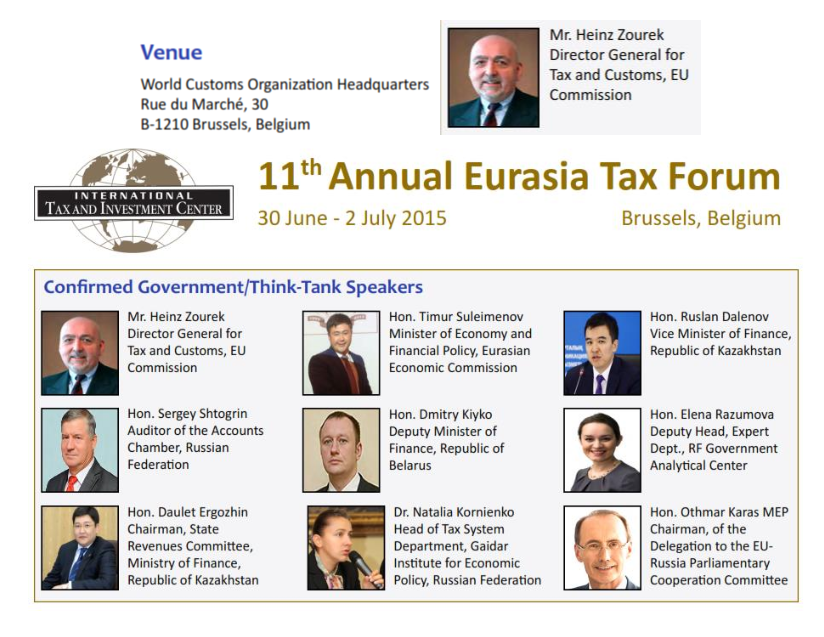
At a meeting today on intellectual property, counterfeiting and piracy in Brussels, hosted by the European Parliament’s Kangaroo Group, http://www.tobaccotactics.org/index.php/Kangaroo_Group

http://tobaccotactics.org/index.php/Othmar_Karas the International Tax and Investment Center (ITIC) warned the European Union (EU) that it faces an uphill battle to stem the flow of illegal cigarettes pouring through its borders and across its Member States.

Illegal cigarettes account for approximately 9% of all cigarettes consumed across the EU, costing governments an estimated EUR10 billion in lost tax revenues each year. Certain countries like Ireland have registered levels of 1 in every 4 cigarettes coming from the black market. But the consequences of illicit trade reach far beyond government revenue loss. “Criminal gangs attracted by the huge profits are selling completely unregulated tobacco products to anybody who will buy them, including kids,” said Daniel Witt, President of ITIC.

Speaking about its recently launched booklet – The Illicit Trade in Tobacco Products and How to Tackle It – ITIC outlined the scope and drivers of illicit trade but also showed how customs, law enforcement, and tax and health officials around the world can address the growing problem.

ITIC pointed to numerous factors that are contributing to illicit trade, highlighting unbalanced fiscal policies, protectionist policy measures and weak enforcement. “It is fundamental that government policy aimed at reducing tobacco consumption assesses any potential impact on aggravating illicit trade,” noted Witt. Measures such as the introduction of standardized (plain) packaging for cigarettes, currently considered under the revision of the Tobacco Product Directive by the EU Commission, should be carefully looked at on the grounds that they could very well worsen the problem, making life easier for counterfeiters to flood EU markets with cheap fakes.

The ITIC publication, which also includes input from the World Customs Organization (WCO), will be widely circulated to policy makers and enforcement authorities around the world with the aim of triggering a much needed comprehensive approach to combating the issue.

Copies of the new booklet, The Illicit Trade in Tobacco Products and How to Tackle It can be obtained (at no cost) by writing Ms. Napolitano or directly from ITIC’s web site: http://www.iticnet.org/Public/PublicDocLanding.aspx?id=41&type=Brussels

About the International Tax and Investment Center

The International Tax and Investment Center (ITIC) is an independent nonprofit research and education foundation with offices in Russia, Azerbaijan, Kazakhstan, Jordan, the Philippines, Ukraine, the United Kingdom and the United States. Organized in 1993, the ITIC serves as a clearinghouse for tax and investment policy information and as a leading knowledge center accessible by key policy makers in the former Soviet Union and other countries in the Middle East, North Africa, Southern Africa, and the Asia Pacific region.

More information on ITIC can be found on its website: http://www.ITICnet.org.

About the Kangaroo Group http://www.tobaccotactics.org/index.php/Kangaroo_Group http://tobaccotactics.org/index.php/Othmar_Karas

The Kangaroo Group is an association of members of the European Parliament, Commission and Council and representatives of industry and academia working to enhance European unity step by step around the pursuit of common projects. The motto of the Kangaroo Group is free movement and security. The Group was set up in the European Parliament in 1979.

The Forum on Intellectual Property, Counterfeiting and Piracy, held in Brussels on May 26, was chaired by The Hon. Bill Newton Dunn, Member of the European Parliament. Other participants included The Hon. Edit Herczog, Member of the European Parliament, and Ms. Edit Horvath, Chief Policy Officer from the Hungarian Tax & Customs Authority representing the Hungarian EU Presidency.

unnamed

Failed: Tobacco Industry Funded Research on Illicit Trade of Tobacco Products in Asia

Download (PDF, 1.95MB)

World No Tobacco Day 2015: Time to act against illicit tobacco

http://www.who.int/fctc/mediacentre/news/2015/wntdoped/en/

By Vera Luiza da Costa e Silva, Head of the Secretariat WHO Framework Convention on Tobacco Control

There was a time when smuggling was seen as a romantic industry, its ranks swelled by swashbuckling characters like the Spanish Bandoleros of the 1800s. Riding Andalusian stallions, clothed in long capes and wide-brimmed hats, they smuggled tobacco and still found the time to fight Napoleon’s invaders.

There’s nothing romantic about today’s illicit tobacco trade. A business of truly global proportions, it has a track record of filching funds from where they’re needed most. It’s no exaggeration to say that the world has insufficient hospital wards, nurses and doctors to face the increase in cancer sufferers, because criminals have diverted tax revenues into their own pockets.

It’s difficult to estimate the lost tax, but even a conservative 2009 estimate suggested that US$ 31 billion was missing from government coffers because of the illicit trade. Other reputable researchers say the number is even higher – perhaps as much as US$ 50 billion. The main victims are low- and middle-income countries that need the money most, and of course the consumers turned into addicts by more accessible and affordable tobacco products.

That’s why this year’s World No Tobacco Day on 31 May is devoted to the issue of the illicit trade. The World Health Organization and the Secretariat of the WHO Framework Convention on Tobacco Control (WHO FCTC) are urging Member States to join the expanding group of Parties that have signed the Protocol to Eliminate the Illicit Trade in Tobacco Products, an international treaty in its own right negotiated under the umbrella of the WHO FCTC.

Tobacco-related illness is one of the biggest public health threats the world has ever faced. Approximately one person dies from a tobacco-related disease every six seconds, equivalent to almost six million people a year. That is forecast to rise to more than eight million people a year by 2030, with more than 80% of these preventable deaths occurring among people living in low-and middle-income countries.

The Protocol will not only strengthen the hands of governments in combating this pernicious business. It will also increase tax revenue, improve the health of the world’s citizens and cut the financial lifeline of those who challenge law enforcers such as organised criminal gangs.

Criminal groups are not the only beneficiaries. Petty peddlers make a living where border controls are lax or local officials can be bribed to look the other way. Research shows that insurgent forces have also muscled into the trade in the Middle East and Africa. In central and eastern Africa for example, rebels accused of serious human right violations have been shown to use the illegal tobacco trade to finance their activities.

Yet it’s the tobacco industry that benefits most from the activities of bootleggers and smugglers. Illicit tobacco products come from factories too – and all too often the trail of evidence is traced back to legally sanctioned manufacturers.

There is a wealth of material to prove the point. Several large tobacco companies paid US$ 1.7 billion in fines to the Canadian authorities from 2008-10 after they were accused of smuggling conspiracy charges; Her Majesty’s Revenue and Customs in the UK told an inquiry that tobacco industry supplies to certain countries are “considerably higher than legitimate local demand.” And paperwork disclosed by the tobacco industry as a result of US court cases provided detailed evidence of manufacturers using illicit routes to expand sales and win new markets, for example in Asia and Latin America.

Given the forces ranged against it, how would the Protocol make a difference? Probably the biggest change would increase control over the supply chain. Tracking and tracing systems – with costs charged to the tobacco industry itself but controlled by governments – would show whether and where products have been diverted into the illicit system.

Imports, exports and manufacturing would be licensed, legal sanctions against smugglers and others engaged in the trade would be strengthened and international cooperation of the illicit trade, and action against it, would be enhanced.

The illicit trade is a many-headed entity, a hydra of illegal activity that harms the gullible and the vulnerable. It will take many years to defeat, but the battle must be waged if we are ever to make progress. The entering into force of the Protocol is the critical first step.

The Parliament of the Republic of Moldova approves new tobacco control law

http://www.euro.who.int/en/countries/republic-of-moldova/news/news/2015/05/the-parliament-of-the-republic-of-moldova-approves-new-tobacco-control-law

In the context of World No Tobacco Day 2015, the Parliament of the Republic of Moldova voted today, 29 May 2015, to adopt a series of amendments to different laws directed to strengthen tobacco control. After lengthy debate in the Parliamentary Committee for Social Protection, Health and Family, led by Oxana Domenti, and strong opposition from the tobacco lobby and special interest groups, the new tobacco control law was approved.

For the past 2 years, the Republic of Moldova has made considerable progress in tobacco control, from elaborating and adopting a strong tobacco control law by the Government to securing Parliamentary approval today.

The new law closely follows implementation of the WHO Framework Convention on Tobacco Control and comprises a full ban on smoking in enclosed public spaces and the use of warning labels covering 65% of the front and back of cigarette packages. It also includes a full ban on the advertising and promotion of tobacco products, with the exception of philanthropy, which was replaced by regulations that prohibit advertisements using the trademark designation of tobacco products, the name of the tobacco industry entity and other strategies.

Each year in the Republic of Moldova, smoking causes 5600 deaths and a loss of more than 2000 workers from the national workforce. The Republic of Moldova has 690 000 adult smokers, and 90 000 of today’s youth population will take up smoking in the absence of strong tobacco control measures. Unless action is taken, up to half of all lifetime smokers – almost 390 000 Moldovans – will die early from diseases caused by smoking .

The new law will enforce implementation of these strong tobacco control strategies, lead to significant health improvements in the Moldovan population and provide the opportunity to save more than 40 000 lives each year.