Clear The Air News Tobacco Blog Rotating Header Image

Europe

Total Black Out: Brussels Accused of Cover-up Over Tobacco Lobby Dealings

http://sputniknews.com/europe/20150827/1026259093.html

The European Commission is accused of a widespread cover-up after refusing to release the full details of dealings between its officials and the tobacco industry during negotiations for the highly controversial Transatlantic Trade and Investment Partnership (TTIP) treaty.

Following a freedom of information (FOI) request by research and campaign group Corporate Europe Observatory (CEO), the European Commission released an almost completely redacted letter that it received from British American Tobacco regarding their recent correspondence.

The 14-page document was almost completely redacted, with almost all of the content, including names of officials and lobbyists, dates of the meetings and even the issues discussed blacked out.
Less than 5 percent of the text was visible, which included merely a few standard introductory and closing remarks.

The documents were in relation to discussions about the proposed TTIP trade deal being negotiated between the US and EU, as well as separate negotiations between EU and Japanese officials.

Fears Over ISDS

TTIP negotiations have been dogged by a severe lack of transparency of behalf of government officials involved in the talks, with the almost completely blacked out letter increasing fears that such a trade deal will include provisions for tobacco companies to sue governments if they attempt to tighten smoking legislation.

The investor-to-state dispute settlement (ISDS) process is currently being used by tobacco giant Philip Morris, which is undertaking legal action against Australia after the government introduced plain cigarette packaging, while the same company is also suing Uruguay for $25 million over its attempts to increase health warnings of the packaging of tobacco products.

CEO has denounced the release of the letter, backing its call for a full disclosure of negotiations between European officials and tobacco lobby groups.

The group says that full disclosure of the documents is necessary in order to “enable the public to scrutinize the nature of the relations between DG Trade [Directorate-General for Trade of the European Commission] and the tobacco industry” and “to enable the public to assess the extent to which the EU-Japan FTA (and TTIP) poses a risk to tobacco control policies.”

In response, Catherine Day, Secretary-General of the European Commission, dismissed arguments that the transparency of negotiations was in the public interest, saying that it: “does neither outweigh the public interest in protecting the Commission’s international relations and decision-making process, nor the commercial interests of the companies in question.”

Day added that the documents could not be released in their entirety because they “contain elements that relate to the Commission’s negotiating position with regards to tobacco in the ongoing bilateral negotiations for a free trade agreement with the USA and Japan.”

Opposition to TTIP Grows

Following the FOI request, a number of politicians and campaign groups have heaped more pressure on EU governments to come clean on the highly secretive TTIP negotiations, while CEO officials say they are in the process of appealing against the redacted documents.

“CEO is deeply concerned about the Commission’s secrecy around its relations with tobacco industry lobbyists and more widely the secrecy around its international trade negotiations. We are therefore preparing a complaint to the European Ombudsman.”

The proposed TTIP trade deal, currently being negotiated by US and European Union member states, has attracted widespread public criticism in Europe for the lack of transparency associated with negotiations.

There are fears that the deal will result in a reduction of health and safety standards in Europe, and will favor large US multinational corporations, which critics say could kill off many European small businesses.

On top of widespread public demonstrations against TTIP, 2.5 million people have signed a petition against the treaty, with critics arguing that EU officials are determined to ram through the deal despite the wishes of the European public.

TTIP’s secret courts

https://fullfact.org/europe/ttip_secret_courts-46491#anchor

The impressively dry topic of investor-state dispute settlement (ISDS) is at the heart of the debate over a proposed treaty between the EU and US.

ISDS allows companies or individual investors to seek compensation from an independent arbitration panel if another signed-up country breaks an agreement to protect foreign investments. Almost all existing treaties involving guarantees to foreign investors use it.

Both sides want to include it in the Transatlantic Trade and Investment Partnership (TTIP, pronounced ‘T-tip’).

This is controversial. Campaigners complain about, among other things, a lack of transparency in ISDS proceedings.

Who decides cases, and where?

Using ISDS, a foreign investor that thinks it’s been treated in a way that an investment treaty doesn’t allow can ask an arbitration panel to decide the matter, rather than having to rely on the courts of the country they’re arguing with.

The arbitrators are usually commercial lawyers and academic experts in international law. Unlike a judge in a British court, they often double up: acting as an advocate for a government or company in one case, handing down decisions in another.

In general, each side will choose one arbitrator, with a third agreed upon or chosen by the organisation hosting the case.

The vast majority of cases are administered by the International Centre for Settlement of Investment Disputes (ICSID), part of the World Bank, or in line with rules published by the United Nations Commission on International Trade Law (UNCITRAL).

Are cases heard in secret?

Like other arbitration panels but unlike most courts, ICSID doesn’t make its hearings or decisions public unless the parties agree (although it does publish its legal reasoning and a list of cases).

UNCITRAL, the other major system, was so concerned at the lack of transparency that it changed its rules recently. They now say that decisions must be published, hearings should be public, and third parties (such as NGOs) can make arguments in the case. But this only applies to new investment treaties, and countries can agree to leave this part of the rules out.

Where the new rules don’t apply, “the very existence of a dispute can be kept secret if both parties so wish”. The EU has included the new UNCITRAL rules on transparency, with some modification, in a draft treaty with Canada that’s similar to TTIP.

How many are there?

While the rules on transparency make it hard to be exact about the volume of ISDS cases, campaigners often make claims about how many are taken by investors, and how frequently they succeed.

The most comprehensive breakdown of known cases is held by a United Nations agency, which tells us that they frequently revise and update their records.

At the time of writing, the database showed 608 cases launched between 1987 (when the first was recorded) and the end of 2014. The number has increased markedly in recent years, with 2013 seeing 59 new claims recorded—the highest number ever in a single year.

The increase in ISDS cases can, at least in part, be explained by the volumes of foreign direct investment over the same period, with the growth in ISDS cases and in outward investment following a similar trend.

unnamed

Where do they come from?

ISDS claims typically come from companies based in relatively rich countries; the respondents are more likely to be poorer nations. Investors from the EU and US account for three-quarters of all claims.

Although no ISDS cases between the US and an EU-15 country have been identified, there have been a small number between the US and newer EU member states.

Overall, the UN records that EU member states have had 131 known claims lodged against them (around one fifth of the worldwide total). The most frequent respondents have historically been Argentina, Venezuela, the Czech Republic and Egypt.

It’s been argued that the most targeted countries are also those which score poorly in terms of legal quality. For instance, Argentina and Venezuela are currently ranked 143rd and 144th (out of 144) in the World Economic Forum’s index of “Efficiency of legal framework in challenging regulations”.

That situation seems to be changing, though. In 2014, 40% of all new claims were brought against rich countries, and a quarter were between an EU investor and another EU country (11 out of 42).

What are the outcomes?

At the end of 2014, 405 known ISDS cases had reached a resolution. The state won in 36% of these, while most of the rest were either decided in favour of the investor (27%) or settled (26%). Settled cases will typically involve the state paying an amount it is satisfied with, but the exact terms aren’t published.

To date there have been 16 cases against EU countries in which the tribunal awarded compensation to the investor, while another 13 were settled.

unnamed (1)

Only two ISDS challenges have ever been brought against the UK. The outcome of one is unknown; the other claim, against the UK and France over the Channel Tunnel, was partially successful. The companies involved were reportedly awarded compensation of around €24 million, although we don’t currently know how much, if any, of that the British government paid.

The debate about whether it should be included in TTIP is ongoing. The European Parliament has recommended that “the inclusion of any form of private arbitration courts in TTIP must be ruled out”.

The EU Trade Commissioner has expressed support for a permanent court to replace the ISDS procedure, and wants TTIP to allow for appeals and changes to how arbitrators are selected. This will have to be negotiated with the Americans over the next few months.

Update 07/08/2015

We originally said that the UK had lost neither of the ISDS cases taken against it, on the basis of a UN database. This was incorrect; in fact, a compensation award was made against the UK and France jointly in one case. We’ve updated our article, and our graph of results, to reflect this.

TTIP: a corporate lobbying paradise

Which businesses are pushing most for the proposed EU-US trade deal TTIP? Who’s influencing EU negotiators? Corporate Europe Observatory’s eight new info-graphics reveal the corporate lobby behind the TTIP talks.

image009

When preparing the mandate for the negotiations on TTIP, and in the first important months of the talks themselves (January 2012 to February 2014), the European Commission’s trade department (DG Trade) had 597 behind-closed-door meetings with lobbyists to discuss the negotiations, according to internal Commission files obtained via access to information requests. 528 of those meetings (88%) were with business lobbyists while only 53 (9%) were with public interest groups. So, for every meeting with a trade union or consumer group, there were 10 with companies and industry federations. The rest of the meetings were with other actors such as public institutions and academics. In total, DG Trade met 288 lobby groups in the early phase of the TTIP talks – 250 of them from the private sector (Check the full data and how we gathered it here).

There is evidence that DG Trade actively encouraged the involvement of corporate lobbyists, while keeping pesky trade unionists and other public interest groups at bay. For example, in autumn 2012, DG Trade chased pesticide lobby group ECPA to participate in the then-ongoing public consultation on TTIP. As “the European crop protection/pesticides industry, is one of the key sectors we would be looking at in terms of improving the framework for business,” a DG Trade emailed ECPA, their contribution “would be most welcome”. The official added: “A substantial contribution from your side, ideally sponsored by your US partner, would thus be vital to start identifying opportunities of closer cooperation and increased compatibility”. ECPA responded a few weeks later, together with its US sister organisation CropLife America, demanding “significant harmonisation” for pesticide residues in food. Trade unions, environmentalists, and consumer groups did not receive such special invites.

DG Trade’s responses to contributions to the public consultations also differed greatly. While trade unionists received a standard confirmation receipt, business lobbyists were invited to initiate follow-up meetings with negotiators. The Association of Automotive Suppliers (CLEPA), for example, got an email from DG Trade thanking “you for your readiness to work with us”, and offering a meeting, “to discuss about your proposal, ask for clarification and consider next steps”. Again, public interest groups did not receive this special treatment.

BusinessEurope and the US Chamber of Commerce, two of the most powerful pro-TTIP lobby groups, also had a follow-up meeting in November 2012, after responding to one of the Commission consultations on TTIP. On the table: their proposal for “regulatory cooperation”, a “potential game changer” which would allow business lobbyists to “co-write regulation”, as they put it. At the table: officials from DG Trade, but also DG Enterprise and the General Secretariat of the Commission. The atmosphere was clearly friendly. And the Commission stressed its desire to work closely with the two business lobbies to refine the proposal (renewed in another meeting with BusinessEurope in February 2013 where the Commission noted the importance of EU industry “submitting detailed ‘Transatlantic’ proposals to tackle regulatory barriers”1). A year later, the EU negotiation position for regulatory cooperation in TTIP was leaked. The demands of the US Chamber and BusinessEurope had been largely accommodated – one example showing that, while the number of lobby encounters does not have a simple correlation with levels of influence, it is an indicator, and these encounters do pay off.

Another example of the formidable alliance between EU negotiators and the corporate sector is the enthusiasm in the financial lobby community for the EU’s approach on financial regulation in TTIP. When the EU’s position on the issue was leaked in early 2014, Richard Normington, Senior Manager of the Policy and Public Affairs team at TheCityUK – a key British financial lobby group – applauded the Commission’s proposals, because it “reflected so closely the approach of TheCityUK that a bystander would have thought it came straight out of our brochure on TTIP”.

So, clearly, the close involvement of business lobbyists in drawing up the EU’s position for the TTIP talks is a result of the privileged access granted to them by DG Trade. Despite her PR to the contrary, this practice hasn’t changed significantly under the new Trade Commissioner Cecilia Malmström, as the next info-graphic shows.

1. European Commission (2013): Brief report – BusinessEurope US Network meeting, 21 February 2013, dated 22 February 2013. Obtained through access to documents requested under the information disclosure regulation. On file with CEO.

European Parliamentsafeguards health in TTIP, says No to ‘business as usual’ ISDS

Download (PDF, 95KB)

Legal analysis of the agreements between the European Union, Member States, and multinational tobacco companies

Download (PDF, 579KB)

Legal analysis of the agreements between the European Union, Member States, and multinational tobacco companies

Download (PDF, 579KB)

Experts want end to deal with tobacco industry

http://www.imt.ie/clinical/2015/06/experts-want-end-deal-tobacco-industry.html

The agreements drawn up between the European Union (EU) and the four major transnational tobacco companies to crack down on cigarette smuggling and recoup lost tax revenues are failing to meet their stated aims, concludes research published online in the journal Tobacco Control. They are littered with loopholes, which the tobacco companies can easily exploit, and should be abandoned.

The agreements were drawn up between 2004 and 2010 with Philip Morris (PM), including Philip Morris International (PMI), Japan Tobacco International (JTI), British American Tobacco (BAT), and Imperial Tobacco Limited (ITL), following emerging evidence of the direct and indirect involvement of the tobacco industry in smuggling activities, and subsequent litigation. The agreements released these companies from any civil claims relating to previous smuggling activities and, in the case of Philip Morris and JTI, were set up in exchange for dropping legal proceedings against them.

The intention was to crack down on the illegal trade in cigarettes across Europe by requiring the four companies to secure their supply chain through marketing and tracking/tracing activities and by making two types of payment to the European Commission and the member states of the EU.

These payments comprised annual fixed sums payable from 2004 up to 2030, ranging from US$200 million to US$1 billion; and ‘seizure payments’ equivalent to 100 per cent of the evaded taxes for seizures above quantities of 50,000 cigarettes in one haul, or up to 500 per cent if total annual seizures exceed 150-450 million cigarettes.

To find out how well the agreements are working, the researchers analysed documents for 2004-12 not publicly available, but obtained under EU legislation. These showed that some €70,728,624 (US$100 million) had been paid out during this period by three out of the four transnational companies — PMI, JTI and ITL.

In 2012, these companies stumped up just €4.1 million, equivalent to 20 million seized cigarettes. But this is a tiny fraction (0.5 per cent) of the 3.8 billion cigarettes seized in the EU that year, say the researchers.

The European Anti Fraud Office (OLAF) estimates that cigarette smuggling loses the EU €10 billion every year, so the average yearly total for seizure payments of €8.3 million represents just 0.08 per cent of these losses.

There are two main reasons why these payments are so small, they suggest. Only large-quantity seizures qualify for the penalty, and since the agreements were reached, the average size of consignments has shrunk; and secondly, the payments only apply to genuine, not counterfeit, products, yet customs officials rely on industry to determine the status of the seizures not subject to independent verification.

Ms Elisabetta Gardini: Illicit Trade of Tobacco Products

Download (PDF, 373KB)

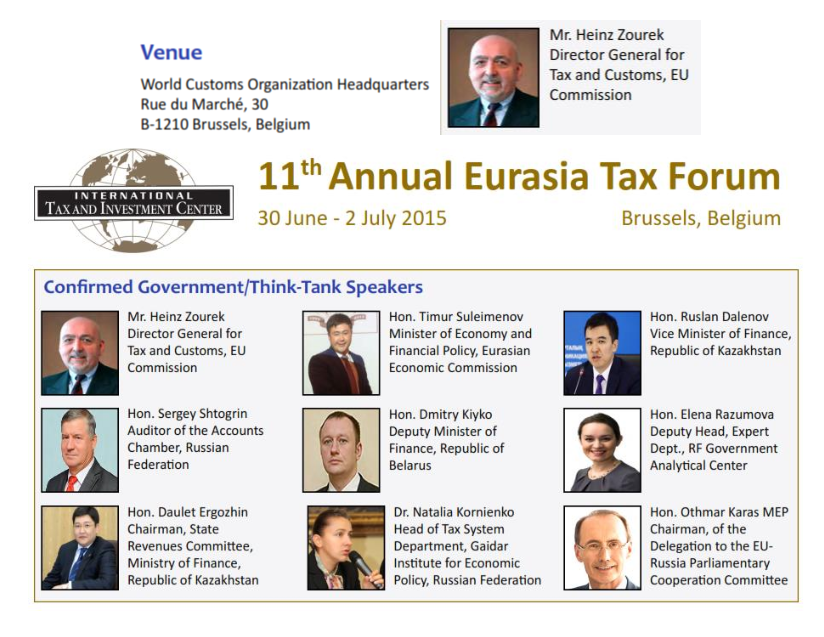
ITIC (International Tax and Investment Center) Raises Alarm to EU Policy Makers About Galloping Illicit Tobacco Trade

http://www.prnewswire.com/news-releases/itic-international-tax-and-investment-center-raises-alarm-to-eu-policy-makers-about-galloping-illicit-tobacco-trade-122712193.html

WASHINGTON, May 30, 2011 /PRNewswire/ —

– EU Member States Losing EUR10 Billion in Tax Revenues Each Year and Facing Uphill Battle to Reverse the Trend

At a meeting today on intellectual property, counterfeiting and piracy in Brussels, hosted by the European Parliament’s Kangaroo Group, http://www.tobaccotactics.org/index.php/Kangaroo_Group

http://tobaccotactics.org/index.php/Othmar_Karas the International Tax and Investment Center (ITIC) warned the European Union (EU) that it faces an uphill battle to stem the flow of illegal cigarettes pouring through its borders and across its Member States.

Illegal cigarettes account for approximately 9% of all cigarettes consumed across the EU, costing governments an estimated EUR10 billion in lost tax revenues each year. Certain countries like Ireland have registered levels of 1 in every 4 cigarettes coming from the black market. But the consequences of illicit trade reach far beyond government revenue loss. “Criminal gangs attracted by the huge profits are selling completely unregulated tobacco products to anybody who will buy them, including kids,” said Daniel Witt, President of ITIC.

Speaking about its recently launched booklet – The Illicit Trade in Tobacco Products and How to Tackle It – ITIC outlined the scope and drivers of illicit trade but also showed how customs, law enforcement, and tax and health officials around the world can address the growing problem.

ITIC pointed to numerous factors that are contributing to illicit trade, highlighting unbalanced fiscal policies, protectionist policy measures and weak enforcement. “It is fundamental that government policy aimed at reducing tobacco consumption assesses any potential impact on aggravating illicit trade,” noted Witt. Measures such as the introduction of standardized (plain) packaging for cigarettes, currently considered under the revision of the Tobacco Product Directive by the EU Commission, should be carefully looked at on the grounds that they could very well worsen the problem, making life easier for counterfeiters to flood EU markets with cheap fakes.

The ITIC publication, which also includes input from the World Customs Organization (WCO), will be widely circulated to policy makers and enforcement authorities around the world with the aim of triggering a much needed comprehensive approach to combating the issue.

Copies of the new booklet, The Illicit Trade in Tobacco Products and How to Tackle It can be obtained (at no cost) by writing Ms. Napolitano or directly from ITIC’s web site: http://www.iticnet.org/Public/PublicDocLanding.aspx?id=41&type=Brussels

About the International Tax and Investment Center

The International Tax and Investment Center (ITIC) is an independent nonprofit research and education foundation with offices in Russia, Azerbaijan, Kazakhstan, Jordan, the Philippines, Ukraine, the United Kingdom and the United States. Organized in 1993, the ITIC serves as a clearinghouse for tax and investment policy information and as a leading knowledge center accessible by key policy makers in the former Soviet Union and other countries in the Middle East, North Africa, Southern Africa, and the Asia Pacific region.

More information on ITIC can be found on its website: http://www.ITICnet.org.

About the Kangaroo Group http://www.tobaccotactics.org/index.php/Kangaroo_Group http://tobaccotactics.org/index.php/Othmar_Karas

The Kangaroo Group is an association of members of the European Parliament, Commission and Council and representatives of industry and academia working to enhance European unity step by step around the pursuit of common projects. The motto of the Kangaroo Group is free movement and security. The Group was set up in the European Parliament in 1979.

The Forum on Intellectual Property, Counterfeiting and Piracy, held in Brussels on May 26, was chaired by The Hon. Bill Newton Dunn, Member of the European Parliament. Other participants included The Hon. Edit Herczog, Member of the European Parliament, and Ms. Edit Horvath, Chief Policy Officer from the Hungarian Tax & Customs Authority representing the Hungarian EU Presidency.

unnamed

The Parliament of the Republic of Moldova approves new tobacco control law

http://www.euro.who.int/en/countries/republic-of-moldova/news/news/2015/05/the-parliament-of-the-republic-of-moldova-approves-new-tobacco-control-law

In the context of World No Tobacco Day 2015, the Parliament of the Republic of Moldova voted today, 29 May 2015, to adopt a series of amendments to different laws directed to strengthen tobacco control. After lengthy debate in the Parliamentary Committee for Social Protection, Health and Family, led by Oxana Domenti, and strong opposition from the tobacco lobby and special interest groups, the new tobacco control law was approved.

For the past 2 years, the Republic of Moldova has made considerable progress in tobacco control, from elaborating and adopting a strong tobacco control law by the Government to securing Parliamentary approval today.

The new law closely follows implementation of the WHO Framework Convention on Tobacco Control and comprises a full ban on smoking in enclosed public spaces and the use of warning labels covering 65% of the front and back of cigarette packages. It also includes a full ban on the advertising and promotion of tobacco products, with the exception of philanthropy, which was replaced by regulations that prohibit advertisements using the trademark designation of tobacco products, the name of the tobacco industry entity and other strategies.

Each year in the Republic of Moldova, smoking causes 5600 deaths and a loss of more than 2000 workers from the national workforce. The Republic of Moldova has 690 000 adult smokers, and 90 000 of today’s youth population will take up smoking in the absence of strong tobacco control measures. Unless action is taken, up to half of all lifetime smokers – almost 390 000 Moldovans – will die early from diseases caused by smoking .

The new law will enforce implementation of these strong tobacco control strategies, lead to significant health improvements in the Moldovan population and provide the opportunity to save more than 40 000 lives each year.