Clear The Air News Tobacco Blog Rotating Header Image

Legislation

No Smoking Area – Smoking Here is an Offence

kashmir_region_2004The Divisional Commisioner of the region of Kashmir is calling on the High Court to take suitable steps to implement the following, in letter and in spirit, the following:

  • Ban on smoking in public places
  • Ban on sale of tobacco products to persons below 18 years of age
  • Ban on sale of tobacco products within 100 yards of any educational institution

The letters can be downloaded here and here.

Parliament of Australia: Inquiry into Plain Tobacco Packaging (Removing Branding from Cigarette Packs) Bill 2009

smoking-kangarooView all submissions received by the Committee as at 5 May 2010 here.

Dear Legco

CBR003027

Legco
Subcommittee on Dutiable Commodities
(Exempted Quantities) (Amendment) Notice 2010

6th May 2010

Dear Sir,

We are aware that Legco is receiving submissions at 16.40 hrs this afternoon on the above
subject and we are unable to attend at short notice. However we wish the following relevant
information to be brought to the attention of the Honourable Subcommittee…

Read the full document here.

Please see the WHO stance on Duty Free tobacco here.

Trademark attorney: Tobacco companies have no case on plain packaging

6a00d83451c2d869e2010534ca6af8970b-800wiLast published: May 5, 2010

Source: Crikey

In response to last week’s plans by the government to restrict cigarette packaging to plain and standardised designs, the cigarette industry has warned that it will protect its intellectual property rights and claim compensation from the government. I saw a figure of $3 billion as a possible amount for that compensation. The government has denied that compensation would be needed. So who has the better case?

In my view, the government has the stronger position. No one is disputing that the government can restrict the appearance of packaging for goods; it already does this. But the government must pay compensation if it takes control over any property, and in this case the cigarette companies are complaining that they are losing some of their intellectual property rights, primarily their trademark and copyright intellectual property of their present cigarette packaging.

The problem the companies will have with this approach is that the new plain packaging will include the trademark, albeit in small-sized black letters in a standard font and position on the packet. Otherwise the consumer will not be able to ask for their preferred cigarettes at the point of sale.

Most trademarks are registered in just this form, as plain words in upper case, and this type of registration covers the word in whatever form it is actually used — irrespective of whether it is in a fancy script or in a special colour or surrounded by graphics and attractive patterns.

For example, the word mark Winfield is Australian trademark registration No.369487 dating from December 18, 1981, and owned by British American Tobacco (BAT).

It is often overlooked that the primary right obtained from trademark registration is a negative right; it is actually the right to prevent other people from (mis)using the trademark. The proprietors may use the mark themselves subject to other laws, but they actually gain from registration the right to take legal action that will stop third parties from using the mark on the same or similar goods.

So, the change to plain packaging will not adversely affect this right. For instance, in the future if someone were to manufacture in Australia Winfield cigarettes in their present packaging for export to other countries, BAT would still be able to take action to prevent this.

The situation with copyright is broadly similar. It basically confers the right to take action against third parties who are copying and misusing the owner’s old packaging artwork and this right is hardly diminished by requiring plain packaging.

About 2900 trademarks are current registered in Australia covering cigarettes, and there are another 180 or so pending applications. But consumers do not see 3000 different brands of cigarettes when they go into a shop. What is happening is that the cigarette companies in many cases are double dipping, and obtaining multiple trademark registrations for each brand they own.

There are 17 trademark registrations and applications including the word Winfield, 22 including Pall Mall, and 11 including Horizon. These registrations include the basic plain word mark — Horizon is registration 203429 dating from 1966, Pall Mall is registration 1062086 dating from 2005. But in addition to the plain version, which protects the mark in whatever appearance it is used, the cigarette companies have also re-registered the mark in a narrower form, including the get-up of the cigarette packaging.

BAT’s TM registrations  Nos.1226909, 1226913, 1226914, and 1226915 (without a colour restriction), all dating from 2008, cover different variations of the Pall Mall packaging:

100503_cigarettes1

It is unlikely that these registrations provide much additional protection over the broader 1062086 registration; perhaps they can help protect the logo, but possibly not, since it is really the presence of the Pall Mall words that make these distinctive, and in any case the ‘915 registration renders the first four redundant as it covers all possible colour variations of the logo.

This profligacy of trademark registrations, in many cases unnecessary from a trademark protection point of view, will inflate any claim to compensation to be made by the cigarette companies. In fact, the large number of trademark registrations of the whole appearance of the packaging in the light of prior registrations of plain word marks is fairly unusual in the trademark arena. I doubt if courts would be impressed by this approach.

An indication of why the government is now moving to enforce plain packaging can be gained from viewing BAT’s registrations Nos.1143366, 1143368, 1143369, 1143371,and 1129286:

100503_cigarettes2

Which provide an indication of the thinking of tobacco companies about where the packaging get-up may be trending, as well as perhaps giving the producers of the Mad Men television series pause for thought about their own intellectual property rights . These trademarks would seem to have a promotional aspect that would help negate the health warning on existing packets of cigarettes, should they be used.

The trademark register is also cluttered with many registrations of cigarette packaging and word marks that are probably no longer being used. For instance, BAT is still maintaining Strand as No.10699 dating from 1911 and Craven as registration No.2933 dating from 1906, which are seemingly no longer being used, though it is interesting imagining smokers asking for Craven brand cigarettes.

Such registrations would probably be invalid, because any registration for a mark that has not been used generally in a continuous period of three years is liable to be removed from the register, if an application to do so is made by a third party.

So for several reasons the intellectual property owned by cigarette companies will not be much affected by the restriction to plain packaging, or is based on redundant registrations directed to packaging variations of plain word marks that will still be being used. The cigarette companies could argue that the value of their goodwill in these redundant trademark registrations has been reduced and damaged, but assigning a value among the plethora of registrations will be difficult, and I believe probably will not much help the companies’ legal position.

Furthermore, the government is likely to be able to show a public benefit from restricting the packaging to a plain and standard form, by reducing the level of smoking in Australian society, as well as in improving its financial situation, because the new standard packaging should reduce smuggling of contraband cigarettes from overseas. Shops stocking traditional-looking packs of cigarettes will now be easy to spot as all Australian cigarettes will be distinctive in appearance, at least until other countries adopt similar procedures.

No doubt there will be more huffing and especially puffing from the cigarette companies about the requirement to use plain packaging, but ultimately, I believe this will prove futile.

Written by Glen Gordon

Call for stricter smoking laws

070102_smokingban_hmed_1220phmediumLast updated: May 4, 2010

Source: Radio & Television Hong Kong

The government has been urged to expand legislation against smokers in non-smoking areas. The call came from a group of Hong Kong University medical students, who collected some 2,000 signatures in support of their campaign.

They said the administration should look into examples in Ireland, where a restaurant owner would also have legal responsibilities if its customers violated smoking bans there. The group said such stronger powers would have a greater deterrent effect against offenders.

New laws can curb smoking

cigarette_butt_tight_cropLast updated: May 3, 2010

Source: South China Morning Post

Our neighbours Down Under took a bold step forward regarding tobacco control last week.

The Australian government announced that starting on July 1, 2012, all tobacco companies will be forced to use plain packaging.

At the same time, the tax on cigarettes rose another 25 per cent from midnight, April 29.

This new legislation is an impressive step forward in helping to cut tobacco consumption and curb tobacco-related deaths.

The Australian government believes that the changes will cut the country’s tobacco consumption by 6 per cent. Here in Hong Kong, we appeal to the SAR government to follow suit. Lung cancer directly attributable to smoking still ranks as the leading form of cancer in Hong Kong, with more than 3,600 related deaths recorded every year. As increasing criticism surrounds Hong Kong concerning rising air pollution, this is a window of opportunity to do something positive in safeguarding the health of Hong Kong people.

By taking more drastic measures like the ones announced in Australia last week, we can work towards reducing tobacco deaths and further minimise the burden of cancer in our community.

Sally Lo, founder and chief executive, Hong Kong Cancer Fund

Tommy Cheung joins the call for HK$24 minimum

minimum_wage-increaseLast updated: April 21, 2010

Source: South China Morning Post

Clear the Air says:

this is from the Liberal Party – can you believe they are interested in the rights of the people , or their rich bosses whom they represent ? The Liberal Party delayed Hong Kong’s anti smoking legislation for 6 long years – how many Hong Kong people died because of that ?

Liberal Party warns of ripple effect of rise in wage level on businesses

Catering industry lawmaker Tommy Cheung Yu-yan – who got into hot water last month for suggesting a minimum wage of HK$20 an hour – has joined Liberal Party colleagues in proposing a rate of HK$24.

Cheung and party chairwoman Miriam Lau Kin-yee said that even at this level business would be severely affected by a “ripple effect” that would push up wages of workers already earning more than the minimum.

The suggestion was put to the Provisional Minimum Wage Commission yesterday along with one from the Hong Kong Confederation of Trade Unions suggesting HK$33.

The Liberal Party estimates that in addition to the 138,200 workers earning less than its suggested minimum, at least 400,000 earning up to HK$33 would also get a pay rise.

“A ripple effect is present anywhere when a minimum wage is introduced,” Lau said, citing the United States and Britain as examples.

“If the wage of a dish washer earning HK$20 per hour is increased to HK$24 per hour, a company also has to increase the wage of a pantry helper who earns HK$23 an hour as well as other workers who earn more than HK$24,” she said after meeting commission members.

“We believe the Provisional Minimum Wage Commission should also assess the impact of the minimum wage on enterprises.”

Liberal Party executive committee member Michael Tien Puk-sun said the wages of various workers would also have to be increased to offer incentives and to distinguish differences in job nature.

The party said its proposed minimum wage was consistent with international levels in terms of the number of workers benefiting and the ratio between the median wage and minimum.

Cheung said that as labour accounted for 30 per cent of costs in the catering industry, it would feel the greatest impact of all industries.

Citing a survey of 49 companies owning 1,867 restaurants with 75,000 workers, he said more than half the city’s restaurants were operating at a loss and pay increases would be a huge burden.

“Setting the rate at no more than HK$24 can forestall the loss of non-technical jobs and a spate of restaurant closures,” he said,

“At the end of the day, we do not want to see businesses shut down and low-skilled workers thrown into the street.”

Cheung dismissed talk that he had bowed to pressure in proposing HK$24 after the outcry that greeted suggestions the wage should be no more than HK$20. A man wearing a pig mask threw a HK$20 note at his feet after he said at a City Forum gathering than any amounts more than that would have a severe impact on Hong Kong’s employment, competitiveness and long-term investment.

After party and business allies distanced themselves from his idea, Cheung apologised on March 24. “I hope to let bygones be bygones,” he said yesterday, adding that the catering industry’s suggestion was made with serious consideration for business operations.

“Is HK$24 per hour enough or not? It is not our concern. What we look at is the influence on restaurants and how to protect the low-skilled workers from losing their jobs,” he said.

The Confederation of Trade Unions also met the Provisional Minimum Wage Commission yesterday and said the statutory minimum wage should be set at no less than HK$33 an hour.

The unions said the impact of such a rate was not as big as many people imagined.

“According to Census and Statistics Department figures, the total labour cost would only be increased by 1.6 per cent and the profit of all enterprises would only be decreased by 0.2 per cent when the minimum wage is set at HK$33 an hour,” the unions said in their proposal submitted to the commission.

“Even for enterprises depending largely on low-income workers, the total labour cost will only be increased by 8.4 per cent.

“We believe enterprises can still shoulder the increase.”

Secretary for Labour and Welfare Matthew Cheung Kin-chung said the Provisional Minimum Wage Commission was still collecting the views of various parties before announcing the minimum wage in July.

“The commission will consider a number of factors including the minimum wage’s impact on the labour market and business environment, Hong Kong’s competitiveness and living standards,” Cheung said.

CFA criticises wording of smoking law

mfile_56_664958_1Last updated: May 1, 2010

Source: Radio & Television Hong Kong

The Court of Final Appeal has criticised the wording of the law governing smoking, saying it is in places “puzzling”. However, the five judges did not call for the legislation to be changed. Rather, they clarified the meaning of the relevant provision.

The judges made the comments in their reasoning for making a judgement over-ruling a lower court decision that smoking inside a restaurant which is enclosed on three sides is not illegal.

The five judges considered the definition in the law that people cannot smoke inside an area which is at least up to 50 percent enclosed on each and every side. They ruled that in the light of context and purpose, there is no ambiguity in meaning – that for an area to be indoors, at least 50 percent of the total area of all sides must be enclosed – irrespective of how the enclosed area is distributed among the various sides.

Abolish duty-free concessions on tobacco products

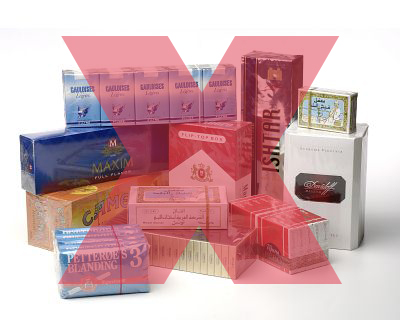
tobacco_packaging_1Dear ALL,

The Financial Secretary, in his 2010-2011 Budget, proposed to abolish duty-free concessions on tobacco products for incoming passengers to Hong Kong as a means to further protect public health.

To implement the budget proposal, the Dutiable Commodities (Exempted Quantities) (Amendment) Notice 2010 was introduced. Under the proposal, all incoming passengers may carry up to 19 cigarettes, or one stick or 25 grammes of cigar (to cater for the varieties of packaging of cigars in the retail market, incoming passengers who have with them more than one cigar will be subject to a ceiling of 25 grammes), or 25 grammes of other manufactured tobacco products. Incoming passengers will be entitled to only any one kind of tobacco product. It is also proposed to remove the 24-hour rule on time spent outside Hong Kong for entitlement of the duty-free concessions on tobacco products that currently applies to Hong Kong identity card holders. This is to avoid frequent travellers between Hong Kong and the Mainland who may have in their possession small amounts of tobacco products for own consumption being caught for not making the necessary declaration in accordance with the law.

A subcommittee was formed to scrutinize the Notice.  It is now inviting public to submit opinions on this Notice by 4 May 2010 (next Tuesday). Being a tobacco control advocate, your support and input to this consultation would be much appreciated.

For details of the submission of views, please kindly visit the link http://www.legco.gov.hk/general/english/sec/invite_s/sc0720100429.htm

http://www.legco.gov.hk/general/chinese/sec/invite_s/sc0720100429.htm

for further information.

Let’s join hands to support a smoke-free Hong Kong.

A Letter to the HK Customs and Excise Department – Anti Tobacco Smuggling Division

writing1Last updated: April 30, 2010

Dear Mr Hui,

Since 70% of Hong Kong seizures last year were genuine cigarette products (40% above the world norm)  it is high time Hong Kong like the EU has punitive fines placed on the manufacturers whose products are seized in Hong Kong – this will immediately deter smuggling by the tobacco companies. Alongside this move tobacco company directors should be charged with conspiracy to commit this smuggling crime, conspiracy to defraud, and for local excise tax evasion.

It is ridiculous for Customs Department to continue to allocate more manpower chasing the smugglers when the fear of going to jail will immediately stop these top end tobacco people from propagating the smuggling.

Kind regards.

James Middleton

www.cleartheair.org.hk

Australian Prime Minister Kevin Rudd lost face with core supporters by giving in to opponents of climate-change legislation. He has won some of it back by taking on Big Tobacco in an unprecedented anti-smoking initiative that will end up in the courts. Australia is to become the first country to ban logos and branding on cigarettes, in line with World Health Organisation guidelines. From 2012 they will have to be sold in plain, standardised packets carrying large, graphic warnings against smoking, with the brand name in small print.

An emissions trading scheme is now off the agenda until 2012 at least. Instead Rudd will campaign for re-election this year on badly needed health reforms. A fight with Big Tobacco fits that strategy. After all, smoking-related diseases kill 15,000 Australians each year and cost more than A$30 billion (HK$215 billion) in health care and lost productivity. To underline that point, the government also raised cigarette taxes from today by 25 per cent, or about A$2 a packet, to directly fund health care.

The tobacco industry vowed a legal challenge to the proposed legislation to defend intellectual property rights. Retailers said the tax rise would hit profits, penalise people who had made legitimate lifestyle choices and encourage a black market in cigarettes.

The latter argument has a familiar ring about it. It prevailed when our government decided not to raise the tobacco tax in the last budget – admittedly after having raised it by a punitive 50 per cent the year before. But health experts and anti-smoking activists still say that, short of banning smoking as a hazardous addictive habit, progressively raising taxes is the most effective deterrent. That is just common sense, whatever the findings of a survey by the Food and Health Bureau on the effect on smoking rates of last year’s tax rise.

Cigarettes remain relatively cheap in Hong Kong. The government is bound to continue raising the tax in the long run as a responsible public health measure. But concerns about smuggling and its effects on retailers’ profits are no excuse for dragging its feet. They are a reason for effective measures against smuggling.