Clear The Air News Tobacco Blog Rotating Header Image

Edmonton Journal: Alberta legislature passes new rules on smoking in cars, use of water pipes

by Keith Gerein of the Edmonton Journal:

The Alberta legislature has passed new tobacco control legislation that will ban smoking in cars carrying children, and prohibit the use of water pipes in public.

The Alberta legislature has passed new tobacco control legislation that will ban smoking in cars carrying children, and prohibit the use of water pipes in public. This is one of the anti-smoking warnings on cigarette packages. (Edmonton Journal/Alberta Federal Government)

The approval of Bill 33 late Wednesday, combined with a separate bill to ban the sale of flavoured tobacco products, gives Alberta some of the most aggressive tobacco-control restrictions in the country, says a leading advocate.

“We are definitely at the forefront in Canada,” said Les Hagen, executive director of Action on Smoking and Health. “Taken together, these two bills will go a long way to prevent tobacco use among youth.”

However, he said a fight still remains on the issue of menthol cigarettes.

Bill 206, which was passed Monday, includes provisions for banning the sale of tobacco with a “characterizing flavour,” such as candy-scented cigars and cigarillos and fruity spit tobacco that appeal to youth. But the exact list of banned products will be set later through government regulation, and Hagen said the tobacco industry is lobbying hard to have menthol cigarettes exempted.

Eric Gagnon, director of corporate affairs for Imperial Tobacco, said his company does not make any “confectionary” style products but believes menthol should be allowed to continue to be sold to Alberta adults.

“We do believe that anything that is overtly confectionary — cherry, bubble gum or fruity flavoured — is appealing to youth and should be banned,” he said. “But menthol has been in the marketplace for decades, it represents a very small percentage of the marketplace, and the research demonstrates that it is consumed by a more senior adult population.

“I think we need to divide these two products completely.”

However, Hagen said the recent Youth Smoking Survey, conducted in 2010-11 by the Propel Centre at the University of Waterloo in Ontario, indicated menthol is now being used by a substantial number of youth smokers in Alberta.

He said it is arguably the worst flavouring of all because it “has a medicinal impact, soothes the throat, opens the airways, and it assists with nicotine absorption into the bloodstream.”

Among the other new rules passed by the legislature is a ban on the use of water pipes or other “tobacco-like” products in bars, restaurants or other public places where smoking is already prohibited. The province has said establishments that feature the pipes, or hookahs, will be given 12 to 18 months to transition before the legislation comes into effect. But an advocacy group called Safe Shisha has warned that as many as 70 businesses may close across the province.

The legislation also makes it illegal to smoke in vehicles when children are present. Some details of enforcement still have to be worked out, but the province has said the law will be complaint-based. Violators will usually get a ticket of $250, though fines of up to $5,000 could be imposed for egregious cases and multiple offences. An exact date for putting the law into force has not yet been determined.

In addition, the bill includes a ban on tobacco sales to minors, making Alberta the last province in Canada to take that step, Hagen said. A federal law already prohibits selling to minors, but is not consistently enforced.

29 Nov 2013
Crikey: Simon Chapman honoured as Skeptic of the Year – a good time to look back on the historic tobacco plain packaging campaign

by Marie McInerney, reporting for Crikey:

It’s an opportune time to publish the recent speech Simon delivered as the 2013 Cunningham Lecture to the Australian Academy of Social Sciences, Australian National University, on: Plain packaging of tobacco products: a case study in radical health policy adoption and the role of advocacy.

A precursor to the book he is writing about the landmark campaign, the speech is packed with sharp insights into how to design and pursue policy change, including how plain packaging even got on the agenda (“I doubt there was anyone in the room who expected that the proposal would have any life other than as an historic but merely “noted” recommendation in a report.)  Simon looks at the role of research and multi-disciplinary academic expertise in informing and supporting policy change, the central role of news media in providing ‘foundational narratives’ over many years, and, of course, the instrumental role of the Health Minister Nicola Roxon, “the real super hero in all this”.

You can watch the speech being delivered here, or read the full transcript below.

(more…)

Understanding the emergence of the tobacco industry’s use of the term tobacco harm reduction in order to inform public health policy

Download (PDF, 240KB)

No place to hide: two pilot studies assessing the effectiveness of adding a health warning to the cigarette stick

http://www.ncbi.nlm.nih.gov/pubmed/24335476

Abstract

OBJECTIVE:

To examine whether health warnings printed onto the cigarette stick would increase intentions to quit.

METHODS:

Two experiments with smokers were conducted. The first study was conducted in Scotland on 88 adult (aged 18 or over) smokers recruited around two university campuses. The second study was conducted on 120 adult (aged 16 or over) smokers recruited around inner city cafes in Greece. Study 1 tested smokers’ ratings of the attractiveness of cigarettes printed with either ‘minutes of life lost’ (minute condition) or ‘toxic constituents’ (toxic condition) against a control cigarette as well as the change in participants’ pre-exposure and postexposure quitting intentions. Study 2 only assessed the effect of the minute condition on smokers’ change in quitting intentions. Analysis of variance and paired-samples t tests were undertaken. Participants in Study 1 were shown a picture of the stimuli, with participants in Study 2 given the actual cigarette to hold.

RESULTS:

The analyses revealed increases in quitting intentions postexposure for the minute condition (mean paired difference=0.68, p<0.001) and the toxic condition (mean paired difference=0.23, p<0.05) in Study 1. Similar findings were found for the minute condition (mean paired difference=0.38, p<0.001) in Study 2.

CONCLUSIONS:

These results suggest that printing a public health warning on the cigarette stick may result in higher intentions to quit smoking. However, many other messages (eg, benefits of quitting, harmful effects of secondhand smoke) which can be printed on the cigarette stick have not been tested in the current studies.

When health policy and empirical evidence collide: the case of cigarette package warning labels and economic consumer surplus

http://www.ncbi.nlm.nih.gov/pubmed/24328661

Abstract

In its graphic warning label regulations on cigarette packages, the Food and Drug Administration severely discounts the benefits of reduced smoking because of the lost “pleasure” smokers experience when they stop smoking; this is quantified as lost “consumer surplus.” Consumer surplus is grounded in rational choice theory. However, empirical evidence from psychological cognitive science and behavioral economics demonstrates that the assumptions of rational choice are inconsistent with complex multidimensional decisions, particularly smoking. Rational choice does not account for the roles of emotions, misperceptions, optimistic bias, regret, and cognitive inefficiency that are germane to smoking, particularly because most smokers begin smoking in their youth. Continued application of a consumer surplus discount will undermine sensible policies to reduce tobacco use and other policies to promote public health.

The Standard: Activists push for 100% tax on tobacco

from Qi Luo, reporting for the Standard:

Anti-smoking lobbyists are urging the government to increase the tobacco tax to at least 75 percent immediately and to 100 percent by the next fiscal year.

The Council on Smoking and Health said the current tax accounts for between 65 and 68 percent of the retail price, which is below the 70 percent recommended by the World Health Organization.

Based on past experiences when tax was raised in the territory, the council estimates that the prevalence of smoking will further drop from 10.7 percent to single digits after one to two years from when the 100 percent tax hike takes effect.

“The tobacco tax was hiked by 50percent and 41.5 percent in 2009 and 2011, respectively. As a result, the incidence of smoking dropped from 12 percent in 2009 to 10.7 percent in 2012,” executive director Vienna Lai Wai-yin said. “A high tobacco tax will push smokers to quit or reduce tobacco consumption, as well as prevent those who plan to start smoking, especially youngsters.”

Lam Tai-hing, professor in the University of Hong Kong’s School of Public Health, said about one in two smokers die of diseases related to their habit.

“We are saving lives. The sooner, the better,” he said.

The tax on an average pack of cigarettes, sold for HK$52 over the counter, is HK$34.

If the proposal to hike the tax to 100percent is accepted by the financial secretary, the retail price for a pack of cigarettes will increase to HK$84. A survey by the School of Public Health found that a majority – 63.5 percent – of the 2,401 respondents supported an increase in tobacco tax.

“Nearly one-third of ex-smokers who quit after 2011 agreed that the tobacco tax increase that year made them more determined to quit,” Lam said.

“More than 31.4 percent of current smokers reduced their daily consumption after the 2011 tax increase.”

The council also called for more resources for tobacco control.

Chairwoman Lisa Lau Man-man said: “COSH wants more smoke-free education and other tobacco control measures, including combating smuggling and enforcement of smoking offenses.”

20 Nov 2013

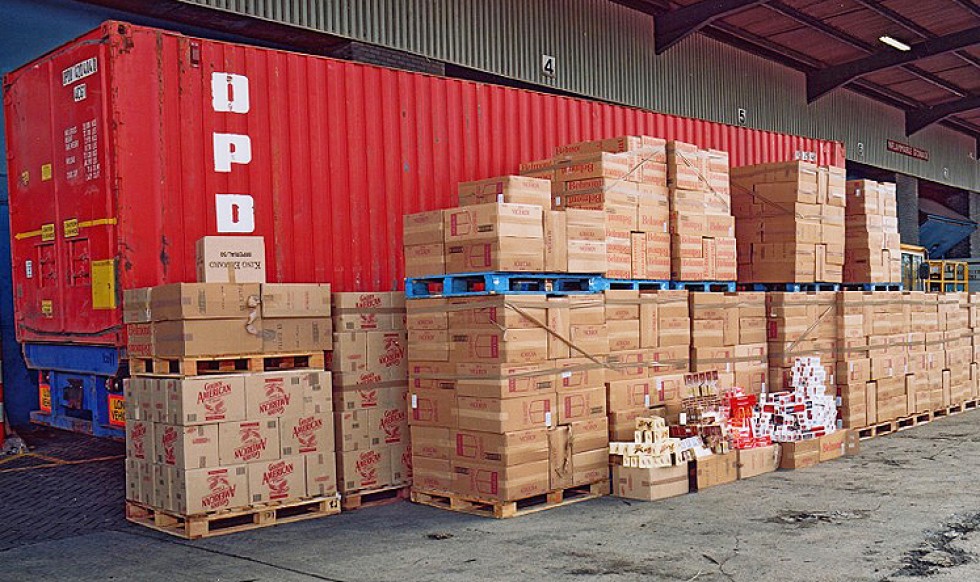
SCMP: Customs seize HK$1.7m worth of illegal cigarettes hidden in fake water heaters

from Clifford Lo of the SCMP:

Customs officers confiscated more than HK$1.7 million worth contraband cigarettes hidden in fake electric water heaters on Friday.

The consignment – the second such seizure in three months – was discovered after officers followed a cross-boundary lorry to a logistic centre in Sheung Shui at about 11am.

The 34-year-old driver was arrested while unloading the goods from the lorry. The vehicle, which arrived from Shenzhen, was registered as carrying metal and nylon products and ceramic tiles.

In the first 10 months of this year, customs have intercepted 22 big smuggling attempts involving at least 500,000 illegal cigarettes in each case. (SCMP)

(more…)

SCMP Letters: Primary students can get across anti-smoking message to parents

Letter from Heidi Lau, executive director, Life Education Activity Programme, published in the SCMP:

Life Education Activity Programme (LEAP) concurs with the undersecretary for food and health, Professor Sophia Chan Siu-chee, in advocating that it is important to stop adults around children from smoking in order to prevent children from picking up the habit (“More young children trying smoking according to new survey”, November 9).

Research has shown that children are likely to imitate their parents’ behaviour – healthy and unhealthy. It is said that compared to young people who have not seen their parents drunk, teenagers who have are more than twice as likely to get themselves drunk in a typical month. And those teens who get drunk regularly are three times more likely to use cannabis and smoke cigarettes.

To help kids build self-esteem and stay away from drugs, including cigarettes and alcohol, parents can do many things, and most important of all is to be a good role model for their children.

LEAP, founded in 1994, is the leading drug prevention education organisation in Hong Kong, helping young people establish a healthy lifestyle and become aware of the dangers of drugs and substance abuse. Since 2011, LEAP has been working with the Tobacco Control Office, which has helped enable LEAP to offer its well-established smoking prevention programmes to our primary and secondary students for free.

LEAP’s anti-smoking programmes aim at increasing students’ understanding of the dangers of smoking and the marketing strategies of tobacco companies, as well as helping them develop effective skills to deal with peer pressure.

Professor Chan also acknowledged that children “are very powerful. Many people quit smoking for their children, and a lot of elderly smokers quit for their grandchildren.”

Recognising how children could influence their parents or families, primary students participating in LEAP’s smoking prevention programmes are invited to bring the anti-smoking message home and spread it further to their families and friends.

The feedback from parents has been very positive – more than 80 per cent of the parents expressed willingness to establish a smoke-free family – proving that children could also be very powerful in affecting family habits.

LEAP is one of the several agencies in Hong Kong that offers preventive education to young people and their families. We are encouraged by the drop in the smoking population and would like to applaud the Tobacco Control Office’s plan to continue to strengthen its educational and promotion efforts on the tobacco control front.

18 Nov 2013

Scoop NZ: Quitting tobacco would reduce poverty

from a press release by New Zealand’s Smokefree Coalition, printed in Scoop:

This New Year’s increase will be the second of four tobacco tax increases taking effect each 1 January, in a Government initiative to bring the cost of the average pack of cigarettes to more than $20 by 2016.

Members of the Smokefree Coalition hope the increase in price brought about by taxation will nudge New Zealanders that still smoke, to give up.

“The average pack-a-day smoker stands to save more than $7000 a year if they give up smoking,” said Dr Kyle Perrin, Medical Director for the Asthma Foundation.

“Tobacco is part of the reason some New Zealanders are falling into poverty. We hope the price increase will help them make the smart decision, to save their money for the more important things in life.”

Smoking prevalence increases with increasing deprivation and is three times more common amongst people of low socioeconomic status. People from deprived areas are four times more likely to die from smoking. Among the members of the Smokefree Coalition there is concern that smokers from lower socio-economic backgrounds tend to pay the price and let some of the basic necessities slide. In response to this, there is a concerted push by cessation service providers such as Quitline, Smokechange, Aukati Kai Papa and Pacific Quit Services, to promote nicotine replacement therapy and coaching to quit in lower socio-demographic communities.

“There is free and accessible help to quit and if adults in a family do quit they will have more money to spend on their children,” Paula Snowden, Chief Executive of Quitline, said.

“Smoking is highly addictive and quitting is hard when you are under stress, but it can be done and thousands do quit successfully, with help and support, every year. A smokefree family have more money and better health.”

Tax increases are the most effective measure to stimulate people to quit, according to a recent Lancet report, and New Zealand’s own prevalence monitoring. Smokefree Coalition urge New Zealanders that still smoke to engage with their services for a greater chance of successfully quitting, for the good of their children and for the good of our country.

“Our services improve a person’s chances of quitting successfully by 5 times than if they made the attempt cold turkey. We hope we’re inundated with callers this January,” said Snowden.

In 2011 the Government agreed to the goal of New Zealand becoming essentially Smokefree by 2025. The current smoking prevalence rate in New Zealand is 15 percent.

(more…)

Review of the PMI funded ‘Project Star’ report

Download (PDF, 1.25MB)