Clear The Air News Tobacco Blog Rotating Header Image

Ban on smokeless cigarettes kicks in

http://www.straitstimes.com/singapore/ban-on-smokeless-cigarettes-kicks-in

Smokeless cigarettes have officially been banned island-wide.

The ban, which comes into effect today, covers emerging tobacco products “currently not available in Singapore”, said the Ministry of Health (MOH) in a statement yesterday.

Other products that were also banned include dissolvable tobacco and products containing tobacco or nicotine that may be applied topically, injected or implanted in the body.

It will also include any tobacco or nicotine-containing substances meant to be used in e-cigarettes.

The ban was first announced in June this year and is part of MOH’s “ongoing efforts to protect the public against the known and potential harms of emerging tobacco products”.

These products join e-cigarettes, which have already been banned under the Tobacco Act.

The new ban is to “ensure that they do not gain a foothold or become entrenched in the Singapore market, which could stimulate demand for and increase the prevalence of tobacco consumption”, said MOH.

The ban that comes into effect today is part of a two-phase effort to bar such products from taking root in Singapore.

The second phase of the ban, which covers products already in the local market, will kick in from August next year.

The products that will be banned include nasal and oral snuff, which are smokeless forms of tobacco that are inhaled and chewed respectively; gutkha, which is a mix of tobacco, betel nut and catechu (herb) with lime, menthol, sandal oil, spice and flavourings; and khaini and zarda, which are flavoured chewing tobaccos.

MOH said this approach will give retailers time to “adjust their operating models away from such products, and deplete their existing stocks”.

Smokers who flout the ban can be fined up to S$10,000 or jailed up to six months or both. The maximum penalties will double if they are convicted for a second time.

Wrong for governments to ban vaping, smokers say in survey

http://www.therakyatpost.com/news/2015/12/15/wrong-for-governments-to-ban-vaping-smokers-say-in-survey/

The majority of smokers in Asia believe their governments would be wrong to ban electronic cigarettes if the devices were scientifically proven to be less harmful than tobacco, according to a recent survey.

The survey, which was carried out by regional consumer advocacy group factasia.org, found that 75% of those polled were in favour of the government not preventing or delaying the introduction of less harmful alternatives.

The poll, which was recently conducted by a global market research company Ipsos, featured hundreds of respondents from Australia, Hong Kong, Macau, Malaysia, New Zealand, Singapore and Taiwan.

Factasia.org’s co-founder John Boley said the respondents were also asked whether governments should encourage adult smokers to switch to less harmful alternatives and also ensure that they were not used by young people.

“There was very strong agreement,” he said during the “Harm Reduction in Asia – Developing a Regulatory Framework for E-cigarettes Symposium” here last week.

The symposium was organised by Factasia.org in the wake of the intense debate over the harm reduction potential of e-cigarettes as a less harmful alternative for adult smokers.

The group’s initiative comes at a time when the Hong Kong and Macau governments are considering completely banning the sales of e-cigarettes.

Authorities in Malaysia have already announced they will regulate rather than ban and proposals are expected to be reviewed and voted on by legislators in 2016.

Boley said 82% of the respondents felt that governments should encourage smokers to switch to less harmful alternatives.

“Incidentally, we also asked whether they thought they were okay with using e-cigarettes in their own country.

“There is an extraordinary degree of uncertainty as more of a third of the people polled across the region, or 36% of people in Hong Kong, do not know whether these things were legal or not.”

Boley also said 71% of the respondents agreed that e-cigarettes were a positive alternative to today’s conventional cigarettes while 70% of those interviewed would consider switching to e-cigarettes if they were legal, met quality and safety standards, and were readily available.

In August, Public Health England (PHE), the expert body that advises on public health in the United Kingdom, concluded that e-cigarettes were 95% less harmful to health than tobacco.

Meanwhile, Nav Lalji, founder of the Hong Kong-based Asian Vape Association, said he had been seeing more adult smokers switching to “vaping” in order to reduce or completely quit their tobacco dependence.

“We are seeing a rapid increase in adult smokers switching to vape products throughout Hong Kong.

“Most users are now ex-smokers who wished to quit but found traditional therapies, such as nicotine patches and chewing gums, ineffective.

“A lot of users strongly oppose a ban on e-cigarettes because this means that they will be forced to go back to using tobacco cigarettes, which ironically are not banned.”

He said that vaping was the most successful alternative to tobacco cigarettes due to its ability to replicate the act of smoking.

THAILAND: PHILIP MORRIS MOVES TO BLOCK NEW LAW

http://tobaccocontrol.bmj.com/content/24/4/316.full

ASH Thailand has alleged that Philip Morris International has written to the country’s Ministry of Public Health in an effort to prevent a new law on tobacco control being passed. The law was due to be fast-tracked earlier this year following delays the public health minister reportedly blamed on the agriculture and finance ministries. It has since been further delayed amidst accusations of tobacco industry lobbying.

If passed, the new law will increase the legal age for purchasing cigarettes from 18 to 20, tighten advertising and marketing bans—including on social media—and prohibit tobacco industry corporate social responsibility initiatives. According to ASH Thailand Secretary General Prakit Watheesathokkij, PMI’s letter argued that Thailand’s existing tobacco control laws are sufficient for educating people about the harms of smoking and preventing uptake.

The tobacco industry is up against a formidable and very creative foe in Thailand, which has a long history of strong tobacco control action, with both ASH Thailand and the Thai Health Promotion Foundation providing leadership in the Southeast Asian region. The Thai Health Promotion Foundation’s latest campaign uses dead smokers’ lungs to send a direct message to smokers—literally.

The Message From The Lungs opens with blank ink dispersing into water and a paint brush making a bold black stroke on canvas, with the words: “This is not ordinary ink. Because it was the life’s work of a man. A man who spent 50 years of his life to make every drop of it…by smoking every day”.

It goes on to explain how Thai Health teamed up with the Faculty of Medicine at Chulalongkorn University to make ink extracted from the tar in lungs donated by smokers. The ink was then bottled and used to create artwork for ads. Samples were also distributed in public spaces as part of exhibitions to convince people to quit.

According to Thai Health, the campaign has resulted in a five-fold increase in quit smoking program participation.

United Nations agency gives EU a tobacco warning

http://www.politico.eu/article/united-nations-eu-tobacco-warning-smuggling-health-lobbying/

Top official tells Commission to steer clear of the industry as it works on new smuggling controls.

The United Nations public health agency in charge of tobacco control has warned EU policymakers to keep their distance from industry as they consider reforms to fight cigarette smuggling.

The head of the World Health Organization’s Framework Convention on Tobacco Control secretariat, Vera Da Costa e Silva, wrote senior European Commission officials earlier this month, saying the EU’s close working relationship with tobacco companies to fight cigarette smuggling may violate Europe’s international commitments.

Citing a recent report in POLITICO, Costa e Silva said the “continuation of an illicit trade agreement with a major tobacco company” on the part of the Commission could be in contravention of international commitments, which state that obligations to clamp down on smuggling “shall not be delegated to the tobacco industry.”

One of the letters, addressed to Commission Vice President Kristalina Georgieva and Health and Food Safety Commissioner Vytenis Andriukaitis, points to growing concern over the Commission’s position on two key reform areas, in which the Commission is considering working closely with the world’s four largest tobacco companies.

The first area of concern is the anti-smuggling agreements which the Commission and EU national governments signed with tobacco producers Philip Morris, Japan Tobacco International, British American Tobacco and Imperial Tobacco Limited between 2004 and 2010.

The agreements are legally binding, enforceable anti-fraud deals involving EU and national counterfeit investigators and have been used as a way to compel tobacco companies to take responsibility for genuine tobacco products that end up on EU black markets, avoiding tax. The Philip Morris agreements expire in 2016 and Georgieva is now deciding whether to renew them.

In another letter, Costa e Silva raised concern about POLITICO’s revelations that anti-smuggling officials within the European anti-fraud office OLAF are both in favor of the Philip Morris deal being renewed and of a controversial packet-tracing technology being promoted by a consortium of tobacco companies.

“I have raised concerns regarding these matters with both [the directorate general for health and food safety] and OLAF,” Costa e Silva wrote, adding that OLAF investigators had expressed to POLITICO a preference for a “track and trace” technology being promoted by tobacco companies.

“I believe this to be of some importance, especially in light of the future membership of OLAF in the Panel of Experts on the Protocol,” Costa e Silva said.

Asked about the letters from Costa e Silva, a Commission official said: “As we said on numerous occasions, there are no negotiations with PMI, or any other companies about the ‘track and tracing’ in the tobacco agreement.”

The European Union is a signatory to the World Health Organization’s Framework Convention on Tobacco Control, an international treaty which came into force in 2005.

Under the convention’s framework, governments around the world are now considering an additional protocol, signed in 2012, which targets the illicit trade of tobacco products. That protocol must now be ratified and accepted by the 53 states and the European Union that have signed it.

The text of the protocol requires signatories to avoid outsourcing enforcement requirements to the tobacco industry and commits competent authorities to “interact with the tobacco industry and those representing the interests of the tobacco industry only to the extent strictly necessary” to implement the track and trace requirements.

The Commission is considering how best to balance its own “track and trace” provisions under the EU’s 2012 revised Tobacco Products Directive and the requirements of the World Health Organization protocol.

Under the directive, the EU will be required by 2019 to “ensure that all unit package of tobacco products are marked with a unique identifier” which will be “irremovably printed or affixed” to cigarette packets. The Commission is preparing a second feasibility study to examine which type of technology it should recommend EU member states employ.

The tobacco companies are lobbying vigorously for the adoption of their in-house technology, called Codentify. However, other packaging and printing companies are also in the running, including the Swiss-based Sicpa, a high-tech printing company which provides package tracking technology in a number of countries.

The European Carton Makers Association is also watching the process keenly, with a number of its members preparing to counter bids of both SICPA and Codentify if and when public tenders are issued.

‘Popcorn Lung’ disease claim linked to vaping exaggerated, says cardiologist

http://www.therakyatpost.com/news/2015/12/13/popcorn-lung-disease-claim-linked-to-vaping-exaggerated-says-cardiologist/

A recent research finding which suggested that e-cigarette usage could lead users to develop the chronic respiratory condition known as “Popcorn Lung” disease has been blown out of proportion, says a leading cardiologist.

Dr Konstantinos Farsalinos, of the University of Patras in Greece, said the recent finding was exaggerated as the report on the matter failed to mention that the chemicals that caused bronchiolitis obliterans, were also present in tobacco cigarette smoke and in larger quantities, too.

Dr Farsalinos was referring to a recent publication in the journal Environmental Health Perspectives by researchers from the Harvard T.H. Chan School of Public Health who evaluated the presence of diacetyl, acetyl propionyl and acetoin in 51 cigarette-like products of different flavours.

The researchers, he pointed out, found at least one of the chemicals in 92% of the samples, with 76% containing diacetyl and recommend urgent action to evaluate the extent of diacetyl exposure from e-cigarettes.

“We did that same study last year and they used our example.

“We found higher levels last year than what they found and those ‘high’ levels were 100 times lower than what was present in tobacco cigarette smoke, so they created, again, this media frenzy,” he said.

Dr Farsalinos said this when met on the sidelines of the “Harm Reduction in Asia – Developing a Regulatory Framework for E-cigarettes Symposium” here on Thursday.

The symposium was organised by regional consumer advocacy group, Factasia.org, in wake of the intense debate over the harm reduction potential of e-cigarettes as a less harmful alternative for adult smokers.

The group’s initiative comes at a time when the Hong Kong and Macau governments are considering completely banning the sales of e-cigarettes, with authorities in Malaysia announcing they will regulate rather than ban, and as proposals are expected to be reviewed and voted on by legislators in 2016.

Dr Farsalinos also said there had yet to be a single case of e-cigarette users who had developed the disease, which causes inflammation and scarring to the lungs and constricts breathing, from prolonged use of the device, although it was said that 75% of the vaping liquid refills contained the chemicals involved.

In response to the Harvard study, Dr Farsalinos, in his blogsite, said the article had created false impressions and exaggerated the potential risk from diacetyl and acetyl propionyl exposure through e-cigarettes.

“They failed to mention that these chemicals are present in tobacco cigarette smoke and violated a classical toxicological principle that the amount determines the toxicity and the risk.

“Whether you are healthy or not, smoking will be a much stronger risk factor for health damage compared to any exposure coming from e-cigarettes, at least at the average levels found in our study and the new study,” he wrote.

However, he said he was a strong supporter of removing diacetyl and acetyl propionyl from e-cigarettes.

“Smokers need to be informed about the risk from continuing smoking versus a risk coming from use of diacetyl containing e-liquids.

“We should not forget that the risk of discouraging smokers from using e-cigarettes as a smoking cessation tool is higher than the risk of being exposed to diacetyl and acetyl propionyl at the average levels found in this study,” he said.

Dutch Ban Vaping For Under 18s, Say More Harmful Than Thought

http://www.medicaldaily.com/dutch-ban-vaping-under-18s-say-more-harmful-thought-365102

THE HAGUE (Reuters) – Electronic cigarettes and water pipes will be banned in the Netherlands for children under 18 from next year, the government said, after finding that the devices were more damaging to health than expected.

E-cigarettes, which electrically vaporize a nicotine-infused solution, are defended by their proponents as a healthier alternative to conventional cigarettes, but the government said its studies showed they were still harmful.

“With this ban I want to protect young people from the damage e-cigarettes cause,” said health state secretary Martin Van Rijn in a statement. “I also want to avoid young people thinking that these e-cigarettes in hip colors are normal.”

The government said that studies carried out by the Dutch food safety and public health institutes had shown that e-cigarettes were “more harmful than expected” to users’ health.

A recent U.S. study showed that teens and young adults who “vape” are more likely to graduate to smoking combustible cigarettes than those who do not.

The market for e-cigarettes is growing fast around the world as conventional smoking declines in response to massive public health campaigns and high sin taxes imposed on the practice.

Tobacco companies, including BAT, Philip Morris, Imperial Tobacco and Japan Tobacco, are all jostling for position in the emerging vaping market, which could top $7 billion in size this year.

The Netherlands will ban advertising of the devices when the new law comes into force in May 2016. E-cigarettes will be subject to new safety requirements and their packaging will have to carry health warnings.

The Netherlands, known for its relaxed attitude towards the consumption of soft drugs, is one of few countries left in Europe where it is still permitted to smoke indoors in certain bars.

(Reporting By Anthony Deutsch, writing by Thomas Escritt, editing by Jeremy Gaunt)

Tobacco firms challenge packaging law

http://www.bqlive.co.uk/2015/12/11/tobacco-giants-challenge-new-packaging-law/

Some of the world’s largest Tobacco firms have gone to the High Court to challenge the lawfulness of the government’s new packaging rules.

The case has been brought by four of the world’s biggest firms against regulations which come into force in May next year banning companies from using any logos or branding on packets of tobacco products.

Mr Justice Green, sitting in London, is being asked to rule on the legality of the new “standardised packaging” regulations in a judicial review action by Philip Morris International, British American Tobacco, Imperial Tobacco and Japan Tobacco International.

The challenge is being contested by Heath Secretary Jeremy Hunt, who argues that the regulations are lawful.

At the start of an estimated six-day case, David Henderson QC, for Japan Tobacco International (JTI) said the companies were “entitled to know” whether the regulations “are lawful or not.”

He told a packed court: “The claimants manufacture products which are lawful, which contribute approximately £10bn per year in excise duty alone for the UK exchequer, which are used by some 19% of the adult population, and which the secretary of state … has never sought to ban.”

Anderson, referring to written legal submissions before the court on behalf of the secretary of state, said he was “quite wrong when he says that we are trying to protect our ability to market unencumbered by legitimate legislation.”

The QC submitted that “on the contrary” the industry was “regulated in a way almost unprecedented in any other field.”

At the heart of the case are the Standardised Packaging of Tobacco Products Regulations 2015, which the companies argue will destroy their highly valuable property rights and render products indistinguishable from each other.

Under the regulations any part of tobacco packaging not covered by the health warning carried on it must be a dark brown or green colour, and brand names must be in small, non-distinctive lettering.

The government argues that the new measure will discourage more people from smoking.

As well as hearing arguments from lawyers for each of the companies and the Health Secretary, the judge will hear submissions from campaigning public health charity Action on Smoking and Health (Ash), which says it “works to eliminate the harm caused by tobacco.”

The firms are putting forward a number of grounds of challenge, including a claim that the regulations violate a number of UK and EU laws, and that they are “disproportionate.”

In written submissions to the judge, Philip Morris International (PMI) argues that the regulations are “disproportionate and so must be quashed.”

PMI QC Marie Demetriou said the defendant (the health secretary) has “failed to demonstrate” that the regulations are suitable or appropriate to meet the objective of “improving public health by reducing smoking” because “it has failed to establish that the regulations will cause a material decrease in smoking rather than an increase”.

PMI further submits that the health secretary has failed to demonstrate that the regulations “are necessary in that the same public health objective cannot be achieved through a less restrictive means, namely taxation.”

Demetriou said: “The defendant has failed to demonstrate that the regulations strike a fair balance between their public interest objectives and the interests of the claimants, given that the regulations will substantially interfere with the claimants’ fundamental rights and freedoms, and destroy their valuable, and often very long-standing, property rights.”

James Eadie QC, representing the health secretary, said in written submissions that the companies manufacture and sell tobacco products “which are the only legal consumer products in the world that cause half of their long-term users to die prematurely.”

He said: “At the heart of the claimants’ case is the assertion that the regulations will not be effective in achieving their public health objectives.

“In short, according to the claimants, standardised packaging will not reduce the appeal of smoking and will not achieve a reduction in tobacco consumption.

“To the contrary, standardised packaging is likely to increase tobacco consumption, and have other adverse consequences such as an increase in illicit trade in tobacco.”

Eadie added: “The secretary of state’s case is that none of the grounds of challenge are made out and the regulations are lawful.

“The claimants’ attack on the proportionality of the regulations is without substance.”

The QC said that “independent and systematic reviews of the evidence” concluded that branded packaging plays an important role in encouraging young people to smoke, and that “standardised packaging is highly likely to reduce both uptake and prevalence of smoking, and thus will have a positive impact on public health.”

He argued that if the tobacco industry “is prevented from using packaging to promote its products to consumers or potential consumers, the appeal of cigarettes is likely to diminish, with inevitable reducing effects on smoking itself.”

Smoking Fact: Nicotine Is MORE Addictive Than Cocaine, Morphine, Heroin Or Alcohol

Smoking Fact: Nicotine Is MORE Addictive Than Cocaine, Morphine, Heroin Or Alcohol – Affecting BOTH Sides Of Your Brain
right-left-smoking-brain

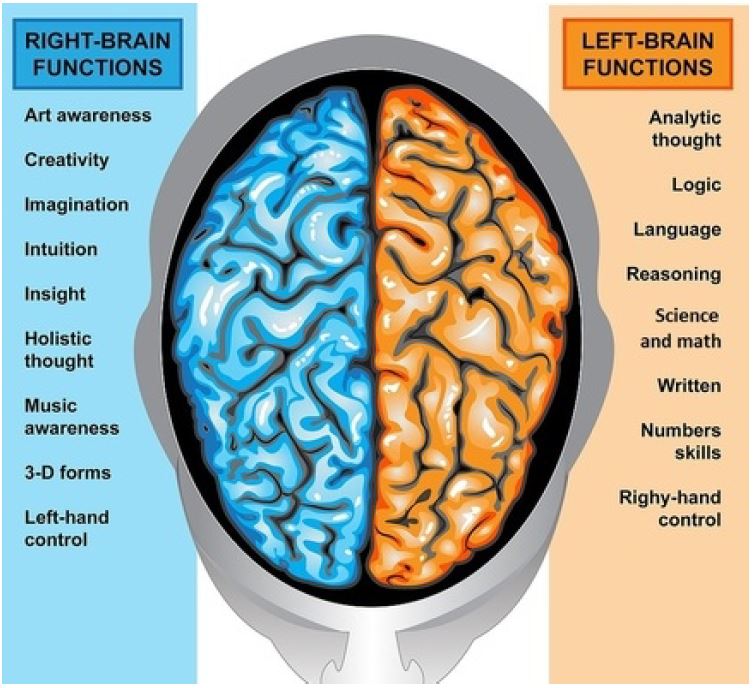
On the right side of your brain, you’ve got the ability and functions for art, creativity, imagination, intuition, insight, holistic thoughts, music awareness, and of course, left hand control. Then, on the left side of your brain, you’ve got the abilities and functions to develop analytic thought, logic, reasoning, language, science and math, writing, and of course, right hand control. Which hand do you smoke with? Drive with? Brush your teeth with? Which side controls your emotions about life, and very importantly, which side will give you the drive and willpower to quit smoking nicotine? It’s possibly the most addictive drug on the planet as far as your brain is concerned. Let’s find out why.

Reward Activity via Synapses and Dopamine Researchers at the University of Chicago found that the nicotine in cigarettes doesn’t just stimulate the brain’s reward system, but alters the BALANCE OF INPUTS from two kinds of NEURONS that regulate reward system ACTIVITY which makes the pleasure of smoking last longer.

Research from 2003 on “Dopaminergic Neurons”

Sure, scientists have known for years that hard core drugs attach to the core neurons of the brain’s reward system in order to reinforce behaviors, but those same “behaviors” can essentially save your life, like drinking water when you’re thirsty, or eating dark organic chocolate when you’re depressed. In your brain, in your VTA (ventral tegmental area), you have reward system neurons (dopaminergic) that trigger the release of dopamine in another nearby region of your brain. Nicotine actually ATTACHES to these neurons and they increase their ACTIVITY. This floods your nucleus accumbens (NAc). That’s when you feel the pleasure and your brain creates the DISPOSITION for that situation, whether it’s drinking water, eating chocolate or lighting up a smoke. That’s why addictions can be good or bad. You could actually be addicted to eating right, exercising and meditating, if you reinforce positive feelings with organic supplements, Superfoods and clear thinking. Think about it.

The research also revealed that nicotine attachment only stimulates the DA neurons for a few minutes, while dopamine levels in the nucleus remained elevated for MUCH LONGER. So when someone tries to quit smoking, their brain will be searching for those rewards and for extended periods of time throughout the day, unless they can find some other way to replace and replenish their nutrient base and the right foods that stimulate dopamine production, like organic cabbage, mucuna pruriens (legume supplement also called dopabean), kale, spinach, goji berries, maca, to name a few.

Experiment: Scientists exposed VTA cells in rats to nicotine for 10 minutes How long does the average person take to smoke a cigarette? About ten minutes.

How long does it take ammonia-treated nicotine, which is in virtually all commercial and domestic cigarettes, to reach the human brain? About three seconds. Scientists found that when they measured electrical properties of the brain tissue of rats exposed to nicotine, BOTH “pacemaker” neurons were affected– the GABA producing cells and glutamate producing cells–where in the latter the brief nicotine application induced a condition known as LONG-TERM POTENTIATION. This explains why the brain activity occurs at a high-level for an extended period of time, beyond the nicotine-attachment phase, when GABA transmission decreases.

Now think about this, how long does the nicotine last for a smoker? That depends on the physiology of the person, the brand of cigarette (varying nicotine potency), and how they smoke it–whether quick short tugs or long, drawn-out drags. Most people have NO CLUE that commercial cigarettes register off the charts for average nicotine potency, at over 100mg per “serving.” You thought it was 10 – 20 milligrams, didn’t you? Or maybe 35? Nope. The nicotine has been free-based, like crack from cocaine, into a vapor form that reaches the heart AND both sides of your brain within three seconds and lasts up to about 20 or 30 minutes. A two-pack-a-day smoker can maintain nicotine and artificial dopamine boosting feelings all day, but the health trade-off means eventually their body will stop producing dopamine naturally and rely 100% on cigarettes for their reward system neurons to fire long enough for them to enjoy anything at all. Sound familiar?

Excitatory signals promote addiction for the brain’s reward system Dr. McGehee, the lead researcher testing nicotine effects on rat brains, comes to this conclusion:

“This suggests that in humans a relatively short nicotine exposure, even for someone who has never smoked before, can cause long-lasting changes in excitatory neurotransmission. It may be an important early step in the process that results in addiction.” … “The combination of effects–increasing dopamine release and decreasing the inhibitory [GABA] response–results in an amplification of the rewarding properties of nicotine” … “It would be difficult to design a better drug to promote addiction.”

Nicotine is MORE addictive than heroin, because it affects BOTH sides of your brain–and it’s why you haven’t quit, yet Nicotine, therefore, has a combination effect of INCREASING dopamine release while DECREASING inhibitory GABA response. The artificially-induced reward of nicotine is therefore amplified as is the addiction, and THAT is why nicotine is now considered the most addicting drug in the world. It’s not cocaine or heroin or morphine or viagra or xanax or oxycodone or percocet, it’s nicotine. You’re on a drug-induced emotional roller coaster manipulated by cigarette manufacturers to make you their customer for life. It’s affecting your motivation, creativity, deep thinking, attentiveness, learning, and relaxation, and in the worst of ways.

The brain-effect differences between nicotine, cocaine, heroin, morphine …

Dopamine is essential for survival as it is involved in so many functions including motivation, learning and memorization, since the beginning of time. Dopamine is a key element that identifies natural rewards and is involved in the UNCONSCIOUS memorizing of the signs associated with these rewards. Cocaine is different than nicotine in that cocaine increases the dopamine in the synapses. Ecstasy (a powerful stimulant and hallucinogen) increases serotonin. Alcohol blocks the natural neuromediator (NMDA) receptors. Morphine binds to receptors for endorphin (the brain’s natural morphine production). Nicotine binds to the receptors for what is called acetylcholine.

Nicotine causes Desensitization

Nicotine is lying to you. It’s faking you out. It’s tricking your brain – and both sides at that, into believing a cigarette is the only way you can feel the way you feel during and after smoking one. Their is no side of your brain unaffected that can come rescue YOU from the vicious cycle, so you’ll have to physically “break it.” The nicotine in tobacco imitates the action of a natural neurotransmitter called acetylcholine, and so it binds to that type of receptor, now identified as the nicotine receptor. The ion channel opens for a few milliseconds and allows sodium ions to enter the neuron, depolarizing the membrane and “exciting” the cell, then the channel closes again, and the receptor becomes disabled, unresponsive to ANY neurotransmitters whatsoever. That’s the state of desensitization that is being ARTIFICIALLY PROLONGUED by the chronic, perpetual habit of smoking cigarettes.

Are you wondering now about your motivation, sex drive, attitude, senseless fears, senseless worrying, sleepless nights, high blood pressure, depression, anxiety and loss of drive? The experience of cigarette nicotine reduces more and more over time as you build up tolerance and experience reduced pleasure from it. What now? Quit smoking and do it without medication or nicotine replacement programs. When your receptors become functional again, within days, you will replace any cravings with Superfoods that naturally raise dopamine and serotonin levels.

Bottom Line: Your two-sided brain needs the right food and herbal supplements right now. It’s time to exit nicotine and enter the health enthusiasts world. Become one of us starting now. Quit cigarettes and do it naturally.

Flavouring chemical in e-cigarettes linked to severe respiratory disease

Diacetyl among three harmful compounds found in over 75 per cent of flavoured electronic cigarettes; in other research, male hormone gives women a better sense of direction

Diacetyl, a flavouring chemical linked to cases of severe respiratory disease, was found in more than 75 per cent of flavoured electronic cigarettes and refill liquids tested by researchers at the Harvard T.H. Chan School of Public Health. Two other potentially harmful related compounds were also found in many of the tested flavours, which included varieties with potential appeal to young people such as Cotton Candy, Fruit Squirts, and Cupcake. For more than a decade, inhaling diacetyl has been linked with the debilitating respiratory disease bronchiolitis obliterans, colloquially termed “popcorn lung” because it first appeared in workers who inhaled artificial butter flavour in microwave-popcorn processing facilities. The researchers tested 51 types of flavoured e-cigarettes and liquids sold by leading brands for the presence of diacetyl, acetoin, and 2,3-pentanedione, two related flavouring compounds that may pose a respiratory hazard in the workplace. Each e-cigarette was inserted into a sealed chamber attached to a lab-built device that drew air through the e-cigarette for eight seconds at a time with a resting period of 15 or 30 seconds between each draw. The air stream was then analysed. At least one of the three chemicals was detected in 47 of the 51 flavours tested. Diacetyl was detected above the laboratory limit of detection in 39 of the flavours tested.

www.scmp.com/lifestyle/health-beauty/article/1889273/flavouring-chemical-e-cigarettes-linked-severe-respiratory?cx_tag=recommend_desktop

The data on plain cigarette packaging that tobacco companies don’t want you to see

http://finance.yahoo.com/news/data-plain-cigarette-packaging-tobacco-162940466.html

Four of the world’s largest tobacco companies are taking on the UK’s decision to require plain packaging for cigarettes, starting in May next year. The outcome of the six-day hearing that starts today (Dec. 10) and is likely to influence similar plans in more than 20 countries.

Big tobacco will make two main arguments: that forcing cigarettes to be sold in plain packages infringes on companies’ intellectual property rights; and that the change won’t lead to a reduction in smoking. On both counts, the UK government should have a robust counter argument.

Plain-packaging rules generally require green or brown boxes without any designs, apart from health warnings and the brand’s name in a plain font. Tobacco companies will struggle to convince the court that this infringes on their intellectual property. British law considers package designs and logos as trademarks, which give firms “the negative right to prevent others from exploiting their brand” explains Enrico Bonadio, a lecturer in law at City University. “This will still be there with the new rules: the government does not touch this right.”

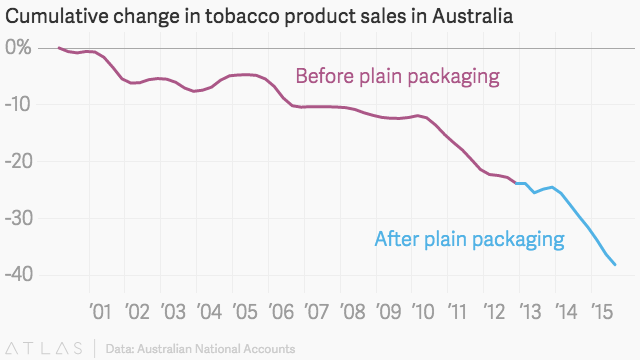
The point about plain packaging not discouraging smokers is also hard to support. Australia introduced plain-packaging rules in 2012, and the data clearly show that this can have an impact, speeding the decline of smoking that is already taking place in many developed countries:

74a7809314ccb49aabbb5c228d79f277


Not all tobacco-control measures work in the same way. Simon Chapman, professor of public health at the University of Sydney, explains how some are quick-acting, like raising taxes or taking cigarettes off shelves. Others are on-going, slow-burn measures like plain-packaging rules. These take longer to have an effect, which can nonetheless be long lasting.

The tobacco companies’ last-ditch court challenge in London will be watched closely by several other countries. (A ruling is likely to be announced early next year.) Apart from the UK and Australia, plain-packaging laws have been passed—but not yet implemented—in France, Hungary, Ireland, and Burkina Faso. A host of other governments are in the earlier stages of introducing similar rules.