Clear The Air News Tobacco Blog Rotating Header Image

April, 2010:

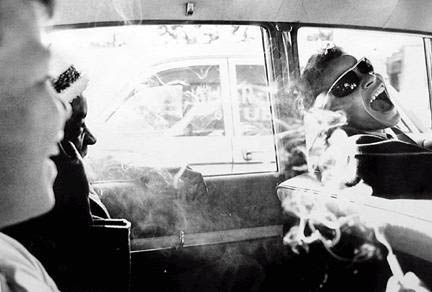
Doctors urge full car smoking ban

harbutt_smokingLast updated: March 24, 2010

Source: BBC News

Smoking should be banned in all cars as well as in public places where young people congregate, doctors are urging.

The Royal College of Physicians wants England’s imminent review of anti-smoking laws to consider such measures to protect the young.

It says passive smoking results in 300,000 extra child visits to GPs in the UK every year for problems such as asthma and bacterial meningitis.

But driving and smoking lobby groups say cars are a “private space”.

Wheezing

A number of medical bodies have supported a ban on smoking in cars transporting children, but the RCP goes a significant step further, urging a blanket ban on anyone lighting up in a vehicle – regardless of whether children or indeed any other passengers are inside.

This report isn’t just about protecting children from passive smoking, it’s about taking smoking completely out of children’s lives
Professor John Britton RCP

It is calling for a two-pronged approach which would see children protected from second-hand smoke and shielded from the sight of adults smoking – whether in the playground or on the TV.

The RCP’s report – Passive Smoking and Children – is being released ahead of the three-year review of the ban on smoking in enclosed public spaces in England. Similar bans have been introduced across the UK, with Scotland having led the way.

Drawing on a series of studies, the report suggests that in the UK, tens of thousands of youngsters are falling ill as a result of exposure to cigarette smoke.

Exclusion zones

These calculations include 20,000 chest infections, some 22,000 new cases of asthma and wheezing, as well as 200 cases of bacterial meningitis and 40 cases of Sudden Infant Death Syndrome – or cot death.

Each year it claims these account for more than 300,000 visits to a GP – some of which end up in hospital – costing the NHS £23.3m.
The car is a private space and it crosses a line to start interfering in it, however much one disapproves of smoking
Nigel Humphries Association of British Drivers

The report does concede that these figures are only estimates, but says it is confident they give an “indication” of the number of children who become ill.

The doctors acknowledge that a ban on smoking in the home, however desirable it believes this to be, would be neither politically or practically possible, but sees the car as an intervention in the private sphere which the public would tolerate.

But it argues that the only way to make it practically enforceable would be to introduce it as a blanket ban on all private vehicles – regardless of their passengers, as exemptions would prove too complex.

In addition, it wants to see smoking banned in places frequented by children, such as parks and outdoor swimming pools – and exclusion zones outside school gates.

Campaigns to explain to parents the importance of a smoke-free home, price hikes and generic cigarette packaging are also among the recommendations issued.

“This report isn’t just about protecting children from passive smoking, it’s about taking smoking completely out of children’s lives,” says Professor John Britton, head of the college’s Tobacco Advisory Group and lead author of the report.

Parental responsibility

A Department of Health spokesman stressed the role that anti-smoking legislation had played in curbing exposure, but added: “The government is looking at ways to go further to reduce the 9,500 children admitted to hospital every year as a direct result of exposure to second-hand tobacco smoke.

“Parents have a responsibility to protect their children by stopping smoking around them in enclosed spaces like their cars and in their homes.”

The Welsh Assembly Government said it had commissioned a tobacco control group to advise specifically on how to protect children, while a Scottish Government spokeswoman said it was conscious smoking in cars was a source of exposure that needed highlighting but had no plans for a ban. Northern Ireland is to conduct its own review.

The driving and smoking lobby groups expressed their anger at the recommendations, arguing that adults did not needs laws regulating every aspect of their behaviour.

Simon Clark, of Forest, which campaigns for smokers’ rights, questioned the figures used in the report, noting that cases of asthma had been rising as the number of smokers had fallen.

“It’s unacceptable to single out smokers and imply that they are solely responsible for the cost of asthma treatments, hospital admissions and asthma drugs for children up to the age of 16.

“We want smokers to be considerate towards those around them, especially children, but changing people’s behaviour should be achieved by education and encouragement not by legislation and enforcement.”

Nigel Humphries, spokesman for the Association of British Drivers, said the car should be seen as an extension of the home and treated as such.

“The car is a private space and it crosses a line to start interfering in it, however much one disapproves of smoking.”

Written by Clare Murphy

Letters to the Editor: Officials must crack down on smokers

police-crackdown-415x275Last updated: March 21, 2010

Source: South China Morning Post

It is always a pleasure to visit Hong Kong and I felt things would be even better thanks to the smoking ban in pubs and public open spaces. However, I see the law being flouted and it is getting worse. In November there were some incidents, in January a few more, and this month I saw people smoking in so many establishments.

The government seems to be willing to let Hong Kong return to the bad old days. What a shame it will not enforce the law.

There are now several establishments I will not go to because the smoking problem is worse than ever, so at least I’m saving money.

I hope for Hong Kong’s sake the government wakes up before it is too late and the bad old days are back forever.

John Preston, Hawksburn, Victoria, Australia

China’s New Center for Chronic Disease Prevention and Management

george-institute

China is the largest developing nation in the world and has undergone dramatic social and economic change over the last few decades, with an equally dramatic shift in the pattern of diseases. China’s major health threats are chronic diseases, such as heart disease, diabetes and cancer, which now account for more than 80% of all deaths.

Download the PDF here.

Philip Morris seat for Baidu finance chief

By Kathrin Hille in Beijing

Published: April 1 2010 12:52 | Last updated: April 1 2010 12:52

Philip Morris has picked Jennifer Li, chief financial officer of Baidu, the Chinese online search company, to join its board as an independent director – the fourth Chinese executive chosen to serve as a director for an S&P 500 company and the first woman from the country.

Her appointment reflects the rise of a new generation of Chinese management talent that brings the country’s corporate sector closer to international peers.

EDITOR’S CHOICE

Baidu beats profits estimates – Feb-10.Philip Morris in tie-up with Filipino tycoon – Feb-25.Ruling on Baidu a blow to record groups – Jan-28.FT top 50 women in world business – Sep-25..Ms Li has an MBA from the University of British Columbia and a bachelor of arts degree from Tsinghua University, China’s leading school for science and engineering.

Before joining Baidu two years ago, she spent 14 years at General Motors in various finance positions based in China, Singapore, the US and Canada. This included work as chief financial officer of GM in China and a position as controller at GMAC, formerly the financial services arm of GM.

“I hope to learn new perspectives and best practices that I can apply and contribute to Baidu’s long-term growth and to the Chinese business community,” said Ms Li.

For Philip Morris, picking a Chinese board member expresses the company’s hopes for a huge market in which it remains a tiny player. China accounts for 40 per cent of the world tobacco market excluding the US. The company, which owns seven of the world’s 15 best-selling cigarette brands, is so far only present through an agreement with China National Tobacco Corporation under which the state monopoly manufactures and sells Marlboro cigarettes locally. The two also have a joint venture for the international sale of Chinese cigarettes.

Philip Morris hoped the new board member could act as a “bridge” to China in contributing her understanding of this market, said Ian Butcher of MWM Consulting, the executive search firm that helped find her.

But Ms Li, 41, would not be expected to play a lobbying role for the company in the world’s biggest tobacco market, Mr Butcher said.

Ms Li said she did not expect her role to be China-specific but thought she could contribute from her cross-cultural background and experience in different industries.

Over the past 20 years, S&P 500 companies have appointed 15 Indians to their boards but only four Chinese, three of them in the past four years.

Executive search experts point to more mature legal and corporate governance standards and stronger English-language skills in India as the main reasons for the gap.

The first Chinese to join an S&P 500 company board was David S. Lee, a China-born entrepreneur who spent most of his adult life in the US. He was appointed as an independent director for Linear Technology, an electronics company, in 1988.

In 2006, Mastercard invited Edward Suning Tian, a US-educated entrepreneur who is also the founder of AsiaInfo, a telecoms supplier, to its board. Last year, Liu Jiren, founder and chairman of Neusoft, one of China’s leading software makers, became an independent director for Harman International, the audio equipment maker.

Mr Butcher described the likes of Mr Tian, Mr Liu and Ms Li as part of a new generation in China’s corporate world. “They are not Communist party representatives but foreign-educated managers with solid financial skills and a capability to communicate internationally.”

“I do expect to see more and more Chinese executives contributing to the global corporate world as China becomes increasingly important in the world economy and as the number of Chinese professionals with experience in both developed and emerging markets continues to grow,” Ms Li said.

The appointment is subject to approval by shareholders at Philip Morris’ annual general meeting on May 12.

.Copyright The Financial Times Limited 2011. You may share using our article tools. Please don’t cut articles from FT.com and redistribute by email or post to the web.