Clear The Air News Tobacco Blog Rotating Header Image

Passive Smoking

Risks for Heart Disease and Lung Cancer from Passive Smoking by Workers in the Catering Industry

Workers in the catering industry are at greater risk of exposure
to secondhand smoke (SHS) when smoke-free workplace policies
are not in force.We determined the exposure of catering workers to
SHS in Hong Kong and their risk of death from heart disease and
lung cancer. Nonsmoking catering workers were provided with
screening at their workplaces and at a central clinic. Participants
reported workplace, home, and leisure time exposure to SHS.
Urinary cotinine was estimated by enzyme immunoassay. Catering
facilities were classified into three types: nonsmoking, partially
restricted smoking (with nonsmoking areas), and unrestricted
smoking. Mean urinary cotinine levels ranged from 3.3 ng/ml in
a control group of 16 university staff through 6.4 ng/ml (nonsmoking),
6.1 ng/ml (partially restricted), and 15.9 ng/ml (unrestricted
smoking) in 104 workers who had no exposures outside
of work. Workers in nonsmoking facilities had exposures to other
smoking staff. We modeled workers’ mortality risks using average
cotinine levels, estimates of workplace respirable particulates, risk
data for cancer and heart disease from cohort studies, and national
(US) and regional (Hong Kong) mortality for heart disease and
lung cancer. We estimated that deaths in the Hong Kong catering
workforce of 200,000 occur at the rate of 150 per year for a 40-year
working-lifetime exposure to SHS. When compared with the
current outdoor air quality standards for particulates in Hong
Kong, 30% of workers exceeded the 24-h and 98% exceeded the
annual air quality objectives due to workplace SHS exposures.
Key Words: secondhand smoke; passive smoking; urinary
cotinine; heart disease; lung cancer; catering workers; Hong Kong.

Workers in the catering industry are at greater risk of exposureto secondhand smoke (SHS) when smoke-free workplace policiesare not in force.We determined the exposure of catering workers toSHS in Hong Kong and their risk of death from heart disease andlung cancer. Nonsmoking catering workers were provided withscreening at their workplaces and at a central clinic. Participantsreported workplace, home, and leisure time exposure to SHS.Urinary cotinine was estimated by enzyme immunoassay. Cateringfacilities were classified into three types: nonsmoking, partiallyrestricted smoking (with nonsmoking areas), and unrestrictedsmoking. Mean urinary cotinine levels ranged from 3.3 ng/ml ina control group of 16 university staff through 6.4 ng/ml (nonsmoking),6.1 ng/ml (partially restricted), and 15.9 ng/ml (unrestrictedsmoking) in 104 workers who had no exposures outsideof work. Workers in nonsmoking facilities had exposures to othersmoking staff. We modeled workers’ mortality risks using averagecotinine levels, estimates of workplace respirable particulates, riskdata for cancer and heart disease from cohort studies, and national(US) and regional (Hong Kong) mortality for heart disease andlung cancer. We estimated that deaths in the Hong Kong cateringworkforce of 200,000 occur at the rate of 150 per year for a 40-yearworking-lifetime exposure to SHS. When compared with thecurrent outdoor air quality standards for particulates in HongKong, 30% of workers exceeded the 24-h and 98% exceeded theannual air quality objectives due to workplace SHS exposures.Key Words: secondhand smoke; passive smoking; urinarycotinine; heart disease; lung cancer; catering workers; Hong Kong.

Download PDF : Toxicol. Sci.-2006-Hedley-539-48

Environmental Tobacco Smoke’s Impact on Children Exposed in New Online Video

http://www.environmental-expert.com/news/environmental-tobacco-smokes-impact-on-children-exposed-in-new-online-video-271238

Source: Cochrane & Associates, LLC

The IAQ Video Network produces another educational video about environmental dangers due to exposure to indoor air quality contaminants.

Phoenix, AZ, December 12th, 2011 — Today, the IAQ Video Network and Cochrane & Associates announced the release of another online video to help educate the public about issues that may impact their health. The latest educational video discusses the threat to children’s health due to environmentaltobacco smoke (ETS).

According to the U.S. Environmental Protection Agency (EPA), “Environmentaltobacco smoke is the mixture of smoke that comes from the burning end of a cigarette, pipe, or cigar, and smoke exhaled by the smoker. It is a complex mixture of over 4,000 compounds, more than 40 of which are known to cause cancer in humans or animals and many of which are strong irritants. ETS is often referred to as ‘secondhand smoke’ and exposure to ETS is often called passive smoking.’

“Infants and young children whose parents smoke in their presence are at an increased risk of lower respiratory tract infections, including pneumonia and bronchitis, and are more likely to have symptoms of respiratory irritation,” reported Paul Cochrane, President of Cochrane and Associates, the company behind the IAQ Video Network and the new public outreach video. “The EPA estimates that between 200,000 and 1,000,000 asthmatic children have their condition made worse by exposure to secondhand smoke each year. We hope this new online video helps to educate people about secondhand smoke and ways people can protect their children’s health.”

To view this video please visit http://www.iaqtv.com/ or

http://www.youtube.com/watch?v=m4tlVjGB67s

Passive Posion

Passive Smoking Causes Psychological Disorders

ThirdAge – Jasmine Williams – ‎16 hours ago‎

Passive smoking, when done around children, can have negative psychological effects on them. According to the American Academy of Pediatrics, approximately five-and-a-half million kids live in households in which someone smokes. …

ADHD Result of Passive Smoking: Study International Business Times

Study: Secondhand smoke might be factor in ADHD WECT-TV6

Secondhand smoke and ADHD connected? Food Consumer

Passive smoking linked to DNA damage and birth defects

The Independent – Steve Connor – ‎5 hours ago‎

Passive smoking can cause genetic damage to sperm cells that may result in birth defects, miscarriages and other reproductive problems which make it difficult to father a healthy child, scientists have found. …

Passive smoking can damage the DNA of sperm, study in mice suggests The Guardian

How passive smoking can harm hearing: Tests show it takes toll on teens

Daily Mail

Scientists think passive smoking affects the blood supply to the area. The damage caused makes it harder for the person to understand speech and has been linked to poor academic performance and disruptive behaviour in school. …

New studies reveal more smoking dangers The Augusta Chronicle

Teens’ Hearing Loss Linked to Secondhand Smoke MedPage Today

Second-hand smoke may cause hearing loss in teens Scotsman

ACA inhales second-hand smoke

http://www.abc.net.au/mediawatch/transcripts/s3242716.htm

Smoking in front of children can make them addicted to nicotine

14 June 2011

http://www.dailymail.co.uk/health/article-2003453/Smoking-children-make-addicted-nicotine.html#

Most smokers are very aware of the damage they are doing to their own health – and know that others can also suffer though passive smoking.

But a worrying new study reveals that smoking infront of children not only passes on the harmful effects of the smoke in the air – it can also get them hooked on cigarettes.

A Concordia and University of Montreal study published in the Oxford journal Nicotine & Tobacco Research, found that tweens who repeatedly observe a parent, sibling, friend or neighbur consuming cigarettes are more likely to start smoking themselves.

Worrying: A new study reveals that smoking infront of children not only passes on the harmful effects of the smoke in the air - it can also get them hooked on cigarettes

Worrying: A new study reveals that smoking infront of children not only passes on the harmful effects of the smoke in the air – it can also get them hooked on cigarettes

‘Kids who see others smoking are more likely to take up the habit because they don’t perceive cigarettes as unhealthy,’ says lead study author Simon Racicot, of Concordia University’s Department of Psychology.

‘We found that kids who’d never smoked who were exposed to tobacco use were more likely to hold positive beliefs about the killer habit. These are the kids who are more likely to start smoking as teenagers.’

This new investigation builds on previous studies examining the negative effects of being surrounded by smokers.

Senior author Jennifer J. McGrath, a professor in the Concordia University Department of Psychology said around 60 per cent of children are exposed to secondhand smoke across North America.

‘Greater exposure to smokers is largely associated with greater exposure to nicotine,’ she said.

‘Children exposed to the same amounts of secondhand smoke as adults absorb higher doses of nicotine.

‘Early findings suggest that secondhand smoke exposure could possibly trigger addiction in the brain – before kids actually start smoking themselves.’

Earning: Early findings suggest that secondhand smoke exposure could possibly trigger addiction in the brain - before kids actually start smoking themselves

Earning: Early findings suggest that secondhand smoke exposure could possibly trigger addiction in the brain – before kids actually start smoking themselves

For the study, 327 11-13 year olds enrolled in French-language public schools were questioned about their smoking habits, the number of smokers in their entourage and the situations where they observed smoking.

‘Preteens who were surrounded by more smokers believed that there are greater advantages to smoking,’ says Racicot.

‘Therefore, smoking by parents, siblings, and friends increases risk factors for later smoking.’

The researchers argue that new prevention efforts must be tailored to children who are highly exposed to secondhand smoke – ensuring they are aware of the risks.

The general public also needs to be informed about how smoking around youth normalizes the dangerous habit.

‘When it comes to smoking around kids, the best thing a parent can do is to avoid exposing their kids to cigarettes and to secondhand smoke,’ says Racicot.

‘A parent should step outside of their home or car to smoke. And the addictive habit should remain out of sight, out of breath and out of mind.’

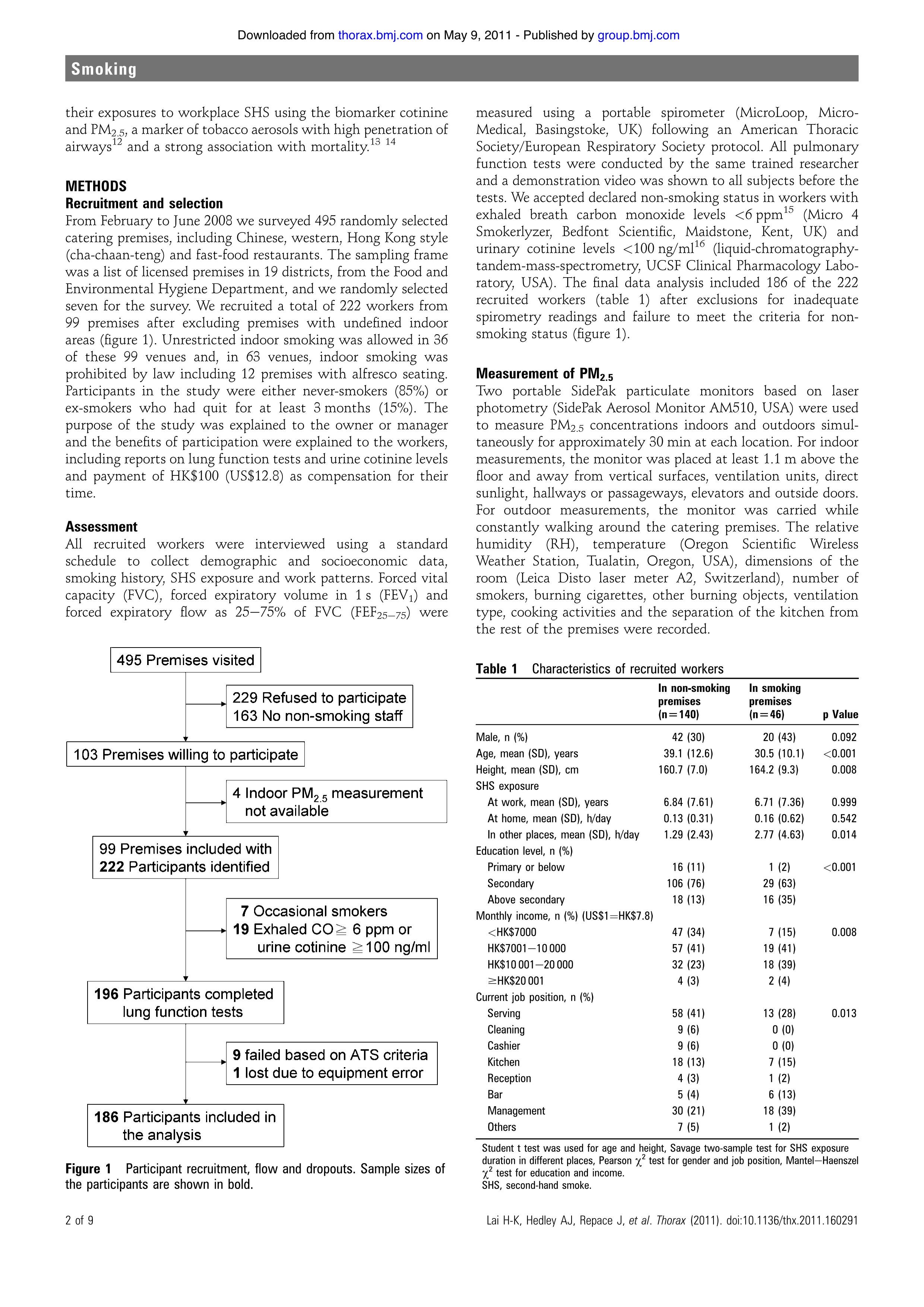
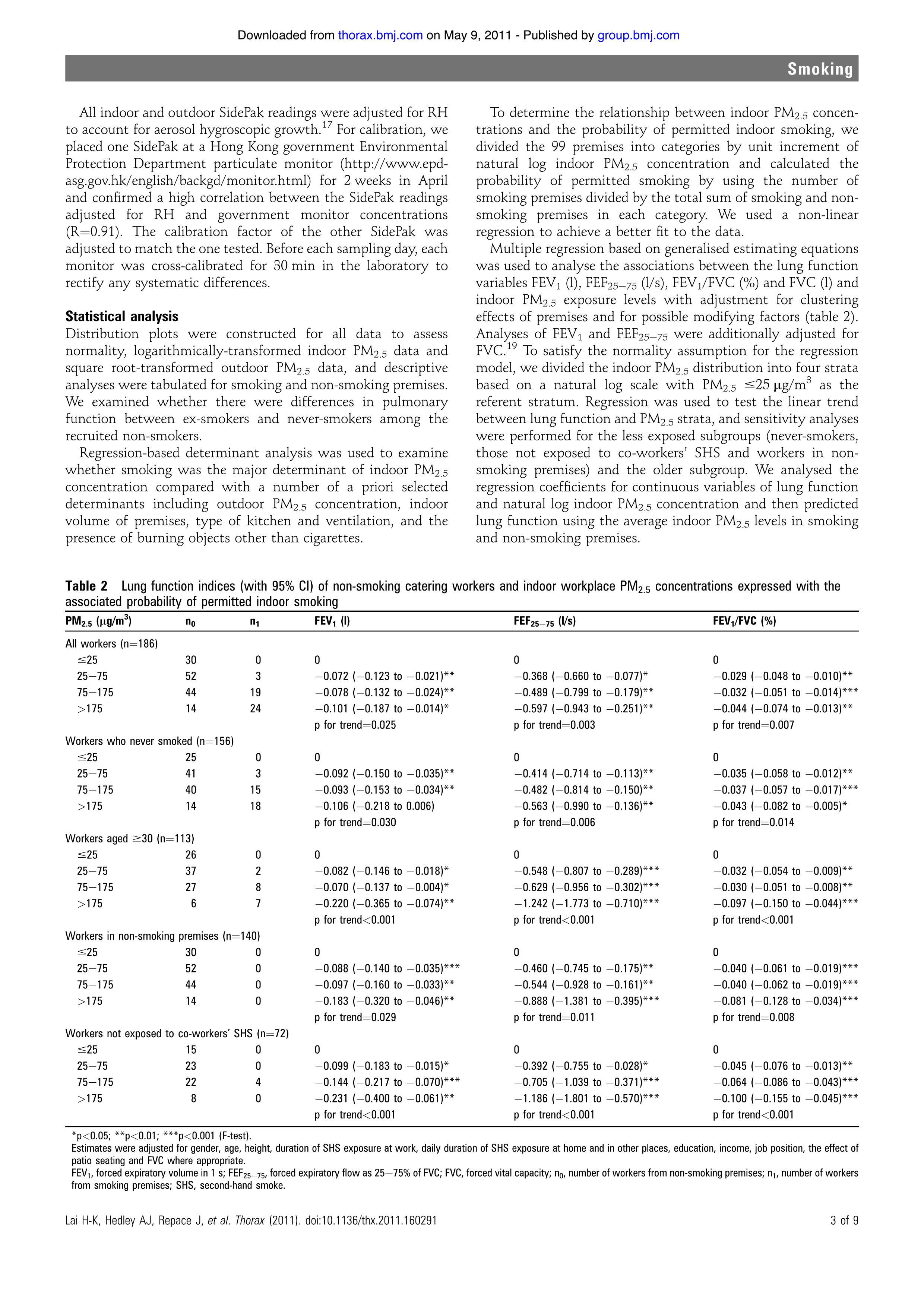
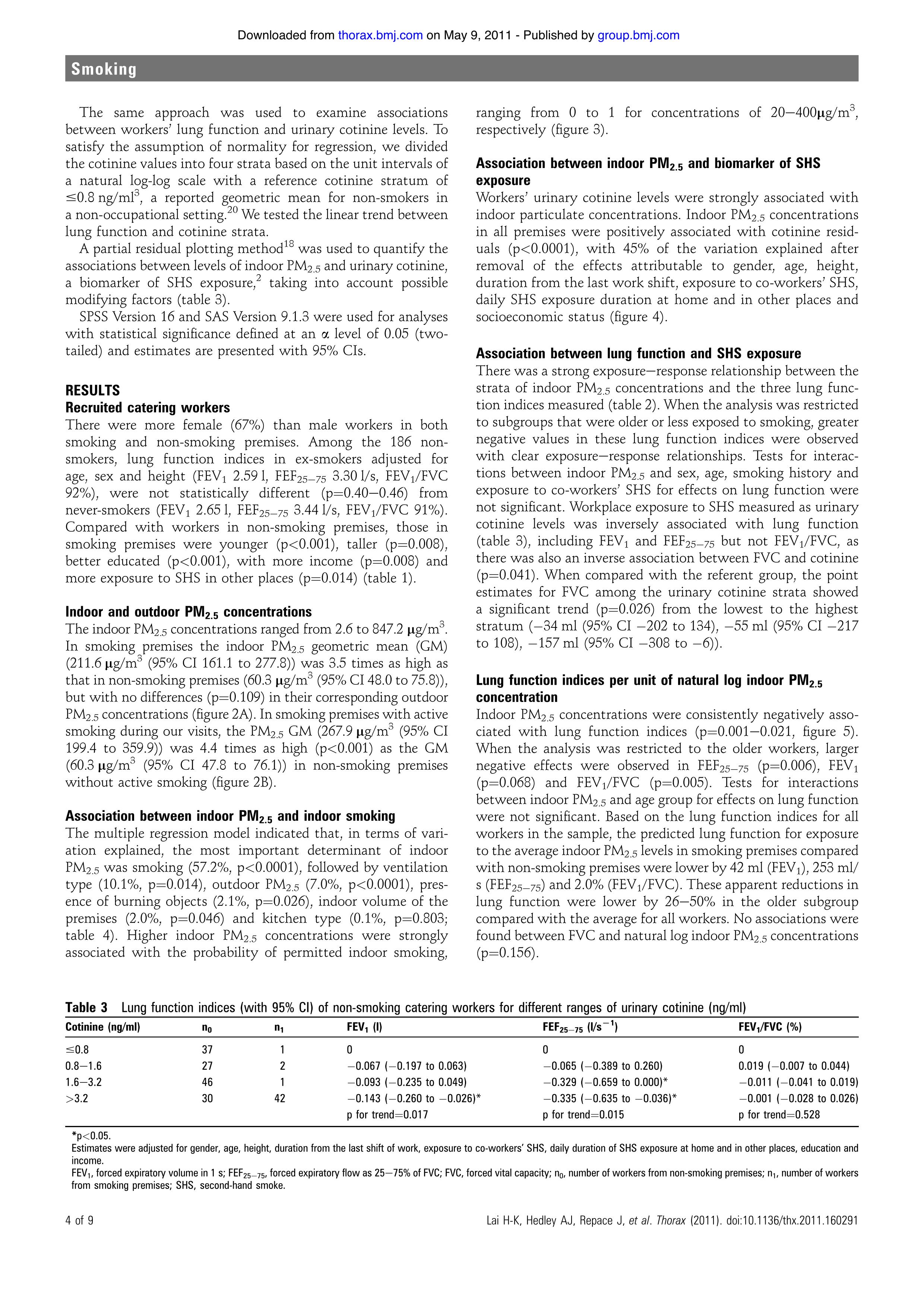
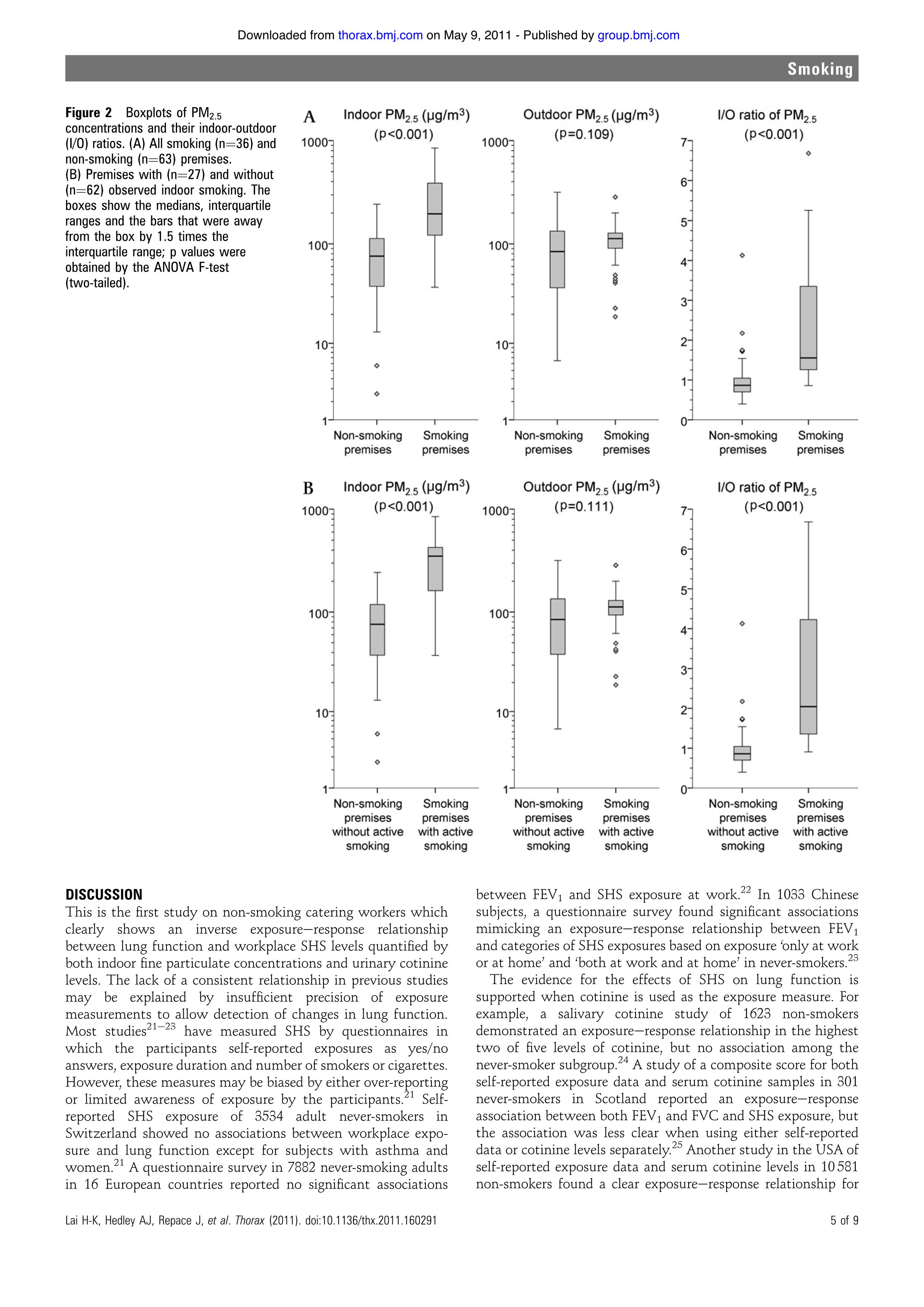
Lung function and exposure to workplace second-hand smoke during exemptions from smoking ban legislation

Inquiry into smoking in private vehicles

Download (PDF, 1.28MB)

Second hand smoke: Assessing the burden of disease at national and local levels

second-hand-smokeLast updated: April 27, 2010

Source: World Health Organization

Second-hand smoke (SHS) is one of the most important and most widespread exposures in the indoor environment. The link between SHS and several health outcomes, such as respiratory infections, ischaemic heart disease, lung cancer and asthma have long been established. Nevertheless, 93% of the world population is still living in countries not covered by 100% smoke-free public health regulations, and exposure to SHS in the home is still common.

This guide describes how to estimate the burden of disease caused by exposure to SHS on a national or local level. It summarizes the evidence linking SHS exposure to health, and the methods for estimating health impacts on a population basis. This is done in a practical step-by-step approach that can be adapted to local circumstances. The generated information can raise awareness and support decision-making on measures to protect the population from SHS.

This method has also been applied to estimate the global burden of disease from SHS and results will soon be available.

This guide is one in a series that describes how to estimate the burden of disease caused by environmental and occupational risk factors. An introductory volume to the series outlines the general method; subsequent volumes address methods for specific risk factors, such as outdoor air pollution, occupational noise or exposure to mercury.

A calculation tool accompanying the guide can be obtained from: EBDassessment@who.int

Download the full document

Second hand smoke: Assessing the burden of disease at national and local levels [pdf 2.12Mb]

Comprehensive smoke-free legislation and displacement of smoking into the homes of young children in Hong Kong

ibchildhealthLast updated: April 10, 2010

Source: http://tobaccocontrol.bmj.com/content/19/2/129.abstract

Objective To investigate the effect of comprehensive smoke-free legislation in 2007 on the exposure of children to secondhand smoke (SHS) in Hong Kong.

Methods Two cross-sectional questionnaire surveys were conducted, before (2006) and after (2008) the implementation of smoke-free legislation, among primary 2–4 students (equivalent to US grades 2–4) from 19 and 24 randomly selected schools, respectively. Adjusted ORs for SHS exposure at home and outside home post-legislation compared with pre-legislation were calculated. The strength of the association between SHS exposure and respiratory symptoms in each survey was used as an indirect indicator of the intensity of exposure.

Results Among 3243 and 4965 never smoking students in the 2006 and 2008 surveys, the prevalence of SHS exposure in the past 7 days increased both at home (from 10.2% to 14.1%) and outside home (from 19.8% to 27.2%). Post-legislation, students were 56% more likely (p<0.01) to report SHS exposure at home coupled with an insignificantly stronger association between SHS exposure and respiratory symptoms. Similarly, students were 60% more likely (p<0.001) to report SHS exposure outside home in 2008, but the association between SHS exposure and respiratory symptoms became insignificantly weaker. Parental smoking rates were similar before and after legislation.

Conclusions The prevalence of exposure to SHS at home and outside home have both increased among primary school students in Hong Kong post-legislation. Comprehensive smoke-free legislation without strong support for smoking cessation might have displaced smoking into the homes of young children.