Clear The Air News Tobacco Blog Rotating Header Image

ITIC

ITIC (International Tax and Investment Center) Raises Alarm to EU Policy Makers About Galloping Illicit Tobacco Trade

http://www.prnewswire.com/news-releases/itic-international-tax-and-investment-center-raises-alarm-to-eu-policy-makers-about-galloping-illicit-tobacco-trade-122712193.html

WASHINGTON, May 30, 2011 /PRNewswire/ —

– EU Member States Losing EUR10 Billion in Tax Revenues Each Year and Facing Uphill Battle to Reverse the Trend

At a meeting today on intellectual property, counterfeiting and piracy in Brussels, hosted by the European Parliament’s Kangaroo Group, http://www.tobaccotactics.org/index.php/Kangaroo_Group

http://tobaccotactics.org/index.php/Othmar_Karas the International Tax and Investment Center (ITIC) warned the European Union (EU) that it faces an uphill battle to stem the flow of illegal cigarettes pouring through its borders and across its Member States.

Illegal cigarettes account for approximately 9% of all cigarettes consumed across the EU, costing governments an estimated EUR10 billion in lost tax revenues each year. Certain countries like Ireland have registered levels of 1 in every 4 cigarettes coming from the black market. But the consequences of illicit trade reach far beyond government revenue loss. “Criminal gangs attracted by the huge profits are selling completely unregulated tobacco products to anybody who will buy them, including kids,” said Daniel Witt, President of ITIC.

Speaking about its recently launched booklet – The Illicit Trade in Tobacco Products and How to Tackle It – ITIC outlined the scope and drivers of illicit trade but also showed how customs, law enforcement, and tax and health officials around the world can address the growing problem.

ITIC pointed to numerous factors that are contributing to illicit trade, highlighting unbalanced fiscal policies, protectionist policy measures and weak enforcement. “It is fundamental that government policy aimed at reducing tobacco consumption assesses any potential impact on aggravating illicit trade,” noted Witt. Measures such as the introduction of standardized (plain) packaging for cigarettes, currently considered under the revision of the Tobacco Product Directive by the EU Commission, should be carefully looked at on the grounds that they could very well worsen the problem, making life easier for counterfeiters to flood EU markets with cheap fakes.

The ITIC publication, which also includes input from the World Customs Organization (WCO), will be widely circulated to policy makers and enforcement authorities around the world with the aim of triggering a much needed comprehensive approach to combating the issue.

Copies of the new booklet, The Illicit Trade in Tobacco Products and How to Tackle It can be obtained (at no cost) by writing Ms. Napolitano or directly from ITIC’s web site: http://www.iticnet.org/Public/PublicDocLanding.aspx?id=41&type=Brussels

About the International Tax and Investment Center

The International Tax and Investment Center (ITIC) is an independent nonprofit research and education foundation with offices in Russia, Azerbaijan, Kazakhstan, Jordan, the Philippines, Ukraine, the United Kingdom and the United States. Organized in 1993, the ITIC serves as a clearinghouse for tax and investment policy information and as a leading knowledge center accessible by key policy makers in the former Soviet Union and other countries in the Middle East, North Africa, Southern Africa, and the Asia Pacific region.

More information on ITIC can be found on its website: http://www.ITICnet.org.

About the Kangaroo Group http://www.tobaccotactics.org/index.php/Kangaroo_Group http://tobaccotactics.org/index.php/Othmar_Karas

The Kangaroo Group is an association of members of the European Parliament, Commission and Council and representatives of industry and academia working to enhance European unity step by step around the pursuit of common projects. The motto of the Kangaroo Group is free movement and security. The Group was set up in the European Parliament in 1979.

The Forum on Intellectual Property, Counterfeiting and Piracy, held in Brussels on May 26, was chaired by The Hon. Bill Newton Dunn, Member of the European Parliament. Other participants included The Hon. Edit Herczog, Member of the European Parliament, and Ms. Edit Horvath, Chief Policy Officer from the Hungarian Tax & Customs Authority representing the Hungarian EU Presidency.
unnamed

Failed: Tobacco Industry Funded Research on Illicit Trade of Tobacco Products in Asia

Download (PDF, 1.95MB)

ITIC extracts from Legacy tobacco documents at UCSF

Download (PDF, 1.53MB)

International Tax and Investment Centre – ITIC and like tobacco front groups

Download (PDF, 1.91MB)

ITIC: A Foundation Directly Sponsored by Transnational Tobacco Companies

Download (PDF, 3.86MB)

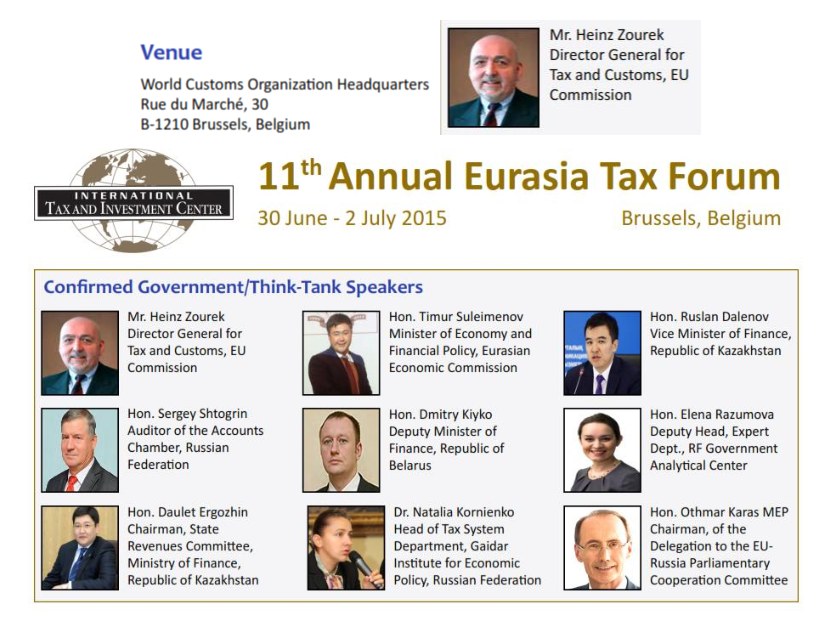
ITIC conferences with World Customs Organisation in direct breach of Article 5.3

Download (PDF, 908KB)

ITIC: A Foundation Directly Sponsored by Transnational Tobacco Companies

http://www.fctc.org/media-and-publications/fact-sheets/alternative-livelihoods-and-environment/1246-itic-a-foundation-directly-sponsored-by-transnational-tobacco-companies

The International Tax and Investment Center (ITIC) is a U.S.-based non-profit research and education organization headquartered in Washington, D.C. ITIC describes itself as an independent clearinghouse for best practices in taxation and investment policy that provides “its sponsors a seat at the policymaking table.”

ITIC’s main sponsors are large multinational corporations from the oil, alcohol and tobacco industries. ITIC’s sponsors include all of the leading transnational tobacco companies, and its Board of Directors includes representatives from BAT, PMI, JTI and Imperial Tobacco.

Internal tobacco industry documents made public through U.S.-based litigation settlements in 1998 disclose that ITIC has long played a role in facilitating the tobacco industry’s access to government officials. For example, a 1997 internal R.J. Reynolds memo describes ITIC’s role in assisting RJR and PMI in favourable tax reform in Russia.

ITIC provides advice to governments on tobacco tax issues. They hold workshops and meetings and provide technical advice through paid experts. They sponsor reports on illicit trade, producing illicit trade estimates with poorly defined methodology and often exaggerated rates of illicit trade. ITIC uses their workshops, contacts and research to push for tax systems and rates that benefit the industry over public health

Download (PDF, 330KB)

CTA Letter – World Customs Organization / ITIC active participation and co-operation

Download (PDF, 376KB)

Download (PDF, 285KB)

Download (PDF, 271KB)

Download (PDF, 227KB)

Former UK tax chief under fire for joining smoking lobbyists

http://www.theguardian.com/business/2015/may/16/uk-tax-chief-smoking-health-dave-hartnett-tobacco-hmrc

Health campaigners are furious that Dave Hartnett joined Washington group that opposes tobacco taxation a year after leaving HMRC

Health campaigners are furious that the former head of HM Revenue and Customs has taken a role with a powerful lobbying organisation that campaigns against tobacco taxation. Dave Hartnett, who stepped down as permanent secretary of tax at HMRC in 2012, became a director of the International Tax and Investment Center (Itic), a Washington-based organisation that is accused of promoting the interests of “big tobacco”, in 2013.

Clear the Air, a Hong Kong pressure group, said Harnett should have declared the role. The advisory committee on business appointments (Acoba) has confirmed that he did not seek its permission, as would normally happen when a senior civil servant takes a prominent role within two years of leaving Whitehall. Hartnett insists that he did not need permission for the unpaid role as nominal director. “I do not believe there was anything here to report to Acoba and it follows that I do not believe that I have offended the letter or spirit of the Acoba rules,” he said in a statement.

Documents show Hartnett chaired meetings for Itic in October 2013. He has also given talks and is due to speak at one of its conferences next month.

Itic boasts that its sponsors have the opportunity to “gain special access to partner country policy-makers and legislators”, but it is regularly accused of undermining health legislation. According to TobaccoTactics.org, it is funded by multinational corporations, including industry leaders Philip Morris, Japan Tobacco International, British American Tobacco and Imperial Tobacco. All four companies have representatives on Itic’s board of directors.

Internal documents obtained by The Observer show how PMI intended to use Itic to lobby against the UK’s plan for plain packaging for cigarettes, seen by health campaigners as a major weapon in the fight to stop young people taking up smoking.

“Itic is paid by the tobacco industry to lobby governments against policies to cut smoking,” said Deborah Arnott, chief executive of health charity ASH. “I’m shocked that Mr Hartnett seems to be happy to allow his status as a former permanent secretary to be used by a tobacco industry front group that promotes addiction, disease and premature death.”

Daniel Witt, president of Itic, defended his organisation, saying it provides a “neutral forum for discussions on tax and investment policy”. Supporters of Itic deny claims that it is in the pocket of big tobacco.

However major health organisations are critical of the way it operates.

The UK is a signatory to the World Health Organisation’s framework convention on tobacco control, which was established to check the influence of tobacco companies and their front organisations. In an unusual move, the organisation has openly called for governments to distance themselves from Itic.

“Itic has published extensively in favour of the tobacco industry’s false positions on excise taxation, investment and illicit trade in tobacco products,” said Dr Douglas Bettcher, director of prevention of noncommunicable diseases for the WHO. “Itic have used their international conferences, such as in Moscow in 2014 and in New Delhi earlier this month, to lobby government officials against tobacco taxation. This is despite tobacco taxation being the most effective and efficient measure to reduce demand for tobacco products. Parties to the WHO framework convention on tobacco control are obliged to protect their public health policies from interference by the tobacco industry and its allies. In this light, WHO urges all countries to follow a non-engagement policy with Itic.”

Hartnett attracted controversy after negotiating tax deals with major corporations such as Vodafone and Goldman Sachs. Critics said the deals were generous to the companies, a claim rejected by HMRC. Since stepping down from the civil service, he has come under fire for his advisory work with HSBC.

Concerns about Itic recently prompted the World Bank to pull out of a tax conference that was funded by several of its transnational tobacco company supporters. “For over two decades Itic has promoted tobacco-friendly fiscal policies in developing countries that have helped fuel the global tobacco epidemic, but governments and international organizations like the World Bank are increasingly realising that Itic is nothing more than a secret mouthpiece for big tobacco companies,” said Matt Myers, president of the Campaign for Tobacco-Free Kids.

In a statement to the Observer, Hartnett explained that he was, along with around 50 other “leading figures in taxation”, a nominal director of Itic.

“I am not paid for that role,” Hartnett said. “I am not an executive director and do not in any way direct the strategy or business of Itic. I know Itic as a not-for-profit research and education organisation which supports the development of tax systems in less developed countries.”

Sheila Duffy, chief executive of ASH Scotland, called on the government to confirm whether any rules had been breached.

“I’d also like to see HMRC and other government departments ensure that no current public official confers any appearance of legitimacy on Itic.”

ITIC Information

Download (PDF, 550KB)

Download (PDF, 285KB)