Clear The Air News Tobacco Blog Rotating Header Image

movie

Cut it out: Smoking scenes in movies DO encourage youngsters to light up

Wednesday, Sep 28 2011

http://www.dailymail.co.uk/news/article-2029433/Films-famous-smoking-scenes-encourage-youngsters-up.html?ito=feeds-newsxml#

http://www.plosmedicine.org/article/info%3Adoi%2F10.1371%2Fjournal.pmed.1001077

Youngsters determined not to develop a cigarette habit could find their plans going up in smoke if they watch actors light up in movies, claim scientists.

A research team from Imperial College in London argue that there’s a danger young people will mimic what they see on the big screen.

The World Health Organisation does recommend to governments around the world that films with smoking scenes contain an adult rating, but few put the advice into practice.

Suggestive: Youths are more likely to take up smoking if they watch it happening in movies, say researchers. Pictured is Sharon Stone in Basic Instinct

Suggestive: Young people are more likely to take up smoking if they watch it happening in movies, say researchers. Pictured is Sharon Stone in Basic Instinct

Lead researcher Dr Christopher Millett, a senior lecturer at Imperial’s School of Public Health, points out that in fact ‘many governments provide generous subsidies to the U.S. film industry to produce youth-rated films that contain smoking and as such indirectly promote youth smoking’.

There are hundreds of famous smoking scenes in films from Basic Instinct to Bridget Jones, but the report by Dr Millett’s team, published in PLoS Medicine magazine, states that exposure to tobacco imagery in movies is a ‘potent cause of youth experimentation and progression to established smoking’.

It adds: ‘Governments should ensure that film subsidy programmes are harmonised with public health goals by making films with tobacco imagery ineligible for public subsidies.’

Theory at the edge of reason? Could Bridget Jones be unwittingly pushing youngsters into a cigarette habit

Theory at the edge of reason? Scientists believe Bridget Jones could unwittingly be encouraging youngsters into a cigarette habit

This conclusion is backed up by recent research published in the Journal of Neuroscience, which revealed that smokers’ brains ‘light up’ when they see actors puffing away on-screen.

‘When a smoker sees someone smoking, their brain seems to simulate the movements they would make if they were having a cigarette themselves,’ said Todd Heatherton at the Centre for Social Brain Sciences at Dartmouth College in New Hampshire.

Potent image: Researchers used Ridley Scott's Matchstick Men, starring Nicolas Cage, to test the responses of smokers to a character lighting up in a movie

Potent image: Researchers used Ridley Scott’s Matchstick Men, starring Nicolas Cage, to test the responses of smokers to a character lighting up in a movie

Dr Heatherton used magnetic resonance imaging to scan the brains of volunteers watching Ridley Scott’s Matchstick Men, which contains a lot of smoking scenes.

Reward circuits in the brains of smokers fired up whenever a cigarette in the film was lit.

Simon Chapman from the University of Sydney, also writing in PLoS Medicine, however, argues that the link between smoking in movies and smoking uptake is not a straightforward one and that censorship is not the answer.

Download PDF : PLOSjournal.pmed.1001077

Government Inaction on Ratings and Government
Subsidies to the US Film Industry Help Promote Youth
Smoking.

little has changed – Just the price

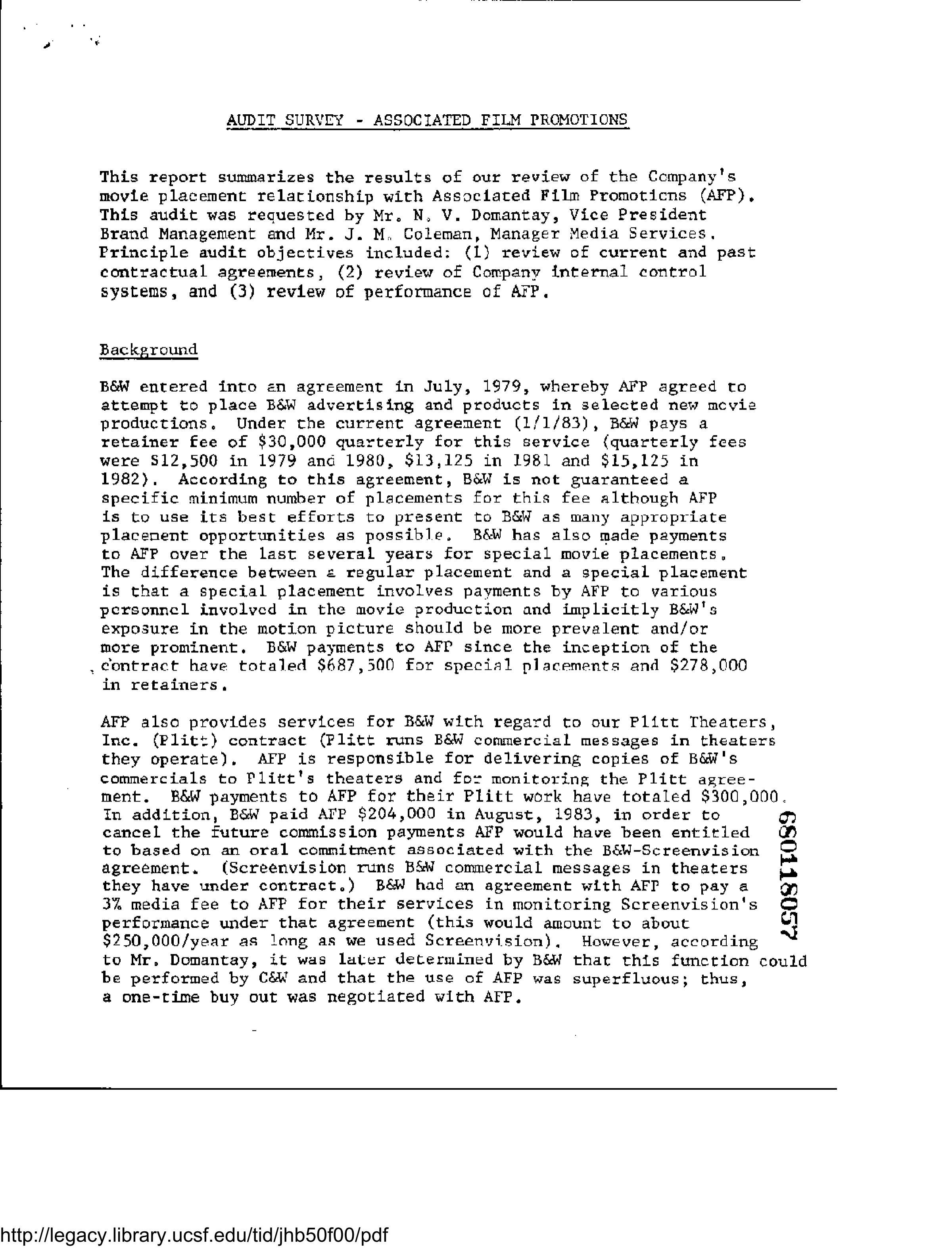
Download PDF : BrownWilliamsonSjhb50f00

The good old days of product placement in the movies

Download PDF : MoviesSegx62d00

Motion Picture Placement of Cigarettes, Cigars of smoking tobaccos

30 YEARS LATER AND LITTLE HAS CHANGED, JUST THE PRICE

Smoking in the movies

June 2009 — World Health Organization issues new film policy guide

Download PDF : Smoking in the movies

Smoke Screen: Tobacco in the Movies

http://www.media-awareness.ca/english/resources/educational/teachable_moments/smoke_screen.cfm?RenderForPrint=1

In Canada, 38% of current and former smokers began smoking before their 15th birthday.1 Behaviours and attitudes of friends and family are considered major influences on young peoples’ decisions to start smoking. However, health studies are pointing to another contributing factor – movies. Research suggests that there is a strong link between viewing smoking in films and smoking initiation among adolescents.2

In 2003, the Dartmouth Medical School conducted a study in which they recruited over 2600 young people, ages 10-14, who had never smoked. The Dartmouth researchers followed the young people for 13-26 months, during which time 10% of the young people started to smoke. They found that the young people with the most exposure to smoking in films were almost three times as likely to have started smoking as those in the group with the lowest exposure.3 In 2005, Dartmouth conducted a larger study, involving over 6500 subjects aged 10-14 with almost identical results.4

In the December 2006 issue of Archives of Pediatrics and Adolescent Medicine, a study “The Extent to Which Tobacco Marketing and Tobacco Use in Films Contribute to Children’s Use of Tobacco,” found that depictions of smoking in movies are more psychologically powerful than cigarette advertisements and have a greater impact on children’s attitudes and behaviours regarding smoking. The research looked at 51 studies and found that media exposure to tobacco use increases the odds of youth taking up smoking almost threefold.5

The University of California, San Fransico’s (UCSF) Centre for Tobacco Control Research and Education, estimates that every year 390,000 teens start smoking because of its depiction in films – translating to $4.1 billion in lifetime sales revenue for the tobacco industry.6

Product Placement

Product placement, the practise of using real commercial products in media, has been used by marketers and companies since the 1980s. During the eighties tobacco companies paid movie producers and actors hundreds of thousands of dollars to promote their brand of cigarettes. (Examples of product placement in movies can be found at http://smokefreemovies.ucsf.edu/problem/bigtobacco.html).

In 1989, the U.S. congress started to investigate the tobacco industry’s involvement in the movie industry. High profile tobacco product placements in movies such as the James Bond film Licence to Kill (1989) led to a voluntary ban within the tobacco industry on this practice. Tobacco product placement has since been considered illegal in the U.S.7 Similarly, in Canada tobacco companies cannot advertise or pay for exposure on television or in movies.8Despite the self regulatory ban, and the fact that tobacco product placement is prohibited; the frequency of smoking in movies has increased.9 In 2002, 74% of all American films featured smoking, including three-quarters of youth-rated movies, regardless of the tobacco industry’s assertion that they did not request or grant permission for the appearance of any cigarette product.10

Smoking in PG-13 Films

Why target youth?

The tobacco industry is losing its customers. Smoking kills over 45,000 Canadians each year, and thousands of other smokers are quitting. Tobacco companies need to recruit more smokers to take the place of those who have died or quit. Most smokers choose their favourite brand of cigarettes and become addicted to nicotine during their teens.

(Source: The Lung Association, http://www.lung.ca/protect-protegez/
tobacco-tabagisme/facts-faits/teens-ados_e.php
)

Health advocates argue that because the youth market is so crucial to tobacco sales, and teenagers make up over a quarter of the movie-going population, it is advantageous for tobacco companies to have a presence in the movies.11

In 2003 the American Lung Association released a study that reviewed 145 movies and found that PG-13 movies contain more tobacco use than R-rated films intended for adults.11 In a similar study the following year found that eighty percent of the popular PG-13 movies examined depicted tobacco use.13

The American Medical Association (AMA) Alliance released a list of movies made in 2006 that were the worst offenders for glamorizing smoking. Of the seven movies listed, five were PG-13 films. The films that made the list were The Ant Bully (PG), Material Girls (PG), Talladega Nights(PG-13), Pirates of the Caribbean 2 (PG-13), Stay Alive (PG-13), Superman Returns (PG-13), andYou, Me and Dupree (PG-13).14

For some young people, they may be exposed to more smoking in movies than they encounter in real life. On average, adolescents watch three movies a week. Films generally contain five smoking episodes per film, equaling to fifteen exposures a week.15

Quick Facts…

  • Since 1998, smoking in PG-13 movies has increased 50 per cent.16
  • Non-smoking teens who watch their favourite stars frequently smoke on screen are 16 times more likely to have positive attitudes toward smoking in the future.17
  • Current movie heroes are four times more likely to smoke than are people in real life.18
  • UCSF’s Center for Tobacco Control Research and Education estimates that movies with smoking generate $894 million per year in tobacco profits.19

For Discussion

  • Do you think movies that depict smoking, and the stars who smoke, influence the way people think and feel about tobacco?
  • What has a more sway, tobacco use by a film character on-screen or tobacco use by an actor off-screen? For example Johnny Depp’s character in Pirates of the Caribbean: The Curse of the Black Pearl(2003), although a pirate, doesn’t smoke and, in fact, in one scene throws tobacco overboard. However, in real life there are many photos of Johnny Depp smoking.
  • Should actors have a right to deny their characters the ability to smoke? Discuss the following comment by actor Eliza Dushka “I had to smoke for a role when I was 15 and it kinda stuck. I made all these plans to quit this year, but then I got a role in a DeNiro movie, and I smoke in that…so I don’t know.”19
  • Discuss the following quote from Stanton A. Glantz, a professor of medicine at the University of California, San Francisco and anti-tobacco activist. “If Hollywood just got the smoking out of youth-related films, it would have a huge effect, and it would cost nothing. It would be the most cost-effective health intervention ever done.”20
    • Do you agree with his statement? If so, in what ways can Hollywood get smoking out of films?
    • Many anti-smoking organizations are requesting that tobacco use in a film should affect its rating. Do you think films that depict tobacco use should get an automatic ‘R’ rating? Can you think of alternatives to an ‘R’ rating? (ie. Warning labels)
  • Define (or research) what ‘social responsibility’ means to you. Do you think movies are or need to be socially responsible? If so, in what ways can filmmakers be accountable for their depictions? What role does social responsibility play in depictions of tobacco use in movies?

Activities

1. Healthy Lung Chart (modelling the Scene Smoking)

Visit the Web site www.scenesmoking.org. The Web site, developed by the “Thumbs Up! Thumbs Down!” project of the American Lung Association of Sacramento-Emigrant Trails, is designed to raise awareness about the impact of tobacco use in movies. The site provides a ratings chart for current films – pink lungs for films without tobacco to black lungs for films that depict significant tobacco use.

Students can create their own healthy lung chart by tracking and accessing, over the course of two weeks, the tobacco use in films and television shows they view.

2. Smoking Survey

The U.S. Centers for Disease Control and Prevention (CDC) reported in July of 2006 that the percentage of high school students that smoked cigarettes increased to 23 per cent in 2005 from 21.9 per cent in 2003. The increase is the first since a steady 40 per cent decline in high school smoking rates between 1997, when 36.4 per cent of high school students smoked, and 2003.22

Have students survey their peers on their tobacco use. For the students who smoke, ask them what factors were involved in choosing to smoke.

3. Public Awareness Campaign

Tobacco is the second major cause of death in the world23 and the single most important cause of preventable illness and premature death in Canada.24 Health advocates argue that films normalize smoking and too few films depict the negative or long-term effects of smoking.25

As a group, have students brainstorm ways to create an awareness campaign on the effects of smoking. Possible ideas may include: posters; public service announcements, as either an audio piece over the intercom or a video piece to share with younger grades; the creation of an anti-smoking Web site; a blog that reviews films on tobacco depictions; or other student ideas.

Quote from the film Thank-you for Smoking

Jeff Megall: They have a futuristic sci-fi movie they’re looking to make.

Nick Naylor: Cigarettes in space?

Jeff Megall: It’s the final frontier, Nick.

Nick Naylor: But wouldn’t they blow up in an all oxygen environment?

Jeff Megall: Probably. But it’s an easy fix. One line of dialogue. ‘Thank God we invented the… you know, whatever device.’

Smoke free movies WHO

Download PDF : 9789241597937_eng

Movies with smoking make less money

http://tobaccocontrol.bmj.com/content/early/2011/09/23/tobaccocontrol-2011-050023.abstract

Abstract

Objective To determine the relationship between presence of smoking in films and total box office receipts.

Methods Regression analysis of box office receipts as a function of film rating, production budget, year of release and presence of smoking for 1232 films released in the USA between 2002 and 2010.

Results R-rated films made, on average, 87% (95% CI 83% to 90%) of what PG-13 films of similar smoking status made and smoking films made 87% (95% CI 79% to 96%) of what comparably rated smoke-free films made. Larger budget films made more money. There was no significant effect of release year or G/PG rating compared with PG-13-rated movies.

Conclusions Because PG-13 films without smoking (median $48.6 million) already make 41% more money at the box office than R-rated movies with smoking (median $34.4 million), implementing an R rating for smoking to remove it from youth-rated films will not conflict with the economic self-interest of producer-distributors.

Interesting reading on ‘product placement’ – tobacco in the movies

http://en.wikipedia.org/wiki/Product_placement

Tobacco

Tobacco companies have made direct payment to stars for using their cigarettes in films. Documentation of $500,000 in payments to Sylvester Stallone to “use Brown and Williamsontobacco products in no less than five feature films” [34][35] is accessible online as part of theLegacy Tobacco Documents Library.[36]

The James Bond film Licence to Kill (1989) featured use of the Lark brand of cigarette and the producers accepted payment for that product placement. The studio’s executives apparently believed that the placement triggered the American warning notice requirement for cigarette advertisements and thus the movie carried the Surgeon General’s Warning at the end credits of the film. This brought forth calls for banning such cigarette advertisements in future films. Later releases of License to Kill, especially for video and television releases, had the Lark pack replaced with a similar-looking, generic pack. Most movies, such as the youth-targeted Ramen Girl, which has a product placement for Marlboro cigarettes, omit the Surgeon General’s Warning.

Reviewing previously secret tobacco advertising documents, the British Medical Journal concluded:

The tobacco industry recruits new smokers by associating its products with fun, excitement, sex, wealth, and power and as a means of expressing rebellion and independence. One of the ways it has found to promote these associations has been to encourage smoking in entertainment productions.1 Exposure to smoking in entertainment media is associated with increased smoking and favourable attitudes towards tobacco use among adolescents.

While the tobacco industry has routinely denied active involvement in entertainment programming, previously secret tobacco industry documents made available in the USA show that the industry has had a long and deep relationship with Hollywood. Placing tobacco products in movies and on television (fig 1Go), encouraging celebrity use and endorsement, advertising in entertainment oriented magazines, designing advertising campaigns to reflect Hollywood glamour, and sponsoring entertainment oriented events have all been part of the industry’s relationship with the entertainment industry.
— How the tobacco industry built its relationship with Hollywood, BMJ 2002[37] http://tobaccocontrol.bmj.com/content/11/suppl_1/i81.full

Product displacement         According to Danny Boyle, director of film Slumdog Millionaire (2008), the makers had to resort to something he calls “product displacement” when companies such as Mercedes-Benz refused to allow their products to be used in non-flattering settings. While they did not mind having a gangster driving their cars, they objected to their products been shown in a slum setting. This forced the makers in post-production to remove logos digitally, costing “tens of thousands of pounds”. Boyle did not, however, comment on the disproportionately common on-screen reference to the cigarette brand Marlboro Lights in the same film, leading some commentators to question whether there was significant funding from the said company for the film.[78]

http://ash.org/legal/eye.html

http://www.epha.org/a/2623

http://www.jstor.org/pss/1251772

http://www.prwatch.org/node/8311

How the tobacco industry built its relationship with Hollywood

Abstract

Objective: To describe the development of the relationship between the tobacco industry and the entertainment industry.

Methods: Review of previously secret tobacco industry documents available on the internet.

Results: Both the entertainment and tobacco industries recognised the high value of promotion of tobacco through entertainment media. The 1980s saw undertakings by four tobacco companies, Philip Morris, RJ Reynolds (RJR), American Tobacco Company, and Brown and Williamson to place their products in movies. RJR and Philip Morris also worked to place products on television at the beginning of the decade. Each company hired aggressive product placement firms to represent its interests in Hollywood. These firms placed products and tobacco signage in positive situations that would encourage viewers to use tobacco and kept brands from being used in negative situations. At least one of the companies, RJR, undertook an extensive campaign to hook Hollywood on tobacco by providing free cigarettes to actors on a monthly basis. Efforts were also made to place favourable articles relating to product use by actors in national print media and to encourage professional photographers to take pictures of actors smoking specific brands. The cigar industry started developing connections with the entertainment industry beginning in the 1980s and paid product placements were made in both movies and on television. This effort did not always require money payments from the tobacco industry to the entertainment industry, suggesting that simply looking for cash payoffs may miss other important ties between the tobacco and entertainment industries.

Conclusions: The tobacco industry understood the value of placing and encouraging tobacco use in films, and how to do it. While the industry claims to have ended this practice, smoking in motion pictures increased throughout the 1990s and remains a public health problem.

http://tobaccocontrol.bmj.com/content/11/suppl_1/i81.full