Clear The Air News Tobacco Blog Rotating Header Image

Quit Smoking

U.S. Chamber Fights Smoking Laws While Hospitals and Insurers Sit on Its Board

http://www.nytimes.com/2015/07/02/business/international/many-board-members-fight-smoking-even-as-chamber-opposes-tobacco-laws.html?_r=0

By DANNY HAKIM

Anthem, one of the nation’s largest health insurers, wants its members to stop smoking.

It reimburses those who enroll in smoking-cessation programs or who buy products, like nicotine patches, intended to help people quit. It has even offered to arrange sessions with a coach who talks smokers through the process of quitting.

“Smoking is an unhealthy habit,” the insurer proclaimed in one of its publications. “It’s a smart business decision to urge your employees to quit smoking.”

But Anthem’s executive vice president, Wayne S. DeVeydt, serves on the board of the U.S. Chamber of Commerce, which is engaged in a worldwide campaign to block antismoking laws. These include taxes on cigarettes in the Philippines, graphic health warnings on cigarette packs in Jamaica and Nepal, a plan to prohibit the display of cigarettes by retailers in Uruguay and restrictions on smoking in public spaces in Moldova.

The chamber’s global opposition to antismoking measures, reported by The New York Times this week, poses a challenge for many of the members of the organization, particularly hospitals and health insurers. Four executives of leading health care organizations, including Mr. DeVeydt, are members of the chamber’s board. The other three executives come from the Health Care Service Corporation, an insurer based in Chicago, the Steward Health Care System of Boston and the Indiana University Health system.

Capture

Letters from the U.S. Chamber of Commerce in Washington to governments all over the world:

Australia
In a May 2011 letter, the chamber says it is “deeply concerned” about a plain packaging proposal, saying it would not improve public health.

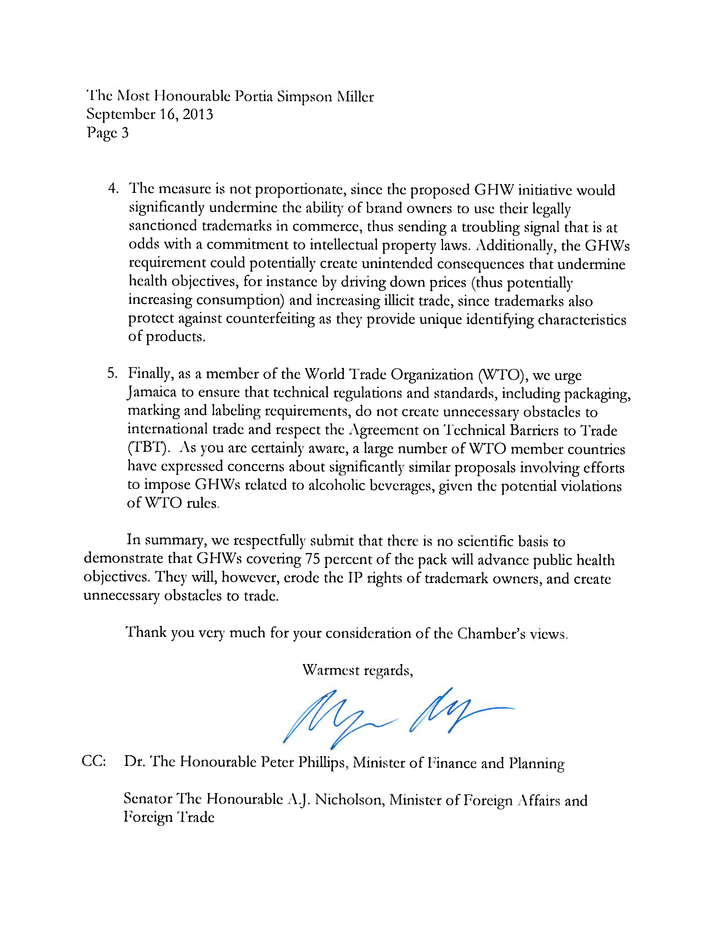
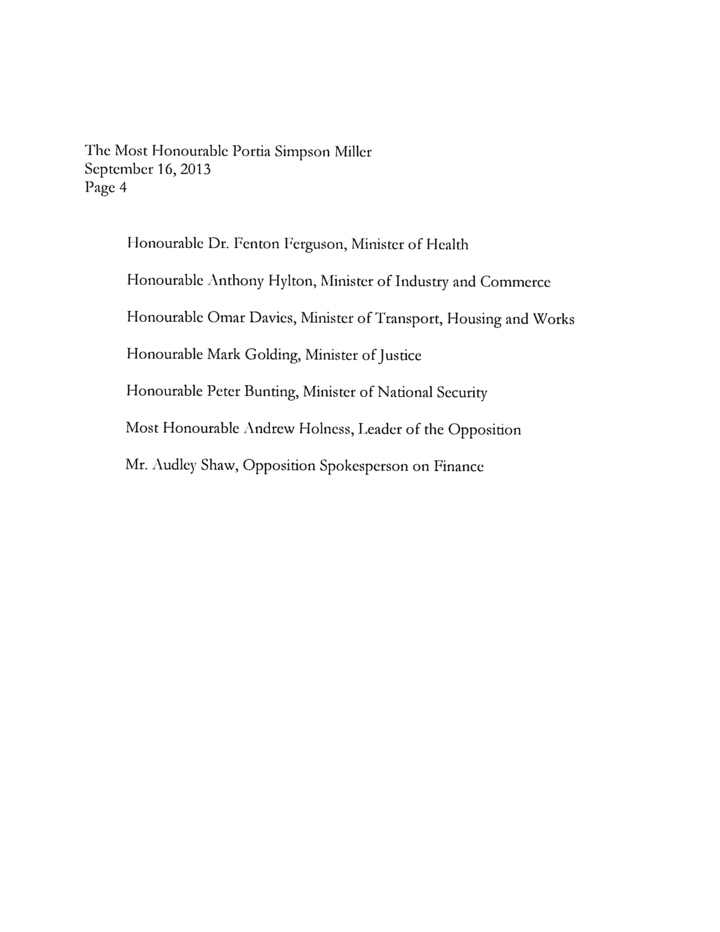
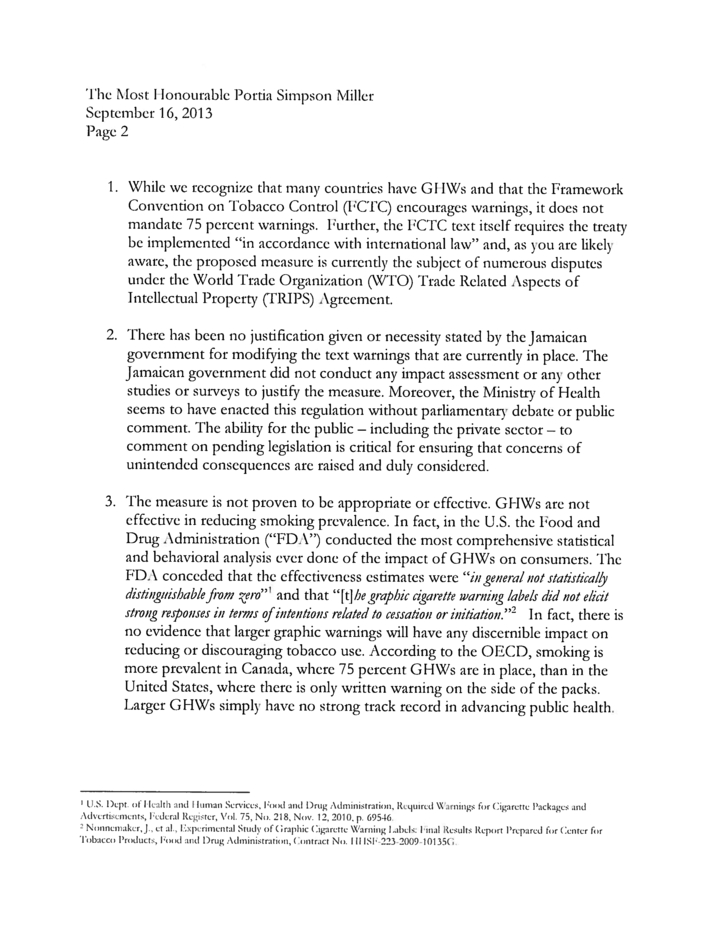
Jamaica
A September 2013 letter to the prime minister protests a new regulation, claiming graphic warning labels “are not effective” and create “unnecessary obstacles to international trade.”

Moldova
In a February 2014 letter, the chamber called a number of proposals “extreme measures” including bans on menthol and slim cigarettes, a ban on advertising at the point of sale and restrictions on smoking in public places.

Nepal
In a January 2015 letter, the chamber says a proposal to increase graphic health warnings on cigarette packs is “of concern to American companies,” and there is not “science-based evidence” it will have an impact.

Uruguay
In an April 2014 letter to the president of the Senate, the chamber expresses concern over new legislation that would bar retailers from displaying tobacco products, calling it “a serious threat to intellectual property.”

New Zealand
In a March 2014 letter, the chamber says new plain packaging legislation “sets a dangerous precedent” by violating trade laws.

 

jamaica_1-720 jamaica_2-720 jamaica_3-720 jamaica_4-720

Letters and documents from the U.S.
Chamber of Commerce’s foreign affiliates

These generally refer to legislation within their own country, but not always.

New Zealand (and Indonesia)
In a March 2014 letter sent to the parliamentary health committee in Ireland, the American Chamber of Commerce in Indonesia objects to the plain package proposal, calling the evidence “questionable.”

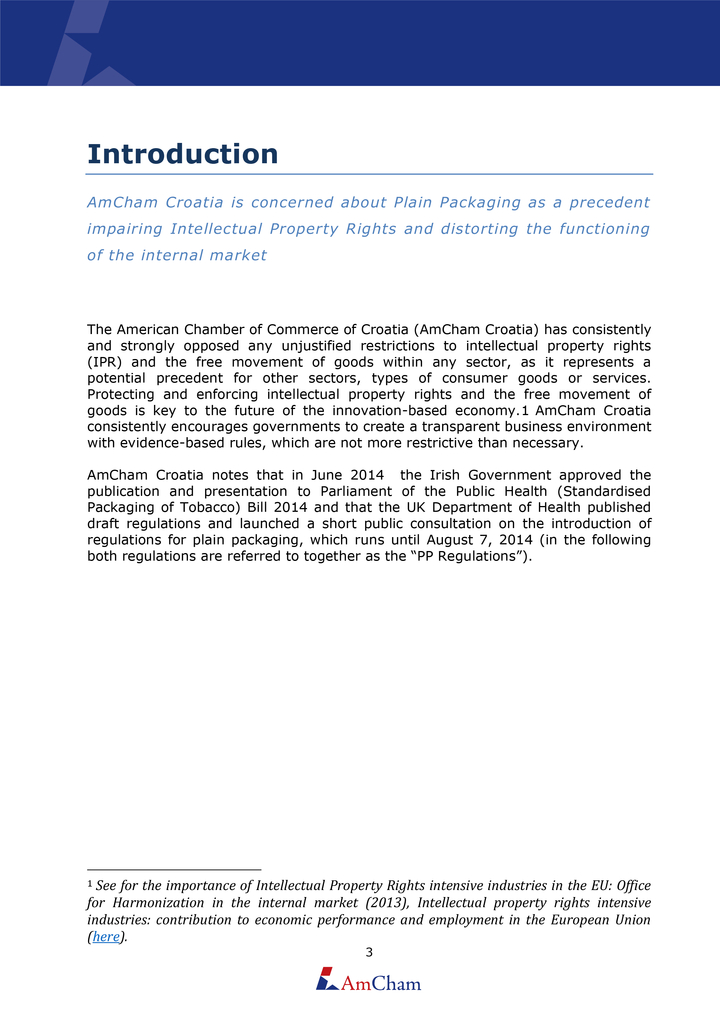
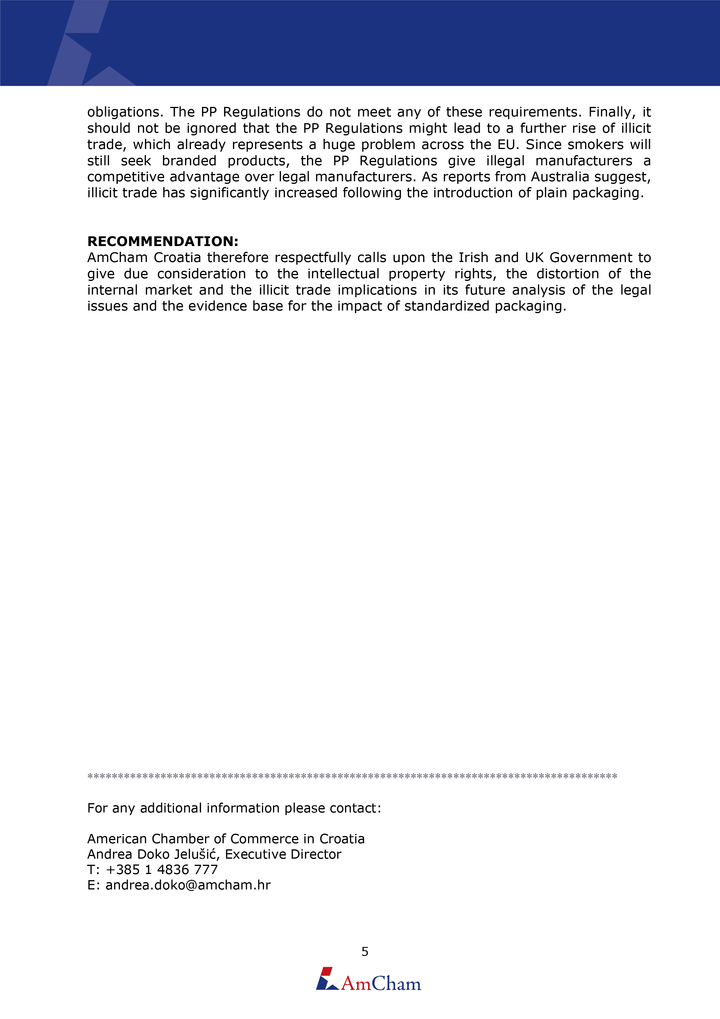
Croatia
In a September 2014 position paper, the American Chamber of Commerce in Croatia outlined its opposition to legislation requiring cigarettes be sold in plain packages in other European Union member states.

Estonia
A paper outlining the policy priorities of the chamber affiliate quotes a Philip Morris executive who says protecting intellectual property in Estonia is crucial “to maintain its competitive position in the global economy.”

Ireland (and Poland)
In a July 2014 letter to the prime minister, the Polish affiliate says both countries “would all be losing out” if Ireland imposes plain packaging requirements.

Ukraine
In May, the prime minister, Arseniy Yatsenyuk, said that his country began a trade case against Australia’s plain packaging law in 2012 because of a complaint by the U.S. Chamber.


croatia_to_ireland_1-720

croatia_to_ireland_2-720

croatia_to_ireland_3-720

croatia_to_ireland_4-720

croatia_to_ireland_5-720


Letters from the U.S. Chamber with other business groups

European Union
In an April 2013 letter to the European Union’s ambassador to the United States, the U.S. Chamber joined other American business groups in opposing “arbitrary product prohibitions” in new tobacco legislation.

White House
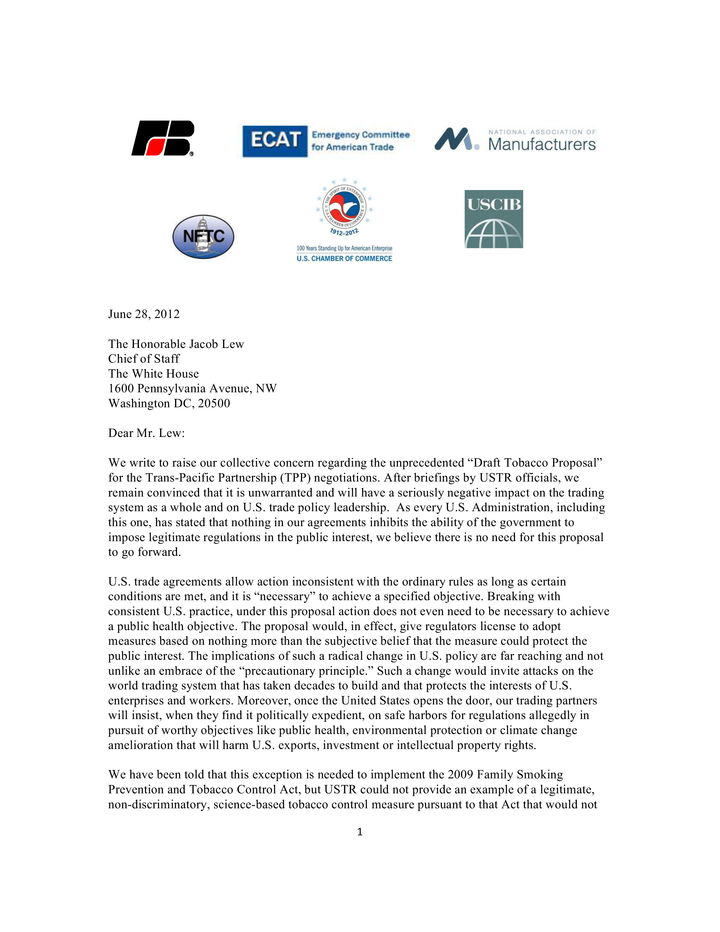
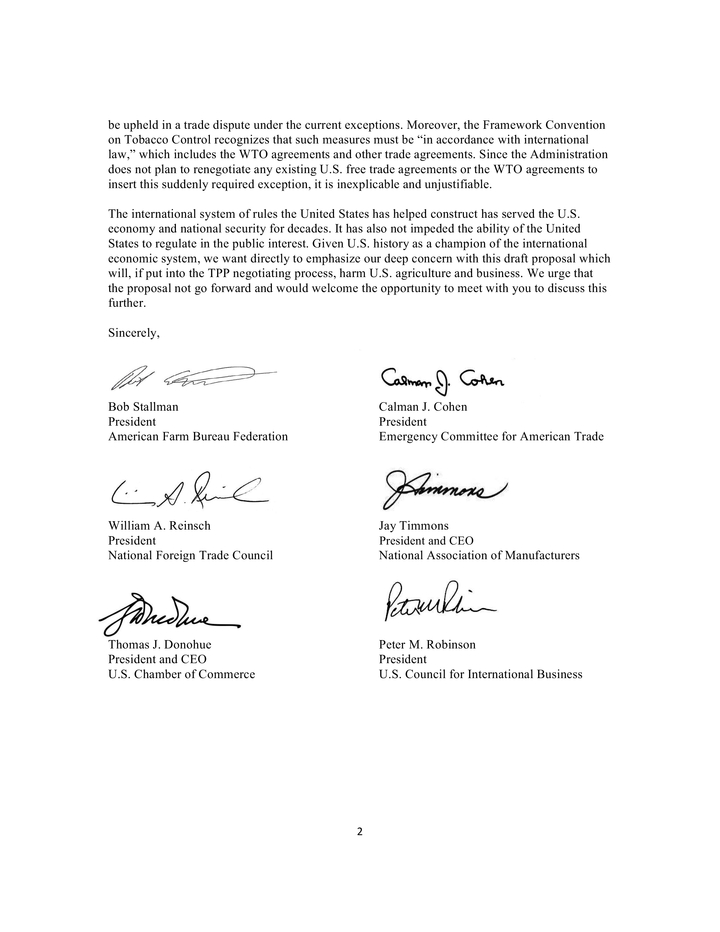
In a June 2012 letter to the then chief of staff, Jacob Lew, the chamber, with five other business groups, objects to the Draft Tobacco Proposal for the Trans-Pacific Partnership negotiations.

U.S. Trade Representative
The chamber, in August 2013 letter with more than 15 other business groups, objects to a “product-specific reference to tobacco or any other product” in relation to the Trans-Pacific Partnership negotiations.
white_house_1-720 white_house_2-720

“Smoking is one of the leading causes of death,” Brooke Thurston, a spokeswoman for Steward, said in a statement, adding, “If the chamber is in fact advocating for increased smoking we do not agree with them on this public health issue.”

The other three companies declined to comment.

Their silence stands in contrast to opposition to the chamber’s tobacco lobbying from a surprising source: the public relations firm Burson-Marsteller.

“It’s pretty obvious that you don’t want to be seen doing the bidding of an interest which is no longer legitimate,” said David Earnshaw, president of the Brussels office of Burson-Marsteller, a company that long worked for the tobacco industry. He tried unsuccessfully to prevent a major affiliate of the chamber, based in Brussels, from issuing a position paper targeting a European proposal on plain packaging.

In a statement Tuesday, the chamber said, “we know that smoking carries obvious health risks,” but added that “we are concerned that a number of governments have acted in ways that are inconsistent with their international obligations.”

The statement said the chamber had raised “substantive concerns” about “the destruction of intellectual property and the dangerous precedent of discrimination against a legal product possibly spreading to other sectors.” It added, “We make no apology for asking governments to keep their word.”

The chamber has not addressed why it has opposed health measures like restricting smoking in public places.

The Times reported this week that the chamber lobbies against antismoking laws in many countries, pits countries against one another on tobacco issues in trade forums, and, in Washington, defends the ability of the tobacco industry to sue under future trade deals.

The chamber, which claims more than three million members, previously encountered friction over its policies. Apple abandoned the chamber in 2009 over its rejection of climate change regulation. The construction giant Skanska left in 2013 after protesting the chamber’s resistance to green building codes.

Last year, when the branch of the American Chamber of Commerce in Brussels, known as AmCham EU, drafted its paper outlining opposition to plain packaging, the only inkling of dissent came from a footnote.

“This position paper does not represent the views of all members of AmCham EU,” it said, in an italicized note at the end.

Burson-Marsteller, which has had its share of controversial clients, was an unlikely rebel against the chamber’s position. The firm developed public relations and marketing campaigns for RJR Reynolds like “Project SPA,” the introduction of its failed Premier brand of cigarettes in the 1980s. Burson, a member of AmCham EU, also worked extensively for Philip Morris U.S.A., now part of Altria, developing campaigns that included a strategy to beat back criticism of the cigarette maker’s sponsorship of women’s tennis.

But in 2010 the firm renounced tobacco. Last year, Mr. Earnshaw raised objections with AmCham EU about aligning with tobacco interests, especially with many members in the cross hairs of European regulators and lawmakers facing concerns about privacy, the dominance of technology companies based in the United States and negotiations over a trans-Atlantic trade treaty.

“I tried to stop AmCham from shooting itself in the foot,” Mr. Earnshaw said. “It’s particularly crazy at a time when there are such big issues that American companies need to be involved in.”

“AmCham is extremely influential in public affairs,” he added. “If it starts producing position papers defending big tobacco on plain packaging, it’s going to make itself look ridiculous.”

The chamber’s E.U. branch proceeded with the position paper, arguing that plain packages unfairly harmed tobacco maker’s intellectual property and posed a broader threat to trademarks, representing “a potential precedent for other sectors and consumer goods or services.”

The chamber’s argument sounded as if it could have been written by the tobacco industry. An unpublished early version of the position paper, which was obtained by The Times, reveals that the rapporteur, or primary author, was Anne-Laure Covin, an executive of Philip Morris International, which is now separate from Philip Morris U.S.A. The company had no comment.

Philip Morris was not the only company involved. The paper came from a committee at the chamber’s European Union branch run by a Time Warner executive, Vincent Jamois, whose name and corporate affiliation are on the draft version of the paper, right above Ms. Covin’s name.

In other forums, Time Warner has expressed concern about cigarettes; in 2005 the company introduced a Tobacco Depiction Policy that sought to limit the number of times people were shown smoking in movies. The goal was “to reduce or eliminate the depiction of smoking and tobacco products/brands in their feature films, unless there is a compelling creative reason for such depictions,” the policy said.

Time Warner even undertook a detailed study of the effectiveness of the policy, finding that total depictions of smoking in its movies fell to 534 in 2013 from 1,346 in 2006.

The committee Mr. Jamois leads deals with intellectual property. The tobacco industry has attracted broader corporate support by framing opposition to plain packaging as a defense of intellectual property rights.


Other companies and institutions whose executives are listed on the U.S. Chamber’s board include Pfizer, which markets the smoking-cessation drug Chantix.

“Tobacco use is the leading cause of preventable death in the world,” Sharon Castillo, a spokeswoman for Pfizer, said in response to questions. But she continued, “Our membership of any group comes with the clear understanding that we may not always agree with all the positions of the organization.”

Part of the chamber’s campaign seeks to discredit antismoking efforts by claiming they lack scientific evidence of effectiveness, particularly requirements that cigarettes be sold in plain packages shorn of corporate logos, or that they be covered with graphic health warnings, or sometimes a combination of the two. A letter from the chamber to the prime minister of Jamaica in 2013 was typical, contending that graphic health warnings “are not effective in reducing smoking prevalence.”

But many studies have found that plain packaging and packages covered with diseased lungs and other disturbing images make smoking less palatable.

“Graphic warnings do work, they motivate people to quit smoking,” said Seth Noar, an author of an analysis by researchers at the University of North Carolina of 37 tobacco studies.

For health care companies, a prominent role in a group that antismoking advocates see as the tobacco industry’s biggest ally can be particularly awkward. Like Anthem, the Health Care Service Corporation encourages members to stop smoking.

One video on its website called “Da Couch Potato” features an overweight man who smokes, drinks beer and watches the Chicago Bears but wants to get back in shape. A news release highlights that “smoking one pack of cigarettes per day can add up to $1,825.00 each year and tobacco use accounts for more than $96 billion a year in medical costs.”

John Cannon, HCSC’s executive vice president and chief administrative officer, is a member of the chamber’s board.

Dr. Ralph de la Torre, a cardiac surgeon and the chairman and chief executive of the Steward health system, also is a board member. One of Steward’s hospitals advertises a smoking-cessation program by saying, “There are a million reasons to quit smoking but it only takes one.”

Daniel F. Evans Jr., chief of the Indiana University Health system, is another member of the chamber’s board. His health system offers a program called “Beat Tobacco” taught by “qualified tobacco educators” who “understand the struggles and side effects of tobacco cessation.”

Lisa Gilbert, who tracks the chamber for Public Citizen, a consumer advocacy group founded by Ralph Nader, said the health companies were conflicted.

“It’s interesting to think of a company giving money to another organization to lobby while publicly proclaiming the opposite policy position,” she said. Such companies either “have no idea what’s being lobbied on and would be appalled to learn that something is diametrically opposed to what they support,” or “there is some actual reason to invest in tobacco control publicly but work to keep laws just as they are in private.”

Moffitt Cancer Center Receives US$3.6 Million Grant to Study E-Cigarettes

https://moffitt.org/newsroom/press-release-archive/2015/moffitt-cancer-center-receives-36-million-grant-to-study-e-cigarettes/

TAMPA, Fla. – Moffitt Cancer Center received a $3.6 million grant from the National Institutes of Health to study the use of electronic cigarettes, or e-cigarettes, over the next five years.

Rather than burning tobacco like traditional cigarettes, e-cigarettes “vaporize” a liquid that usually contains nicotine, and the user inhales the vapor like they would inhale normal cigarette smoke. The use of e-cigarettes has risen dramatically since their introduction a decade ago.

Although very little is known about the safety of these new products, they are thought to be much less dangerous than conventional cigarettes. Most e-cigarette users report that they began using the product in an attempt to quit or cut down on smoking. However, there has been little research to date on the effectiveness of e-cigarettes for quitting smoking.

The goal of the new Moffitt grant is to learn how e-cigarettes are used over time, and whether users are eventually successful at quitting smoking. During the first year of the study, Moffitt researchers will be interviewing e-cigarette users to learn about their experiences and their perceptions of the pros and cons of e-cigarettes. The researchers want to interview current and former smokers who are also current or former e-cigarettes users.

According to the lead investigator on the project, Thomas Brandon, Ph.D., director of the Tobacco Research & Intervention Program at Moffitt, “Public health researchers are really playing catch-up with the explosion of e-cigarettes onto the marketplace.”

During the final four years of the study, Moffitt researchers plan to enroll 2,500 e-cigarette users throughout the United States, and follow them for 24 months by sending them surveys every three months. The research is expected to provide valuable data about the long-term use of e-cigarettes and their value for quitting smoking.

“Millions of smokers are using e-cigarettes to try to quit smoking, yet because there is a lack of data, we are not able to advise them whether that is an effective smoking cessation strategy. This study should provide some answers that will be very useful to smokers as they consider ways to quit,” Brandon explained.

For more information, e-cigarette users interested in being interviewed should call Moffitt’s Tobacco Research and Intervention Program toll-free at 1-877-954-2548.
About Moffitt Cancer Center

Located in Tampa, Moffitt is one of only 41 National Cancer Institute-designated Comprehensive Cancer Centers, a distinction that recognizes Moffitt’s excellence in research, its contributions to clinical trials, prevention and cancer control. Moffitt is the top-ranked cancer hospital in the Southeast and has been listed in U.S. News & World Report as one of the “Best Hospitals” for cancer care since 1999. With more than 4,500 employees, Moffitt has an economic impact in Florida of nearly $1.6 billion. For more information, visit MOFFITT.org, and follow the Moffitt momentum on Facebook, Twitter and YouTube.

Randomised clinical trial of snus versus medicinal nicotine among smokers interested in product switching

http://tobaccocontrol.bmj.com/content/early/2015/05/19/tobaccocontrol-2014-052080.full?g=w_tc_open_tab

Abstract

Background

An essential component of evaluating potential modified risk tobacco products is to determine how consumers use the product and resulting effects on biomarkers of toxicant exposure.

Study design

Cigarette smokers (n=391) recruited in Minnesota and Oregon were randomised to either snus or 4 mg nicotine gum for 12 weeks. Participants were instructed to completely switch from cigarettes to these products. Urine samples were collected to analyse for carcinogenic tobacco-specific nitrosamine metabolites (4-(methylnitrosamino)-1-(3-pyridyl)-1-butanol and N′-nitrosonornicotine and their glucuronides) and nicotine metabolites (total cotinine and nicotine equivalents) levels.

Results

Of the 391 participants randomised, 52.9% were male, the mean±SD age was 43.9±12.5 years, baseline number of cigarettes/day was 18.0±6.5 and Fagerstrom Test for Nicotine Dependence score was 5.1±2.0. The mean±SD number of snus pouches used/week at week 6 prior to tapering was 39.1±24.0 and nicotine gum pieces used was 37.6±26.3. Dual use of cigarettes and these products were observed in 52.9% and 58.2% of those assigned to snus and nicotine gum, respectively, at week 12. The end of treatment biochemically verified (carbon monoxide, CO <6 ppm) 7-day avoidance of cigarettes was 21.9% in the snus group and 24.6% in the nicotine gum group. Toxicant exposure in the nicotine gum group was significantly less when compared to snus.

Conclusions

Snus performed similarly to nicotine gum in cigarette smokers who were interested in completely switching to these products, but was associated with less satisfaction and greater toxicant exposure than nicotine gum.

Trial registration number NCT: 00710034.

Women’s Organization Establishes China’s 1st No-Smoking Community

May 12, 2015

Lin Zhiwen and Chen Hongmei

A women’s organization has helped most tobacco users in Huangwai Community, Zhanjiang City in south China’s Guangdong Province, quit smoking and turned the community into the country’s first smoking-free village.

Since May 2013, Women’s Home, an organization affiliated to the local women’s federations, has urged female residents to help tobacco users quit smoking and ask their husbands to sign no-smoking agreements.”

It was a tough task, given that more than 800 out of its 1,300 residents were tobacco users.

During the campaign, female residents of the village gathered their smoking pipes and destroyed them on voluntary basis.

To better promote the building of a smoke-free community, “Women’s Home” proposed to establish a smoking surveillance team consisting of women members.

The proposal was warmly received and over 30 elderly women joined the group.

For those they found smoking in the community, the team asked them to do cleaning jobs in the public areas of the community and for those who quit smoking and gave up for more than a year, they hand out rewards.

At the entrance to the village, the team erected a plaque, saying “Smoking-free Community” and posted no-smoking signs in public areas.

In addition to routine surveillance, the team goes around the village to see whether there are people smoking in public areas and they are also open to complaints about smoking in households.

“The community’s call for residents to quit smoking is appreciated most by women,” said a team member, who gave a successful example of her husband quitting smoking.

“When my husband quit smoking, my father-in-law also gave up,” she said. “Now, no one coughs because of smoking in my family. It is good for my two children who are growing up.”

The initiative to build a smoking-free community is one of the measures of the “Women’s Home” in Huangwai to encourage women to “hold up half the sky”, as in the famous 20th century Chinese phrase.

Li Yingmei, director of the community’s Women’s Congress, said that the campaign was a measure to empower women, and that “Women’s Home” leads women to participate in the management of the affairs of the community.

Currently, “Women’s Home” has an office and large recreation center of around 180 square meters. In addition to the anti-smoking team, it has established cooperatives as well as exercise, volunteer and cleaning attendant teams.

http://www.womenofchina.cn/womenofchina/html1/news/action/1505/1061-1.htm

Pill that quashes tobacco urge found in plain sight

http://www.washingtonpost.com/business/economy/pill-promises-a-safer-cheaper-way-than-chantix-to-quit-smoking/2015/05/15/8ce5590c-f830-11e4-9030-b4732caefe81_story.html

These laburnum trees growing in vast orchards in Bulgaria could be the source of a potential new stop-smoking drug that’s being tested now in the United States. (PHOTO COURTESY OF MARIA VUCHEVA /PHOTO COURTESY OF MARIA VUCHEVA )

These laburnum trees growing in vast orchards in Bulgaria could be the source of a potential new stop-smoking drug that’s being tested now in the United States. (PHOTO COURTESY OF MARIA VUCHEVA /PHOTO COURTESY OF MARIA VUCHEVA )

Rick Stewart didn’t know about the laburnum trees growing in Bulgaria — and their potential to produce a drug for quitting smoking — back when he was the chief executive of the pharmaceutical company Amarin.

He was too deep inside the drug industry, a place often criticized for its short-sighted focus on profits. He had to fail first. Only then could he spot the opportunity in those yellow-flowering trees.

Now, with the help of the National Institutes of Health, Stewart is trying to introduce the laburnum-derived drug to the U.S. market. The pill works by interrupting tobacco cravings, much like Pfizer’s top-selling Chantix, but possibly without that drug’s high-profile side effects and at a much lower price. A recent run of positive studies have buoyed the pill’s prospects. Today, researchers are excited about what could be the first new treatment for smoking cessation to emerge in years.

“We need this,” said David Shurtleff, deputy director of the NIH Center for Complementary and Integrative Health, explaining why his agency is helping to get the drug approved.

But laburnum’s promise is not new. It was just overlooked — for decades — highlighting holes in how drugs are traditionally developed.

In 2007, Stewart had staked his job as the head of Amarin on a different drug. Miraxion was for treating Huntington’s Disease, and early on it showed signs of improving symptoms of the neurological disorder. But then the drug failed two late-stage trials. Investors in Amarin, a $240 million company based in New Jersey, were stunned. The company’s stock fell 80 percent. Stewart was out of a job.

“The CEO always falls on his sword,” Stewart, 56, says now.

But Miraxion did appear to help patients with Huntington’s — it just took longer than the six months allotted during the clinical trials. Yet the damage was done. This led Stewart and Anthony Clarke, who also lost his job after running the trials for Amarin, to wonder what other misunderstood drugs were out there. They went on a hunt.

“These drugs are uncared for or unwanted. They need tender loving care,” Stewart says. “And pharma, for whatever reason, can’t be bothered with them.”

They set up a tiny company outside London named Ricanto — a mash-up of their first names. They describe the firm’s focus as pharmaceutical asset optimization. They believed innovation was not limited to new drugs. Sometimes it’s just about rediscovering old ones.

Ricanto found a compounded drug used by a few European doctors for a rare autoimmune disorder and introduced it to a larger market. It then helped identify a treatment for severe childhood epilepsy and sold the drug rights to San Diego-based Zogenix in a $130 million deal.

In 2009, Stewart learned of the laburnum trees.

A co-worker told him about a company in Bulgaria named Sopharma that made a stop-smoking drug called Tabex. The pills contained cytisine, a natural compound found in the tree’s seeds. The drug was farmed from massive laburnum orchards in Bulgaria. Cytisine targeted brain receptors to block nicotine cravings. Its power had been recognized since at least the 1940s, when Russian soldiers in World War II, short on tobacco, reportedly turned to smoking the tree’s leaves. Some soldiers found they no longer needed cigarettes.

Sopharma began making the Tabex-branded cytisine pills in 1964, but they were available only in Central and Eastern Europe.

Stewart had never heard of the drug. But he was intrigued. He was also wary. Nearly 1 billion people smoke worldwide, according to the World Health Organization. Tobacco is blamed for 5 million deaths a year. A cheap, effective drug to help smokers quit would be huge. He wondered how others could have missed this opportunity.

There are only three treatment options for U.S. smokers looking to quit.

Chantix is the newest, debuting on the market in 2006. At the time, it was the first prescription drug approved for smoking cessation by the U.S. Food and Drug Administration in nearly a decade, since GlaxoSmithKline’s antidepressant Zyban. Aside from those two drugs, there also are the nicotine-replacement gums, lozenges and patches. But that’s it. The promise of treatments such as nicotine vaccines or other drugs had flamed out. Nothing new has come down the pike.

In 2008, Chantix (sold as Champix overseas) posted $846 million in worldwide sales. But that blockbuster number dropped 17 percent the next year when the FDA slapped a “black box” warning on Chantix and Zyban because of the risk of suicidal behaviors and other mental-health problems. Facing a wave of damaging publicity, Pfizer went on to settle 2,900 lawsuits for nearly $300 million. Chantix’s reputation is still suffering. Last year, it recorded $647 million in sales.

The risk of severe side effects alarmed Stewart.

Cytisine and Chantix work in similar ways. In fact, Pfizer chemists closely studied the plant product as they developed their synthetic drug. But Pfizer supercharged its derivative to increase efficacy. Stewart noted that Tabex had amassed a database of 5 million users in Eastern Europe without signs of Chantix-like side effects.

“Why aren’t we seeing the suicidality?” he recalls thinking.

One study suggested it was because cytisine is less potent. And many researchers today believe the worst side effects attributed to Chantix — such as suicidal thoughts — are unrelated to the drug. (A Pfizer study to be released later this year is expected by many to support this notion.) But stark differences between the two drugs are found in other severe reactions, including abnormal dreams, insomnia and nausea. These are rare for cytisine, but seen in up to 30 percent of Chantix users.

Stewart struck a deal with Sopharma. He wanted to get the drug approved in Western Europe and the United States. Instead of calling it Tabex, the pill would be named Extab.

But Stewart still faced a daunting problem with cytisine.

“There’s no money in it,” said Dr. Taylor Hays, director of the Nicotine Dependence Center at the Mayor Clinic in Rochester, Minn., who would love to see cytisine get a shot here. “And that’s what usually motivates people to try bringing it to market. The money is going to drive it.”

“It’s just frustrating to think that there’s something that could be helping people and we’re not using it,” said Dr. Nancy Rigotti, director of the Tobacco Treatment Unit at Massachusetts General Hospital.

A natural product like cytisine cannot be patented. That makes its market position harder to defend. And getting a drug approved requires millions of dollars. Drug companies say the cost of developing and getting approval for a new drug is $1 billion. This might explain why some companies have seen blockbuster profits with treatments for rare diseases, such as Genzyme’s drug for Goucher disease, which costs $300,000 a year.

“They’re fixated on patent protection and new drugs,” Stewart said.

Stewart is banking on two things to turn a profit with Extab. One is the limited cytisine supply. A competitor would need to plant vast orchards of laburnum trees — hundreds of thousands of them — and wait four years before the drug-containing seeds could be harvested.

The other thing is that Extab is new to the U.S. market. No one has ever tried to get it approved. So the drug would have five years of U.S. market exclusivity as a novel drug under the 1984 Hatch-Waxman Act. That’s less than the typical 20-year window for patented medicines. But it’s something.

“It’s a really old, novel drug,” Stewart says.

Still, he needed help getting the drug through the U.S. regulatory maze. He needed to get lucky. And he did.

British medical authorities offered to pay for and run a clinical trial of cytisine. In 2011, the findings were published in the New England Journal of Medicine, showing cytisine was 3.4 times more likely than placebo to help people quit smoking and stay that way for one year, on par with Chantix.

Then a review by University of Sheffield researchers compared cytisine with Chantix and concluded that while more investigation was needed, “Cytisine is estimated to be both more clinically effective and cost-effective than (Chantix).”

But the real turning point came in December, when another study was published in the New England Journal of Medicine. Researchers with New Zealand’s National Institute for Health Innovation found cytisine was superior to the nicotine-replacement gum or patch.

The drug now had two large-scale clinical trials under its belt.

But more work lies ahead.

“I’m either absolutely mad or I guess I really believe in it,” Stewart says.

European regulators and the FDA are considering what more they need, Stewart says.

In preparation, a lab in California recently started early-stage safety tests on Extab. The NIH is picking up the tab. The NIH’s Shurtleff said the agency wants to support promising drugs that don’t have a clear path to the marketplace, especially natural products.

“That’s where we come in and provide that capital,” he says.

It could take three to five more years for the FDA’s blessing. Stewart said he hopes to find a partner to help his small firm with the U.S. market. He also brushes off any suggestion that Extab would go head-to-head with Chantix, which is made by one of the world’s biggest drug firms. It’s a strategic move on his part.

“They’ll crush us,” he says.

Stewart estimated that Extab could see $400 million in annual sales worldwide five years after launch. Pfizer will notice that.

Currently, the cytisine supply comes from 100,000 laburnum trees planted in fields ringed by protective fences in Bulgaria. Stewart knows that will not be enough if all goes to plan — if the FDA approves, if Extab takes off. He will need to ramp up production.

He has plans to plant 300,000 more of those yellow-flowering trees, including some in the United States, orchards so large they would be impossible to miss.

The relationship between smoking status and health-related quality of life among smokers

http://bmjopen.bmj.com/content/5/5/e007249.full?g=w_tc_open_tab

The relationship between smoking status and health-related quality of life among smokers who participated in a 1-year smoking cessation programme in Taiwan: a cohort study using the EQ-5D

Abstract

Objective

To assess the relationship between smoking status and health-related quality of life 1 year after participation in a smoking cessation programme in Taiwan.

Design

A cohort study of smokers who voluntarily participated in a smoking cessation programme with two follow-up assessments of smoking status via telephone interview, conducted 6 months and 1 year after finishing the smoking cessation programme.

Setting

Hospitals and clinics providing smoking cessation services.

Participants

A total of 3514 participants completed both telephone interviews, which represents a response rate of 64%. After the interviews, participants were divided into four groups according to their smoking status: (1) long-term quitters: participants who had quit tobacco use for 1 year; (2) short-term quitters: participants who had been smoking for at least 6 months and then quit tobacco for 6 months after participating in the programme; (3) relapsed smokers: participants who relapsed into tobacco use after ceasing tobacco use for 6 months; and (4) continuing smokers: participants who failed to quit smoking for at least 1 year, despite participating in the programme.

Interventions

The Outpatient Smoking Cessation Service of Taiwan provides counselling and pharmacotherapy to individuals seeking to quit smoking.

Primary outcomes

The health-related quality of life of the participants was measured using an approved Chinese version of the EuroQol-5D-3L (EQ-5D-3L) descriptive system.

Results

After controlling for sex, age, education, marital status, job status, monthly income and disease status at baseline, our results revealed that long-term (OR=0.61 (0.48 to 0.77)) and short-term (OR=0.65 (0.54 to 0.79)) quitters experienced less anxiety and depression than did continuing smokers.

Conclusions

Our study provides evidence to support claims that all quitters, regardless of whether they stop smoking for 6 months or 1 year, have better quality of life with regard to anxiety or depression.

Why do smokers try to quit without medication or counselling?

http://bmjopen.bmj.com/content/5/4/e007301.full?g=w_tc_open_tab

Why do smokers try to quit without medication or counselling? A qualitative study with ex-smokers

Abstract

Objective

When tobacco smokers quit, between half and two-thirds quit unassisted: that is, they do not consult their general practitioner (GP), use pharmacotherapy (nicotine-replacement therapy, bupropion or varenicline), or phone a quitline. We sought to understand why smokers quit unassisted.

Design

Qualitative grounded theory study (in-depth interviews, theoretical sampling, concurrent data collection and data analysis).

Participants

21 Australian adult ex-smokers (aged 28–68 years; 9 males and 12 females) who quit unassisted within the past 6 months to 2 years. 12 participants had previous experience of using assistance to quit; 9 had never previously used assistance.

Setting Community, Australia.

Results

Along with previously identified barriers to use of cessation assistance (cost, access, lack of awareness or knowledge of assistance, including misperceptions about effectiveness or safety), our study produced new explanations of why smokers quit unassisted: (1) they prioritise lay knowledge gained directly from personal experiences and indirectly from others over professional or theoretical knowledge; (2) their evaluation of the costs and benefits of quitting unassisted versus those of using assistance favours quitting unassisted; (3) they believe quitting is their personal responsibility; and (4) they perceive quitting unassisted to be the ‘right’ or ‘better’ choice in terms of how this relates to their own self-identity or self-image. Deep-rooted personal and societal values such as independence, strength, autonomy and self-control appear to be influencing smokers’ beliefs and decisions about quitting.

Conclusions

The reasons for smokers’ rejection of the conventional medical model for smoking cessation are complex and go beyond modifiable or correctable problems relating to misperceptions or treatment barriers. These findings suggest that GPs could recognise and respect smokers’ reasons for rejecting assistance, validate and approve their choices, and modify brief interventions to support their preference for quitting unassisted, where preferred. Further research and translation may assist in developing such strategies for use in practice.

Tobacco giants fund e-cigarettes LEAST likely to make you quit

http://www.mirror.co.uk/news/technology-science/science/tobacco-giants-fund-e-cigarettes-least-5591868

Cigalikes are less effective at helping you quit nicotine than the “tank” model of e-cigs

Tobacco giants are funding the types of e-cigarettes that are LEAST likely to make you quit, according to a new study.

The study looked at 587 people using e-cigarettes and compared those who used “cigalikes” versus those who used “tank” models.

Cigalikes resemble tobacco cigarettes and are either disposable or use replaceable cartridges. The tank models, on the other hand, look different and have chambers that are filled with e-liquid.

In the study around 76% of participants used cigalikes while 24% used tank models.

After a year nearly a THIRD of daily tank users (28%) had quit smoking compared with 11% of daily cigalike users. This is roughly the same as those who didn’t use e-cigarettes (13%).

The cigalike model (left) is less effective for quitting nicotine than the tank model

Non-daily cigalike users were even less likely to quit than those not using e-cigarettes – with just 5% quitting smoking.

The researchers – from Kings College London – flagged this as a cause for concern, particularly since the tobacco industry owns many of the most prominent cigalike brands. Plus tobacco industry-owned cigalikes tend to be most prominently positioned in the shops that sell them.

That’s at the same time as tobacco giants are using MASSIVE lobbying power to dilute EU regulation of the industry.

“At this point we don’t know why people who use tank type e-cigarettes daily are more likely to have quit,” said the study’s author Dr Sara Hitchman.

Big tobacco has bought a lot of e-cigarette companies

“Research suggests that tanks might deliver nicotine more effectively and perhaps be more satisfying to users, but there may also be other factors, including price and the ways that tanks allow the user to adapt the product, such as the nicotine content and flavour of the liquid.”

There were a number of problems with the research, which the authors highlight, including a very small sample of volunteers – particularly in the group using the tank model of e-cigarette.

Furthermore, the small group was very different in terms of age and education so it’s hard to prove the causal link between the type of vaping device and quitting smoking.

The tank model of e-cig delivers nicotine more effectively

Finally the study is from 2013; e-cigs have evolved a lot since then.

“If this really does, eventually, turn out to be a true effect, then it argues for the use of these products within a regulated cessation programme, rather than using them as a consumer good,” said Professor Martin McKee from the London School of Hygiene & Tropical Medicine.

“Given other concerns about the toxicity of long term inhalation of nicotine and the flavourings contained in these products, it seems that the precautionary approach adopted by public health authorities in many countries remains justified,” he added.

Tom Pruen from e-cig trade body ECITA says he doesn’t think tobacco companies are producing ineffective products deliberately.

“I think it’s more a reflection that the simple,sealed, cigalike products are better suited to the wholesale distribution channels they use, and the poor understanding of the market they had when buying up e-cig companies,” he said.

Half of young smokers relapse after quitting, HKU project finds

About half of young people who received counselling from a University of Hong Kong smoking cessation project began smoking again within six months – despite having successfully quit in the first month – with slightly more women than men relapsing.

Among the 293 smokers who kicked the habit for a month, some 46 per cent took it back up by the sixth month, according to findings by the smoking cessation hotline Youth Quitline.

Since the hotline was set up in 2005, its operators have provided smoking cessation counselling services to 1,591 smokers aged 25 or younger. The counselling, offered by fellow students, consists of advice on ways to quit, followed by seven follow-up calls over a two-year period.

As added motivation, participants are rewarded HK$300 if they manage to stay smoke-free during the sixth month of their participation, but they must pass tests for carbon monoxide and nicotine percentages within the body. As of the end of January, the hotline had helped 335 people quit.

Young women showed a slightly higher relapse rate, with more than 51 per cent of female participants falling back into the habit within six months, compared to some 44 per cent of men.

While half of those who relapsed reported cravings as their main reason for taking up smoking again, the influence of peers was a close second.

“If friends around them are all smokers, they are more likely to … smoke again,” Dr William Li Ho-cheung, project director of the Youth Quitline, said.

“Women’s smoking is more likely linked to [their] emotions,” Professor Lam Tai-hing, of HKU’s school of public health, said.

“They might smoke when they are happy or unhappy … they might also think if men smoked, why shouldn’t they smoke, too. Sometimes they might want to act rebelliously.”

Despite the high relapse rate, more than half of the participants acknowledged health as their main reason for quitting cigarettes. Some participants reported a lack of physical strength in doing exercises.

Lam said smoking provoked depression, which then made quitting even harder.

However, younger smokers showed a relatively mild dependence on nicotine, as some 65 per cent of them smoked fewer than 10 cigarettes per day.

Still, Lam warned that aggressive measures should be taken to combat smoking among the young. “If people start smoking at an early age, two out of three will die earlier,” he said.

Source URL (modified on Apr 22nd 2015, 12:29am): http://www.scmp.com/news/article/1773087/half-young-smokers-relapse-after-quitting-hku-project-finds

Want to quit smoking? Switching to e-cigarettes no advantage

Download (PDF, 658KB)