Clear The Air News Tobacco Blog Rotating Header Image

Clear The Air

Double tobacco tax, Council on Smoking and Health urges Hong Kong government

Clear the Air says:

YES this request shown in SCMP below was one year ago in 2015, and what did the Almighty do (aka John Tsang, Financial Secretary) ?

– well, absolutely nothing! He must prefer gathering the profits tax from the tobacco companies instead and thereby knowingly ignoring a binding

WHO International Instrument lodged with the UN Treaties office.

So here we are in 2016 and COSH, the Government Council on Smoking OR Health  funded body of experts with a deputy director of the Health Department on their Panel, again recommended an increase in tobacco tax to Almighty Tsang, and what did Almighty Tsang do?

– well he said in his budget he was going to provide more hospital beds and no mention of the required preventative measure excise tax increase.

COSH are clear on what they were repeatedly asking of the Almighty: obey the WHO FCTC Treaty requirements binding Hong Kong!

Here is the COSH overpolite response to the nondescript 2016 Almighty’s Budget, on non- preventative healthcare:

http://smokefree.hk/en/content/web.do?page=news20160224

http://smokefree.hk/en/content/web.do?page=PR20150225

So much for the Almighty’s Duty of Care to the people of Hong Kong and the smokers and the inquisitive youth, one of every two of these smokers will DIE, slowly and painfully from their inexpensive habit.

But the Amighty’s arrogance cuts far deeper; COSH is a Government funded body and the Financial Secretary has repeatedly ignored their expert advice and openly failed to follow the FCTC Treaty requirements.

Is this COSH, a Value-for-Money Organisation then if the Almighty can just repeatedly ignore their expertise?

Is it better to Prevent youth starting smoking, or to have to treat the effects of tobacco: nicotine addiction, cancer, emphysema and COPD, loss of productivity, increased health care, just build more hospital beds for them?

Is it Value-for-Money to use tax-payer money to subvent the tobacco companies, which Almighty Tsang repeatedly does, just pay for more hospital beds to treat the ravages caused by the tobacco companies and more doctors, nurses and medicines; instead of prevention of addiction by following WHO FCTC directives (increase tax annually, also increase tax in excess of the inflation rate) as a supposed ratified party to the FCTC Treaty ?

And why is Hong Kong not suing the tobacco companies for the costs of healthcare caused by the use of their consumer product?

__________________________________________________________________________________________

An anti-smoking body has told the government it should double tobacco tax in a bid to reduce the habit among Hongkongers.

The Council on Smoking and Health (COSH) proposes that a 100 per cent tax increase should to be implemented in the next fiscal year, in the hope of cutting the smoking rate from 10.7 per cent, to a single digit figure, between 9.5 and 9.9 per cent, in one to two years.

“At least now we have a preliminary goal and hope the smoking rate will have a further drop in the future,” said the council’s chairman, Antonio Kwong Cho-shing.

The proposal was supported by a survey on tobacco control policy, jointly conducted by COSH and the University of Hong Kong from May to September last year. Some 2,419 people were surveyed, including 800 current smokers, 800 former smokers and 819 people who had never smoked.

More than 65 per cent of the respondents replied that the 11.8 per-cent increase in tobacco tax last year was not effective in bringing smokers to quit, while 72.9 per cent supported increasing tobacco tax annually.

The retail price of a pack of cigarettes should be increased from the current HK$55 to HK$106, the respondents suggested as a mean average. The smokers went even further, suggesting on average that the price should be raised to HK$171.

COSH’s executive director, Vienna Lai Wai-yin, said that increasing tobacco tax is effective in encouraging smokers to quit. “This is more influential among youngsters and the elderly who are more price responsive,” she said.

She added that the World Health Organisation suggested tobacco tax as an “effective and important means” to reduce tobacco consumption.

Tobacco tax in the city was raised 300 per cent in 1983, which lead to a 4.6 per cent decline in the smoking rate over two years. However, tobacco tax has been frozen 12 times since 1999 with only two significant increases – a 50 per cent hike in 2009 and 41.5 per cent rise in 2011.

According to government thematic household survey reports, the smoking prevalence of people aged 15 or above dropped from 11.8 per cent in 2008 to 10.7 per cent in 2012. Secondary school pupils showed a more significant drop from 6.9 per cent to 3 per cent.

“If tax can increase 300 per cent, we will totally support it. It is indeed more effective than television advertisements,” said Professor Lam Tai-hing from the HKU School of Public Health.

COSH urged the government to allocate more resources towards smoking cessation and education, as tax revenue from tobacco products increased to HK$5.8 billion in 2013.

The current tax rate on a price of cigarettes is 69 per cent.

Source URL (modified on Jan 7th 2015, 5:43pm): http://www.scmp.com/news/hong-kong/article/1675992/double-tobacco-tax-council-smoking-and-health-urges-hong-kong
KPMG Report – Illicit tobacco in Australia

CTA says: Gee, read the KPMG disclaimer!

“This report on illicit tobacco consumption in Australia (“Report”) has been prepared by KPMG LLP in accordance with specific terms of reference (“terms of reference”) agreed between British American

Tobacco Australia Limited, Philip Morris Limited and Imperial Tobacco Australia Limited (together “the Addressees”), and KPMG LLP.

KPMG LLP has agreed that the Report may be disclosed to any party on the basis set out herein. KPMG LLP wishes all parties to be aware that KPMG LLP’s work for the Addressees was performed to meet

specific terms of reference agreed between the Addressees and KPMG LLP and that there were particular features determined for the purposes of the engagement.

The Report should not therefore be regarded as suitable to be used or relied on by any other person or for any other purpose. The Report is issued to other parties on the basis that it is for their information

only. Should any party choose to rely on the Report they do so at their own risk. KPMG LLP will accordingly accept no responsibility or liability in respect of the Report to any party other than the

Addressees.”

And the terms of reference were :

1.2 The purpose of this report

British American Tobacco Australia, Imperial Tobacco Australia Limited and Philip Morris Limited have commissioned KPMG LLP to conduct an independent report to estimate the size of the consumption of illicit

tobacco in Australia. The purpose of this report is: 1.To provide an overview of the nature and dynamics of the legal and illicit tobacco markets in Australia of the legal and illicit tobacco markets in Australia,

and2.To provide an independent estimate of the size of the illicit tobacco market in Australia. This report covers the twelve months (July 2013 to June 2014) up to the end of the first half of 2014 (H1 2014).

This H1 2014 report measuring the consumption of illicit tobacco in Australia is the first of two reports that will be tobacco in Australia is the first of two reports that will bepublished for 2014. KPMG has been appointed to produce

bi-annual reports on the illicit trade for the industry in Australia.


Meanwhile it seems KPMG swings with the wind, or rather finds results according to the client paymaster:

KPMG report funded by tobacco money spelling doom and gloom for the catering industry clinically decimated by University of HK report

http://www.legco.gov.hk/yr02-03/english/panels/hs/papers/hs1025cb2-1-2e.pdf

Whereas KPMG reports for the City of Ottawa show the complete opposite to what KPMG submitted with a different paymaster

www.ocat.org/economics/index.html

www.ocat.org/pdf/Final_KPMG_report_Nov_2002.pdf


and University of Bath TobaccoTactics says:

http://www.tobaccotactics.org/index.php/KPMG

http://www.tobaccotactics.org/index.php/Plain_Packaging:_Have_Illicit_Levels_Risen_in_Australia%3F

http://www.tobaccotactics.org/index.php/Countering_Industry_Arguments_Against_Plain_Packaging:_It_will_Lead_to_Increased_Smuggling

http://www.tobaccotactics.org/index.php/Scotland_Plain_Packaging:_Scaremongering_over_Illicit_Tobacco

http://www.tobaccotactics.org/index.php?title=Plain_Packaging:_Have_Illicit_Levels_Risen_in_Australia%3F&action=edit

http://www.cancervic.org.au/plainfacts/browse.asp?ContainerID=plainfacts-news

Download (PDF, 1.46MB)

CTA letter to Legco

Download PDF : CTAlettLeglackfunding

Download PDF : CTAlettPanelHSBudg

CTA letter to Chairman Liquor Licensing Board

Download (PDF, 1.92MB)

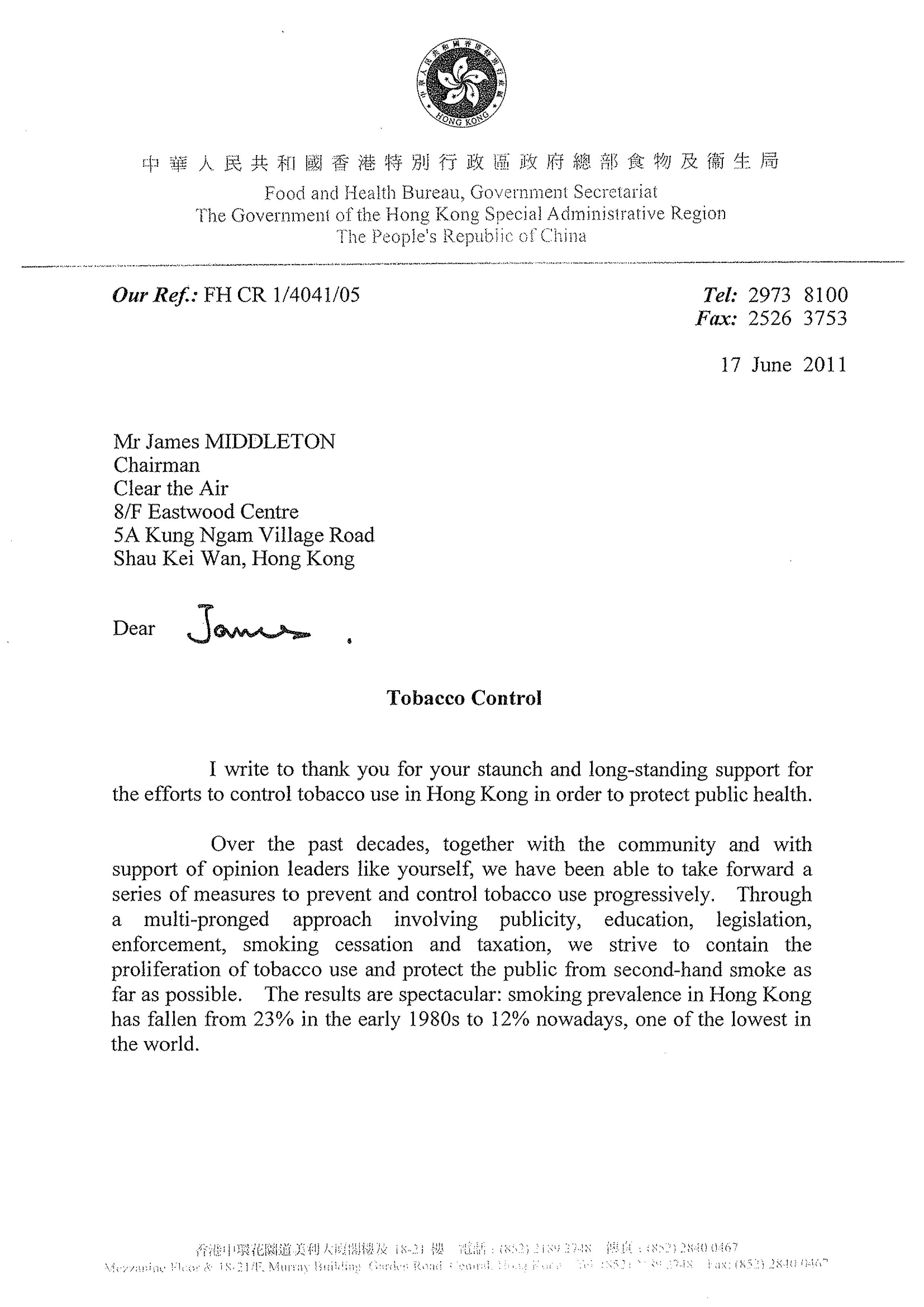
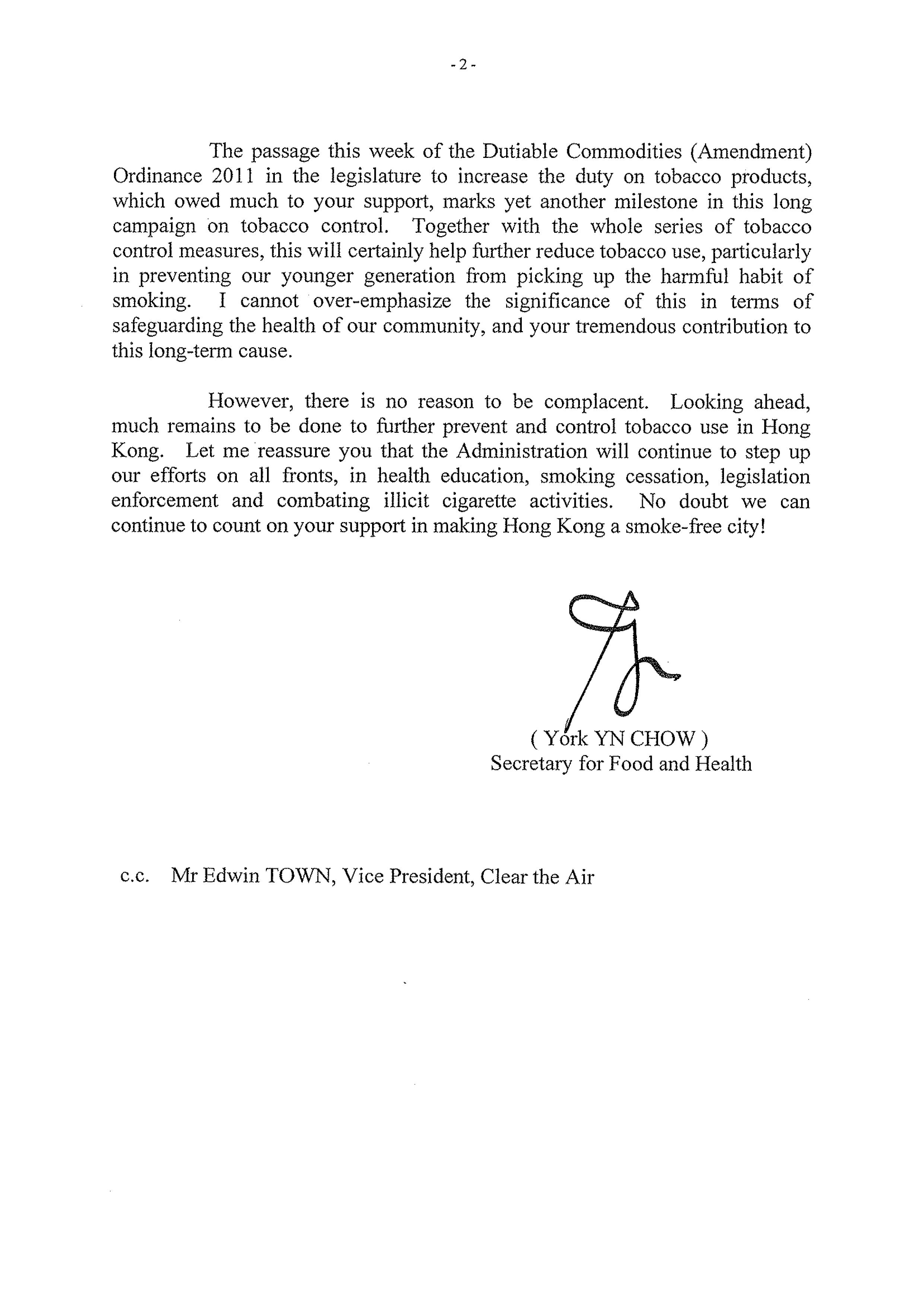
The way forward in Tobacco Control

Letter from York Chow

Damaging indecision: Public health expert Anthony Hedley has relocated to cleaner air. Yet that’s not an option for most Hongkongers, he writes, and the government is failing in its duty to protect them from pollution

luggageLast updated: May 3, 2010

Source: South China Morning Post

I arrived in Hong Kong to begin working in community medicine and public health on July 11, 1988, at 2.30pm. Like one of my 19th-century predecessors from Aberdeen University medical school, Sir James Cantlie, I was captivated by the beauty of the seascapes and landscapes of the Hong Kong archipelago.

My camera and tripod were a permanent fixture on the balcony looking over the western harbour towards Lamma, Cheung Chau and Lantau. Although several districts of Hong Kong had significant pollution problems, I recall the biting clarity of the views on many days. Since then, average daily visibility has progressively declined to only 12 kilometres, landscapes are filtered through a grey blanket and the tripod has been packed away. Each kilometre decline in visibility is a signal of our state of health, and is causally related to daily illness episodes and deaths.

In 1988, my involvement in environmental health was initiated by Lee Wing-tat, then chairman of Kwai Tsing District Council.

His members were deeply concerned about the effects of high sulphur dioxide levels on children, and asked if we could provide support for pollution abatement on health grounds.

We demonstrated that children in Southern district enjoyed better respiratory health and less need for health care than those in Kwai Tsing. On July 1, 1990, a new ordinance modestly restricted fuel sulphur content. There was an immediate, large-scale beneficial impact on air quality, child health improved and differences between districts declined. But much remained to be done and our efforts since have simply not matched the size of the problem.

Hong Kong’s prosperity (SEHK: 0803, announcements, news) has long provided a protective envelope for population health. This is now being seriously eroded by the intense pollution exposures, which damage lungs and blood vessels, and potentially harm everyone. It is ironic that, in a region where two decades ago the government took a decisive step to reduce urban pollution, we are now unable to make essential decisions to protect child health. Hong Kong’s air pollution is fostering an epidemic of health problems that will extend through the rest of this century.

Because of its vast resources, Hong Kong has the best opportunity in Asia to protect younger generations against the inevitable health hazards, predominantly environmental and lifestyle in origin, of the emergent megalopolis of southern China. This will need a decisively new approach to public health protection. Resources to combat infectious disease have been provided, but those needed for other environmental health priorities in Asia’s “world city” are sadly lacking.

The world’s league tables for prosperity are scaled according to trade figures and gross domestic product per capita. I used to teach that these were the principal determinants of health and life expectancy, but today in Hong Kong that is a recipe for complacency.

Arrogance and hubris stemming from our economic success could lead to the neglect of essential public health measures. We are failing to ensure, in our high-performing economy, that inequalities in health are matched by avoidance of inequity in health protection. While a proper sense of duty to provide care should drive health protection legislation, it is now clear that vested interests and government inaction are a direct threat to the health of those most vulnerable. Hong Kong needs a new model for public health advocacy, risk communication and mandatory protection measures to address the explosive changes in urban living.

Rigorous science is vitally important to support the evidence base, but public health is not anyone’s exclusive intellectual property. It must become a truly multi-sectoral effort both within and outside of government. I have learned that broadly based community action is critically important to fill the gaps in health protection created by bureaucratic inertia and obstruction in the Legislative Council. We had skilled champions in Legco to steer tobacco control through the 1997 bills committee; we now need champions to embrace even wider concerns for environmental health. The forum on air quality created by the coalition between universities and NGOs, led by Civic Exchange, is a promising starting point for a stronger, community-based movement for environmental protection. It may even give the government the confidence it lacks to take radical action to protect our health.

Stories about so many important health threats have very short half-lives in the media. Tobacco and air pollution have been unusually robust in that respect, but the resolution of our air pollution problems will take decades unless there is a radical change of policy. The flag-bearers for future evidence-based environmental protection must obviously come from today’s school population. We must focus on developing sustainability in both environmental science and advocacy; it cannot depend on the few.

I have enjoyed and benefited from the opportunities to contribute to health care in Hong Kong. It made an enormous difference to my professional and personal quality of life, and I never wanted to be anywhere else. However, unexpected medical problems and advancing years have made me more vulnerable to the biological stress of poor air quality.

I have received frequent calls to my office over many years seeking advice, from both locals and expatriates on four continents about pollution effects on family health. Many choose not to come or stay; others discount the hazard and come. They all have a choice, in contrast to the majority who depend on government to provide environmental security. They are paying dearly to breathe dirty air, but successive environment ministers say they must pay even more for clean air.

I am fortunate to be able to relocate to cleaner air, but our real concern should be to put in place measures ensuring that every child in Hong Kong is guaranteed their right to clean food, clean water and clean air, now and in the future.

Anthony Hedley is honorary professor at the School of Public Health, University of Hong Kong, and is now breathing the pristine air of the Isle of Man in the middle of the Irish Sea

Hong Kong Anti-Pollution Figure Hedley Leaving for Cleaner Air – BusinessWeek

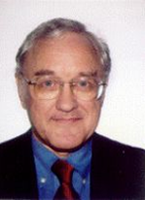
pic-anthony-j-hedleyLast updated: April 22, 2010

Source: Businessweek via Bloomberg

Hong Kong anti-pollution activist Anthony Hedley said today he has decided to relocate to the Isle of Man because his health makes staying too risky.

Hedley, a 69-year-old professor at Hong Kong University’s School of Public Health who has also battled cancer for the past two years, is leaving Hong Kong after 22 years, during which he was a frequent critic of the government’s environmental record.

His decision to leave on May 1 comes just weeks after Hong Kong’s Air Pollution Index reached record levels, hitting the top of the scale at 500 and prompting an outcry by business leaders and residents about deteriorating air quality.

“I am desperately looking forward to breathing clean air in the middle of the Irish Sea,” Hedley said by telephone. “I want to reduce my biological stress by moving to a cleaner environment.”

Hedley said his departure will give him regrets about the people he is leaving behind.

“I feel bad because so many people don’t have this option,” he said.

He said socially mobile people are increasingly “voting with their feet,” by leaving Hong Kong for health reasons.

“It is indeed a sad irony that one of those most committed to alleviating Hong Kong’s air pollution now has to leave the city primarily for that reason,” the Clean Air Network, a local non-governmental advocacy group, said in a statement today.

When Hong Kong’s Air Pollution Index tops 100, it prompts government warnings that people with heart or respiratory illnesses should reduce physical exertion and outdoor activities. That is twice the level of 50 considered safe by the World Health Organization.

Levels above 200 in Hong Kong trigger warnings for the general public to reduce physical exertion and outdoor activities.

Pollution is often cited as an issue for companies attempting to attract workers to the city. Chief Executive Donald Tsang in January called it unacceptable that air quality reached “dangerous” levels one in every eight days last year.

Written by Frederik Balfour

A letter to Financial Secretary

www.cleartheair.org.hk, James Middleton, Chairman of anti tobacco committee, 2010-2-18

James Middleton had written a letter to Financial Secretary about Tobacco tax. Click here to download the letter.

It is high time the HKSAR Government expanded the Tobacco Control Office

Hong Kong Tobacco Control Office only have 99 officers. Do you think it is enough or not?

Hong Kong Tobacco Control Office only have 99 officers. Do you think it is enough or not?

Macau has a population of 544,000 (source: Macau News) compared to Hong Kong’s 7 million.

Their new Tobacco Control Office will have 70 officers or one per 7,771 Macau inhabitants.

Hong Kong TCO has I believe only 99 officers to cover a population of 7 million which is 13 times more

than Macau and this allocates one HKG TCO officer per 70,707 Hong Kong inhabitants or ten times more persons per TCO officer than Macau. In addition Hong Kong has far more tourists per year than Macau.

It is high time the HKG Government expanded the TCO by at least 10 times manpower-wise to effectively police the current laws and allow them to be expanded. Meanwhile the law must be amended to put the onus on landlords and managers of licensed premises to prevent smoking within , at entrances to and patio areas of the premises as well as vehicles with children on board and the Hong Kong airport bus terminus.

http://www.macaudailytimes.com.mo/macau/7895-Bill-tobacco-for-public-consultation.html

“Last week, while the bill was unanimously approved in principle, lawmakers had already voiced many doubts regarding the law’s enforcement. At that time, the director of the Health Bureau, Lei Chin Ion, said a new department would be created to include 70 workers, to take care of the new duties.”

Source: Clear The Air and Macau Daily Times