Clear The Air News Tobacco Blog Rotating Header Image

Uncategorized

Leahy invests in ‘safe’ tobacco (after Tesco made a killing on cigarettes)

3 June 2011

Reuters

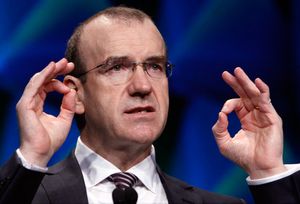
The ex-boss of Tesco, Sir Terry Leahy, has invested part of his own £48m fortune in the start-up company to find cigarette alternatives

Sponsored Links

It has been the dream of health campaigners and nicotine addicts for 50 years: a “safe” cigarette that satisfies the cravings of smokers without the lethal side-effects. Now, falling sales and government crackdowns in the West (if not in the developing world) are tempting the world’s tobacco giants to invest in discovering a non-cancerous alternative. British American Tobacco (BAT) is joining forces with Sir Terry Leahy, the recently departed former Tesco chief executive, who is investing a chunk of his own £48m fortune in a new product which promises to revolutionise the market for “smokeless cigarettes”. Sir Terry has invested an undisclosed sum in the start-up company Kind Consumer, which is developing a non-tobacco, aerosol-loaded, nicotine inhalation device that keeps the “psychological rituals and routines” of smoking.

The company claims that it will appeal to smokers who don’t want to quit. Alex Hearn, chief product officer, said: “Our product contains no tobacco, heat nor smoke, just clean medicinal nicotine.

“It mimics the psychological rituals and routines of smoking, but it is designed also to match the physiological effects of nicotine intake by smokers.”

Sir Terry added: “I believe it will make a difference, not only to the lives of smokers who have repeatedly tried to quit, but to the public health of our nation. “It makes perfect business sense too. There’s a huge gap in the market for a product like this that sits between cigarettes and the very medicalised nicotine replacement therapies.”

The product will be targeted at smoker-friendly sales locations such as petrol station counters and supermarkets, not pharmacies. Health campaigners fear that customers who enjoy the nicotine hit may use the product as complimentary, rather than an alternative, to a pack of cigarettes.

Kind Consumer has signed a global licensing agreement with Nicoventures, a new subsidiary of BAT. Philip Morris International, BAT’s rival, is also investing in “clean cigarettes”. The company has bought the patent for a similar aerosol system being developed by the same scientific team that discovered the potential for commercial nicotine patches in the 1980s.

Previously the “big four” – Philip Morris, BAT, Japan Tobacco and Imperial Tobacco – had left the £2.2bn market for “reduced harm” alternatives to pharmaceutical groups such as Johnson & Johnson, which produces Nicorette patches.

The tobacco giants need an alternative presence at retail locations, to combat new legal restrictions. The Government has promised a ban on the in-store display of tobacco products, which is due to be implemented by 2015. A ban on smoking in public places is now in place in New York, while Australia has announced the toughest measures yet. Under proposals due to come in next year, all logos will be removed from cigarette packets, which must be a drab olive-green colour and covered with graphic health warnings.

The tobacco giants are employing their legal armoury to oppose restrictions on smoking. Imperial Tobacco has forced a judicial review over a store display ban in Scotland, claiming that the Scottish Parliament had no legal right to restrict the open sale of its products.

The big tobacco companies have vowed to fight the Australian logo ban in the courts, with BAT threatening to flood the market with cheap cigarettes.

Smoking in numbers

£13.4bn Consumer spending on tobacco products in Britain in 2009, 90 per cent of which went on cigarettes.

£236bn Estimated value of the global tobacco market.

£1.36bn Value of the global nicotine replacement product market last year. Of this figure, 85 per cent was spent on gum and patches.

£10.5bn British tax revenues from tobacco products in 2009/10: £8.8bn in excise duty, and £1.7bn in VAT.

2.1 per cent Annual predicted growth rate in cigarette sales in the Asia-Pacific region over the next five years.

2 per cent The amount sales in Western Europe are expected to shrink by over the same period.

http://www.independent.co.uk/life-style/health-and-families/health-news/leahy-invests-in-safe-tobacco-after-tesco-made-a-killing-on-cigarettes-2292452.html

Hangzhou’s tobacco regulations in effect for one year; city resident smoking rate, tobacco sales have both fallen

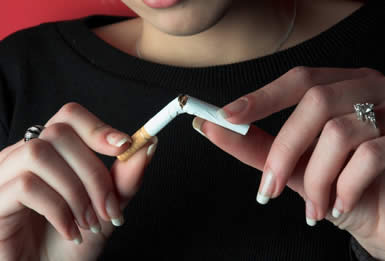
06/01/2011, www.zjol.com.cn [Zhejiang Province], 7 media hits — The results of Hangzhou’s tobacco control survey were released yesterday. The smoking rate among city residents is 24.4% – a considerable drop when compared to the provincial average of 27% reported for 2010. According to figures provided by the Tobacco Monopoly Bureau, tobacco sales between March 2010 and February 2011 were down 27.89% from the same period a year earlier. The most significant drop in sales volume was registered in the CNY 50-100 price range, falling 88%. The largest volume was in the CNY 10-50 price range, but also nosedived 28% during the same period.

News

MPs say no to tobacco donations

The Age – Michelle Grattan – ‎33 minutes ago‎

1 June 2011

THREE Liberal backbenchers have called for the party to refuse donations from tobacco companies after Opposition Leader Tony Abbott announced the Coalition would not oppose plain packaging. Dr Mal Washer, who had threatened to cross the floor if the …

Abbott swings in on tobacco reform Sydney Morning Herald

Tony Abbott retreats on tobacco packaging The Daily Telegraph

Abbott out of puff on plain cigarette packet laws The Australian

Bill eyed to disclose hazardous tobacco ingredients

Korea Times – Kim Tae-jong – ‎1 hour ago‎

The government is seeking to revise a bill regulating the tobacco industry to oblige cigarette makers to disclose the names and quantities of various hazardous and cancer-causing ingredients and additives on cigarette packages. …

Smoking could kill 8 million a year by 2030: WHO Reuters

Smoking, going, gone on World No Tobacco Day ABC Local

Tobacco consumes 1 million lives annually Times of India

Tobacco-related cancer cases rising in Kolkata

MSN India – ‎1 hour ago‎

Kolkata, May 31 (PTI) Tobacco-induced cancer cases are on the rise in the city, growing at over seven per cent in the last 10 years, according to a recent study. The study, conducted by the Netaji Subhas Chandra Bose Cancer Research Institute here, …

Tobacco Use: It’s A Fatal Addiction Times of India

Gujarat, India have high rates of head and neck cancer Daily News & Analysis

Cancer patients to urge President to ban tobacco Mid-Day

China advised to “put a brake” on tobacco industry

Xinhua – Wang Guanqun – ‎3 hours ago‎

BEIJING, May 31 (Xinhua) — Chinese policymakers should consider putting a brake on the growth of the country’s tobacco industry, which produces one third of the world’s cigarettes, a prominent economist and policy advisor has said. …

Tobacco control group fears state budget cuts Fond du Lac Reporter

China should use state monopoly for tobacco control:WHO TwoCircles.net

Cancer Council’s plain packaging push

B&T Marketing & Media – Miro Sandev – ‎9 hours ago‎

The Cancer Council has fired off the latest salvo in the cigarette plain packaging advertising stoush, re-launching a satirical TVC in a bid to paint the tobacco industry as “misleading” and “deceptive”. …

Plain Packaging of Tobacco in Australia under Scrutiny TopNews New Zealand

BAT Wins Australia Court Hearing on Plain Cigarette-Packaging Legislation Bloomberg

World No Tobacco Day 2011 – Tobacco Marketing Is ‘Out Of Fashion’, Australia Medical News Today (press release)

MPs say no to tobacco donations

1 June 2011

THREE Liberal backbenchers have called for the party to refuse donations from tobacco companies after Opposition Leader Tony Abbott announced the Coalition would not oppose plain packaging.

Dr Mal Washer, who had threatened to cross the floor if the Coalition voted against the bill, said it was bad for the party to be accepting money from companies that cause so many health problems.

He thought a number of Liberals would be embarrassed by the party doing so, and urged that a motion go to the Liberal federal council saying this funding should be rejected.

Liberal MP Alex Somlyay said his party should not take money from tobacco companies because 15,000 Australians a year died from smoking related conditions. Russell Broadbent, from Victoria, said accepting the donations should have been ended during John Howard’s time ”and I’m confident Tony Abbott will end it while he is leader”. Labor already bans funds from tobacco companies.

In 2009-10 British American Tobacco ($147,045) and Philip Morris ($145,035) were among the big business donors to the Coalition, although they split their donations into small parcels of money.

Mr Abbott announced the decision on the packaging legislation at the joint parties meeting – and on World No Tobacco Day. He said the opposition would move to ensure the legislation ”really does bring smoking rates down” but if this failed it would not oppose. Even before announcement the legislation had enough support from the cross benches to pass.

Previously the opposition had said it had to wait for the detail of the legislation – which has been released in draft form – but this position became untenable due to open divisions in the ranks.

The shadow cabinet considered the political damage when it met on Monday. At yesterday’s Coalition party meeting, some attacked the idea of a ”nanny” state while others, in favour of the legislation, focused on public health issues.

Health Minister Nicola Roxon welcomed the opposition decision but said ”they certainly had to be dragged kicking and screaming”. Ms Roxon said the government would consider any ”sensible” amendments.

”The truth is here big tobacco have not won their campaign to try to hijack the debate in the Parliament, and Australia will be world leaders when we introduce this law, to come into effect January 1 next year,” she said.

Cancer Council Victoria and Quit congratulated the Coalition, with Cancer Council Victoria CEO Todd Harper saying ”research shows [the reform] will make smoking less desirable, especially to young people”.

British American Tobacco Australia said yesterday it was pleased a full Federal Court would hear its appeal against the government’s refusal to make public its legal advice on plain packaging
Read more: http://www.theage.com.au/national/mps-say-no-to-tobacco-donations-20110531-1fenl.html#ixzz1NwMFcJzs

BAT Wins Australia Court Hearing on Plain Cigarette-Packaging Legislation

May 31, 2011

British American Tobacco Plc (BATS)’s Australian unit won an appeals court hearing in a bid to force the government to turn over documents relating to a plan to restrict cigarette sales to plain packages.

The Full Federal Court of Australia agreed to hear the request, according to a letter from Judge Shane Marshall, provided by British American Tobacco. No date has been set for the hearing, the company said.

Parliament is set to vote on the law in the Australian winter to limit cigarette packaging to plain dark-olive coloring with pictorial health warnings instead of company logos, Health Minister Nicola Roxon said last month. British American Tobacco has sought the legal advice the government received on the plan under Australia’s Freedom of Information Act and has been denied, the company said.

British American Tobacco “suspects that Minister Roxon hasn’t released the legal advice because it’s likely to demonstrate her plain packaging laws are flawed,” the company said in today’s statement.

Health Ministry officials didn’t respond to telephone and e-mail requests for comment.

The Australian proposal is the first in the world aimed at banning logos and color variations on cigarette packages.New Zealand, Canada and the U.K. had considered the move but dropped it out of concern it would be illegal, British American Tobacco said. The Australian proposal may infringe international trademark and intellectual property laws, the tobacco company said.

The name of the cigarette brand would be printed in a uniform font at the bottom of the package. The legislation, if passed in parliament, will take effect Jan. 1.

The government plans to spend more than A$10 million ($10.7 million) on legal fees fighting opposition to the proposal, British American Tobacco said, citing documents obtained through the FOI process.

The case is British American Tobacco Australia Ltd. v. Secretary, Department of Health and Ageing. VID314/2011. Federal Court of Australia (Melbourne).

A cancer epidemic among the poor

South China Morning Post — 2 March 2011

Cancer is an enormous – and growing – global public health problem. And, of the 7.6 million cancer deaths every year, 4.8 million occur in the developing world. A disease formerly considered more pervasive in affluent countries now places its heaviest burden on poor and disadvantaged populations.

In some African countries, fewer than 15 per cent of cancer patients survive for five years following diagnosis of cervical and breast cancer, diseases that are highly curable elsewhere in the world. These are shocking statistics.

The increase in cancer’s impact on the poor reflects factors such as demographic growth, population ageing, the spread of unhealthy lifestyles (including tobacco use), and lack of control of cancer-associated infections.

If no action is taken, the number of cancer deaths in the developing world is forecast to grow to 5.9 million in 2015 and 9.1 million in 2030, while cancer deaths in wealthy countries are expected to rise by 40 per cent over the next 20 years.

Throughout the developing world, most health care systems are designed to cope with episodes of infectious disease. But most lack the funds, equipment and qualified personnel needed to provide basic care for cancer patients. They also have little capacity for prevention, public education, or early diagnosis and treatment.

Many of these patients do not have to die. We know that around one-third of cancers can be prevented. This figure could be increased markedly if more emphasis were placed on identifying additional environmental and lifestyle-associated factors that increase cancer risks. In addition, a diagnosis no longer has to be a death sentence, because one-third of cancers can be cured if detected early and treated properly.

The World Health Organisation and the International Atomic Energy Agency, which helps to build countries’ capacity for radiation medicine, are working closely together to improve cancer control in developing countries.

Preventive measures such as public health initiatives to curb smoking can be remarkably effective. Vaccines against hepatitis B and human papillomaviruses, if made available at affordable prices, could contribute significantly to the prevention of liver and cervical cancers, respectively.

We are seeing promising results in individual countries, but our efforts are just a drop in a vast ocean of need. In order to respond to the growing cancer epidemic, we need nothing less than concerted global action similar to the successful mobilisation against HIV/Aids.

Cancer should be seen as a vital part of the global health agenda. World leaders should be made aware of the scale of the cancer crisis facing developing countries.

The UN General Assembly’s Summit on Non-Communicable Diseases in September provides an opportunity to focus the world’s attention on cancer in developing countries. Let us make cancer control one of the good news stories of 2011.

Margaret Chan is director general of the World Health Organisation. Yukiya Amano is director general of the International Atomic Energy Agency. Copyright: Project Syndicate

Prof .   J u d i t h   L o n g s t a f f   M a c k a y

MBChB, FRCP (Edin), FRCP (Lon)

Senior Advisor

t:  +852.2719.1995    f:  +852.2719.5741

Riftswood, 9th Milestone

DD 229, Lot 147, Clearwater Bay Road

Kowloon, Hong Kong SAR

worldlungfoundation.org

Cigarette displays do encourage smoking, researcher says

Last updated: January 11, 2011

Source: The Guardian

In the last series of Mad Men, the directors of Sterling Cooper stopped just short of hurling themselves from the 23rd floor down on to Madison Avenue in a collective suicide pact after hearing that they had lost the contract to advertise Lucky Strike cigarettes. Some 45 years on in the real world, and tobacco advertising is banned on this side of the Atlantic and severely restricted in the US. Canada has gone further by banning attractive, back-lit displays of cigarette packets near the tills of shops and supermarkets. So, too, have Iceland, Norway, some Australian states and the Republic of Ireland. Not the UK, however. Not yet anyway.

“The legislation was passed by the last government with the intention that supermarkets would have had to remove these displays in 2011, and small retailers two years later,” says Professor Ann McNeill, deputy director of the UK Centre for Tobacco Control Studies. “However, the coalition hasn’t yet committed itself to implementing that legislation.”

She is surprised by that. “They said in their health white paper: ‘Reducing smoking will continue to be a focus for public health’. Also, they claim they’re committed to reducing health inequalities. Given that tobacco accounts for half the differences in life expectancies between social groups one and five, you’d think ministers would want to do everything they can to nudge the public towards healthier choices.”

McNeill is a psychologist based at Nottingham University, the lead in a consortium of nine universities that make up the UK Centre. For 25 years she has worked with experts in other fields, including toxicology, pharmacology and marketing, to find ways of countering the harmful effects of what she calls “the only consumer product, apart from guns, that kills if used as the manufacturer intends”.

She wants to ensure that there is plenty of evidence to counter the intense lobbying of the tobacco industry as it seeks to preserve point-of-sales displays as one of its few remaining marketing gambits. Accordingly, she was only too glad to accept a commission from the Office of Tobacco Control in Ireland to evaluate the effects on adults, retailers and, particularly, children since the ban on displays was introduced there in July 2009. “The budget was too small to commission primary research,” she admits. “So we used existing data sets and augmented them with some questions of our own.”

Over 180 teenagers, aged between 13 and 15, were interviewed a month before the Irish legislation came into effect and a month afterwards. “We found that there was a significant drop in their recall levels when it came to tobacco displays,” McNeill goes on. “Over 80% of them were aware of the displays before the legislation was passed. Afterwards, only 22% thought they’d seen something to do with cigarettes when they went to the shop.”

But why did they think they’d seen anything at all if the displays had been removed?

“They could have been thinking about a vending machine, or it might have been the leather-bound menu of brands that Irish retailers now produce if anyone asks for cigarettes and they’re not sure of the brand they want.”

Further questioning revealed that the majority of youngsters thought it was more difficult for anyone under age to buy cigarettes since the new law came in. “Our survey of Irish retailers backed that up,” says McNeill. “Children could no longer come in, point to a pack in a display and say ‘I’ll have 20 of those’. There was an extra step involved that could undermine their confidence when it came to persuading the person behind the counter that they were over 16.”

Between 30 and 40 retailers were interviewed. The researchers also wanted to find out how they felt about the removal of displays affecting sales and reducing their income. “There are three answers to that,” McNeill says. “One is that profit margins are not great on cigarettes. Another is that tobacco sales have been declining markedly over the past few decades and retailers have been adapting. They know that if customers aren’t spending on cigarettes, they’ll have more to spend on other items. And finally, small retailers in particular are at the heart of their communities and increasingly they don’t want to make profits from a product that they know is killing some of their customers.”

So what did the adults surveyed feel about the removal of tobacco displays?

“We used a survey of 1,000 adults carried out by the Office of Tobacco Control and added a couple of questions of our own. Had they noticed any difference since the displays were removed? And did they support the legislation?”

Support rose from 58% before the legislation came into force to 66% afterwards – not least because of the removal of temptation. “Those who were trying to give up found themselves wavering if they’d gone down to the shop to buy, say, a bottle of milk,” the professor explains. “They’d be in a queue, look at the display and think ‘I might as well get 20 Marlborough while I’m here’. And those who’d already given up felt that they could have been triggered into a relapse by those tempting displays.”

Much to her frustration, that temptation looks set to remain for the foreseeable future – on this side of the Irish Sea, at least.

Florida emerges as center of tobacco litigation universe

lawsuit-cash-advance-fundingLast updated: May 7, 2010

Source: St Petersburg Times

With 9,000 cases awaiting trial in Florida -including many appeals – the state has emerged as the prime battleground in the legal war against Big Tobacco.

On April 26, a Fort Lauderdale jury found Philip Morris USA, R.J. Reynolds Tobacco Co. and Liggett Group responsible for the cancer death of Margot Putney, a Florida woman who began smoking in about 1953 at the age of 15 and died in 1995. The verdict: $15 million.

On April 21, a Gainesville jury said R.J. Reynolds Tobacco was partially responsible in the death of Frank Townsend, who smoked cigarettes and later developed lung cancer. R.J. Reynolds’ portion of the verdict: $46.3 million.

And on April 14, a Pensacola jury found R.J. Reynolds and Liggett responsible for the wrongful death of longtime smoker Janie Mae Clay. The verdict: $21 million.

I could go on. And on.

The pace of tobacco litigation in Florida is fast and furious these days. And ever since tobacco industry defense attorneys scored two wins in this state in 2009, the verdicts – 13 in a row and counting – have turned against Big Tobacco.

This is no fluke. The recent string of favorable verdicts may spell big trouble for a cigarette industry that not so long ago used to brag that it never, ever lost a legal case brought by a dying smoker (or his or her family).

“This ever-growing list of plaintiff victories in Florida constitutes a trend with a capital T,” says Edward L. Sweda Jr., senior attorney for the Tobacco Products Liability Project of the Public Health Advocacy Institute at Boston’s Northeastern University School of Law.

Sweda’s tracked tobacco litigation since his days in law school in 1979. He argues the sheer momentum and volume of these Florida cases with unfavorable verdicts for tobacco will force the industry to settle. If they lose at the appeals level, he says, tobacco companies must actually start paying off the verdicts against them.

And that, argues Sweda, is when it becomes very possible the tobacco industry will start talking settlement.

Why? The drumbeat of rulings against Big Tobacco is remarkable enough. But what boggles the mind and checkbook is that those verdicts are only the first of an estimated 9,000-plus claims that state and federal courts in Florida are due to hear – in theory, at least – for decades to come.

So many lawsuits means the tobacco industry will be forced to put in its second- and third-string legal teams, Sweda suggests, which may result in more losses for Big Tobacco.

No other state boasts anything close to such a volume of upcoming tobacco litigation. For good reason.

A class-action suit was certified in Miami in 1994 claiming 700,000 smokers had been injured by cigarettes and a tobacco industry that did not warn people of smoking risks. An appeals court decided in 1996 that the class action could go forward, though only Florida smokers could be included. This memorable case became known as the “Engle” case for lead plaintiff and Miami pediatrician Howard Engle.

In 2000, the plaintiffs won $145 billion – that’s a b for billion – in what was the largest punitive damage award by a jury in U.S. history. An appeals court later overturned the verdict, and the Florida Supreme Court refused to reinstate it. But the Supreme Court left in place some critical legal changes in the tobacco wars.

First, the court permitted each of the Engle class’ members, known as the “Engle progeny,” to file lawsuits individually. Hence the 9,000-plus lawsuits awaiting their chance in Florida courts.

Second, the court said the Engle jury’s findings on cigarettes, their health effects and the companies’ conduct over the years had to be accepted in future tobacco cases.

That means smokers do not have to prove that cigarettes are harmful every single time they bring suit. It is already a given, the court stated, much to the tobacco industry’s dismay.

In federal cases, tobacco lawyers have appealed arguing these court instructions are unfair. They await a ruling on 4,400 federal cases, part of those 9,000-plus to be tried in Florida alone. But in Florida state courts, the state Supreme Court’s instructions are helping to generate verdicts at a breakneck pace.

What plaintiff lawyers have to prove in such cases is that the smoker (who may or may not be alive) was addicted and smoked a particular brand of cigarette.

In many cases, the verdicts are coming in with the juries assigning a percentage of responsibility to the smoker and the tobacco companies. Cigarette lawyers point to these split verdicts as evidence that these Florida cases are not clear-cut signs that the tobacco industry is losing.

Even so, that’s still left plenty for tobacco companies to pay.

First, of course, every plaintiff victory will be appealed by the tobacco lawyers.

Murray Garnick, a senior vice president at Altria, the parent of Philip Morris USA (which makes Marlboros), has been the de facto spokesman for the tobacco companies in much of this litigation. “Our fundamental case,” Garnick told Virginia’s Richmond Times Dispatch last month, “is that we’re selling a legal product that has risks that are well understood by the consuming public and that people should have the right to decide for themselves.”

And Garnick repeatedly has indicated the tobacco industry has no intention of settling these tobacco lawsuits – even if appeals courts uphold the growing volume of verdicts against it.

Does tobacco have pockets deep enough to handle 9,000 more cases in Florida alone? Can the price of cigarettes simply increase over and over enough to cover such industry costs?

Let’s see what happens when those big bills start to come due.

Written by Robert Trigaux

Free anti-smoking treatments start in Taipei City today

quit_smoking_landingLast updated: April 7, 2010

Source: The China Post

TAIPEI, Taiwan — Taipei City will provide free four-week tobacco control treatment for 1,000 smokers in eight public hospitals starting today.

Allen Chiu, commissioner of Taipei City’s Department of Health, said it can save each smoker NT$1,000 to NT$3,000, and they can get professional help to quit smoking.

This year is Taipei’s Anti-smoking year, said Chiu. Smoking is not only harmful to the smoker, but also those around them. It has a negative effect on the society. So, the department is launching this scheme, in order to help more smokers.

Woung Lin-chung, deputy superintendent of Taipei City Hospital, said it is advised to take tobacco control medication for eight to 12 consecutive weeks, and the first four weeks is critical. He said some tobacco control medication have a success rate of over 50 percent. If the smokers are willing to get professional help, the doctors are confident that they can help them successfully quit smoking.

Taiwanese actor Li Luo is the first smoker to participate in the new scheme. Li has been a smoker for 27 years and his highest record was two pack a day. He said he wants to quit because he wants to give his daughter a healthy childhood. He had tried to quit smoking on his own for many times but he failed. He is determined to quit smoking this time by seeking professional help and announcing it in public.

According to John Tung Foundation, 39 tobacco control specialists from eight public hospitals provide 320 consulting sections for smokers per month. Each month, however, there are only 50 to 60 smokers seek help from the clinics.

The health department’s statistics show that the adult smoking rate in Taipei in 2009 has dropped from 18.93 percent to 15.3 percent, accounting a 70,000 decrease in the smoking population. With the anti-smoking campaign this year, expected the number to go further down.

Regional Action Plan for the Tobacco Free Initiative in the Western Pacific (2010–2014)

WHO logoDownload the WHO Regional Action Plan here.

(more…)